Fluffy Japanese Souffle Pancakes
If your social feeds have ever tempted you with impossibly tall, jiggly pancakes, this recipe is for you. These fluffy Japanese souffle pancakes bring cafe-style brunch right to your home kitchen, no fancy equipment or pastry degree required. Once you master the simple meringue technique, you’ll be flipping these on repeat for lazy Sunday mornings and special-occasion brunches.
Why You’ll Love This Recipe
- Ultra-fluffy texture: Tall, cloud-like pancakes thanks to a stable meringue folded into a simple batter.
- Café-style at home: Recreate trendy Japanese souffle pancakes without special molds or hard-to-find ingredients.
- Brunch showstopper: Perfect for holidays, birthdays, Valentine’s Day, or any weekend you want something extra.
- Customizable toppings: Pair beautifully with berries, whipped cream, matcha syrup, or classic maple.
Ingredients
- 3/4 cup (90g) cake flour or all-purpose flour (cake flour for extra tenderness; AP flour also works)
- 1 tsp baking powder (fresh, aluminum-free if possible)
- 1/8 tsp fine salt (a small pinch to balance sweetness)
- 2 large egg yolks (room temperature)
- 3 tbsp (45ml) whole milk (room temperature)
- 1 tsp vanilla extract (or 1/2 tsp vanilla paste)
- 1 tbsp (14g) unsalted butter, melted (cooled slightly, plus more for greasing)
- 3 large egg whites (chilled, for more stable meringue)
- 3 tbsp (36g) granulated sugar (for whipping into the egg whites)
- 1/8 tsp cream of tartar (optional) (helps stabilize egg whites)
- 1 tsp neutral oil (for lightly greasing pan)
- 2–3 tbsp (30–45ml) water (for adding to pan to create steam)
- 1 cup (150g) fresh berries (strawberries, blueberries, or seasonal fruit, for serving)
- to taste maple syrup or honey (for drizzling)
- 1 cup (240ml) whipped cream or Greek yogurt (lightly sweetened, for topping)
Instructions
- Separate the eggs, placing 2 large egg yolks in one medium bowl and 3 large egg whites in a clean, dry, medium or large mixing bowl. Chill the egg whites in the refrigerator while you prepare the yolk mixture; this helps the meringue whip up more stably.
- In the yolk bowl, whisk together the egg yolks, whole milk, vanilla extract, and melted butter until smooth. Make sure the melted butter has cooled slightly so it does not cook the yolks.
- Sift the cake flour (or all-purpose flour), baking powder, and fine salt directly into the yolk mixture. Gently whisk just until no dry streaks remain and the batter is smooth and thick. Do not overmix. Set aside while you whip the egg whites.
- Remove the chilled egg whites from the refrigerator. Using a handheld mixer or stand mixer fitted with a whisk attachment, whip the egg whites on medium speed until very frothy, about 1 minute. If using, add the cream of tartar once bubbles form.
- With the mixer running, gradually add the granulated sugar, 1 tablespoon at a time, beating on medium-high speed until glossy, medium-stiff peaks form, 3–4 minutes. The meringue should hold a peak that slightly bends at the tip but does not completely collapse.
- Lighten the yolk batter by folding in one large spoonful of the meringue using a spatula. Use gentle, broad strokes to preserve as much air as possible. Once incorporated, add about one third of the remaining meringue and fold just until combined. Repeat with the remaining meringue in two more additions, folding until you have a fluffy, uniform batter with no streaks of egg white.
- Preheat a nonstick skillet or griddle with a lid over the lowest to low-medium heat for 3–5 minutes. Mix a small amount of neutral oil with a bit of butter and lightly grease the pan, wiping away any excess with a paper towel. A well-heated but not hot pan is key for tall, evenly cooked pancakes.
- Using a large spoon or ice cream scoop, mound the batter into 4 equal, tall piles in the pan, leaving space between each pancake. Aim to scoop straight up and down to keep the batter stacked high rather than spread out.
- After 1–2 minutes, when the batter has begun to set slightly on the surface, gently add 1–2 teaspoons more batter on top of each pancake to build extra height. Carefully pour 1–2 tablespoons of water into the empty spaces of the pan (not on the pancakes) to create steam, then immediately cover with the lid.
- Cook the pancakes, covered, over low heat for 5–7 minutes, or until the bottoms are golden and the sides look slightly set but still jiggly. Avoid lifting the lid often; trap the steam for maximum rise. If the bottoms are browning too quickly, reduce the heat further.
- Using a thin spatula, gently loosen the edge of each pancake. Slide the spatula fully underneath and carefully flip each pancake in one confident motion, using your other hand or a second spatula to guide if needed. They will be delicate, so move slowly but decisively to avoid deflating them.
- Add another tablespoon of water to the pan, cover again, and cook the pancakes for another 4–6 minutes, until the bottoms are lightly golden and a toothpick inserted into the center comes out clean or with just a few moist crumbs. The pancakes should be tall, soft, and slightly wobbly, not wet in the center.
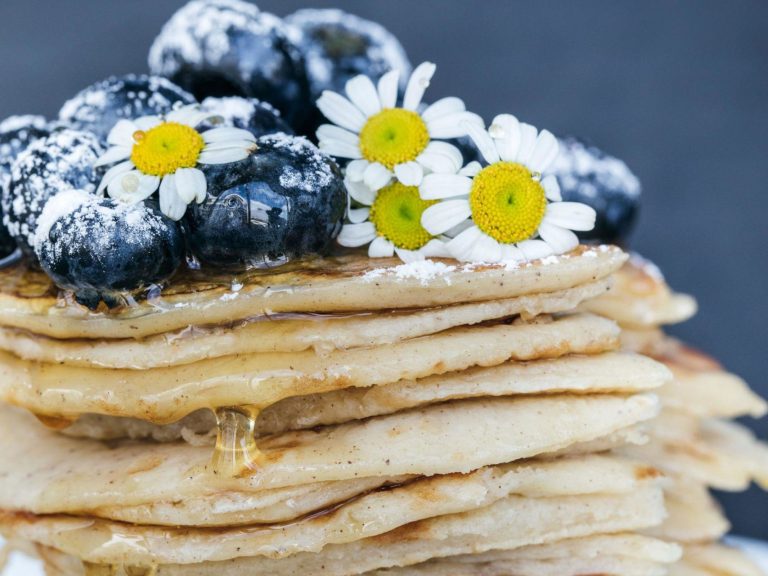
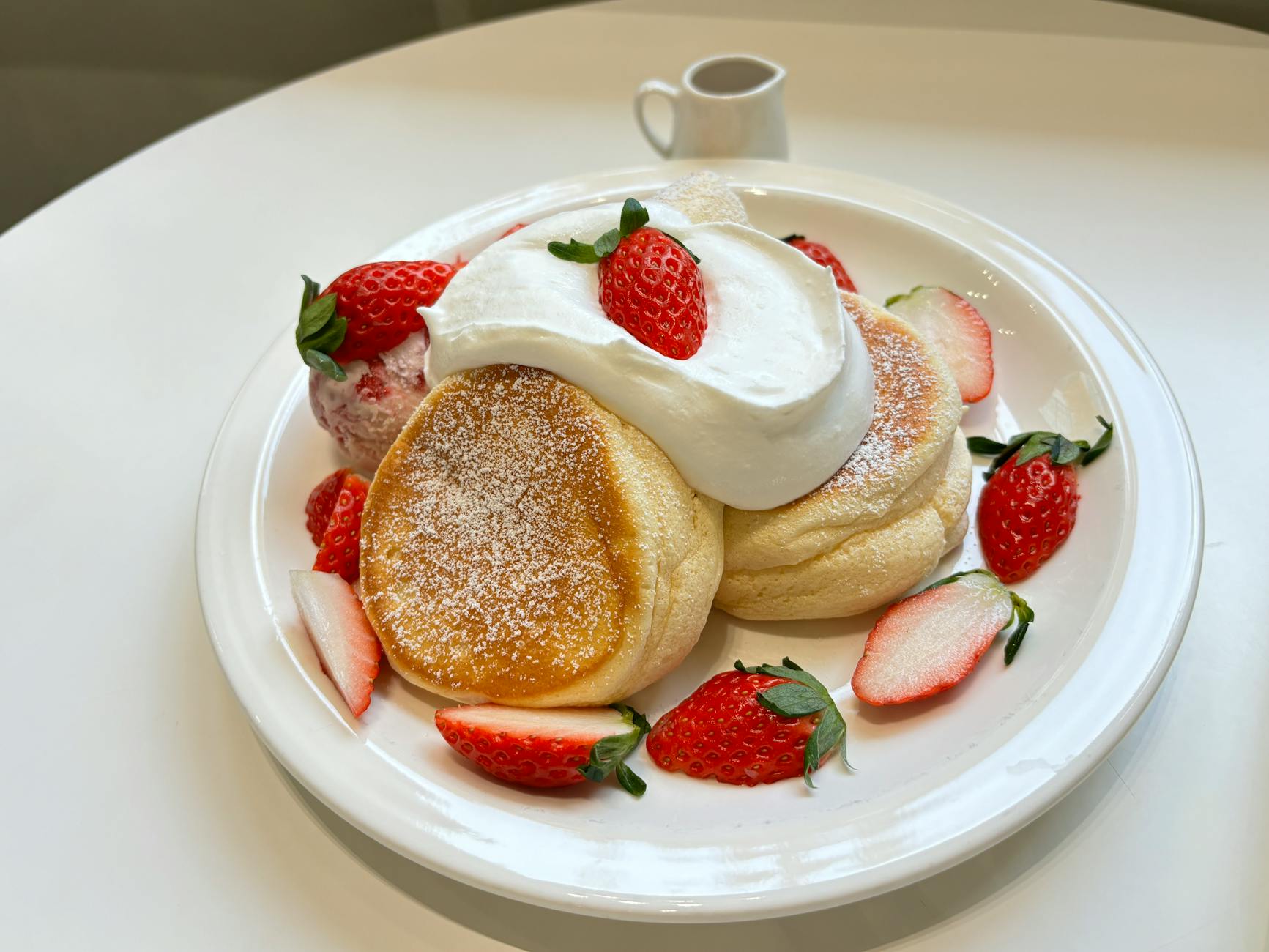
- Transfer the pancakes immediately to serving plates using a wide spatula. Serve at once, topped with whipped cream or Greek yogurt, fresh berries, and a drizzle of maple syrup or honey. Japanese souffle pancakes are best enjoyed right away while still warm and extra fluffy.
Pro Tips & Variations
- Use low heat and patience: These pancakes cook low and slow; rushing with higher heat can burn the bottoms before the centers set.
- Protect the meringue: Fold gently and stop as soon as the batter is uniform—overmixing will knock out the air and reduce the pancakes’ height.
- Try flavor twists: Add 1 tsp matcha powder, a pinch of cinnamon, or a bit of lemon zest to the dry ingredients for a seasonal twist.
- No-ring option that works: If you don’t have pancake rings, simply mound the batter high with a scoop; the thick, stable batter and steam will help them rise tall without special molds.
Storage & Serving
Japanese souffle pancakes are at their very best straight off the pan, while the meringue is still warm and lofty. If you do have leftovers, let them cool completely, then store in an airtight container in the refrigerator for up to 1 day. Reheat gently in a covered nonstick pan over low heat for 2–3 minutes per side, or in a 300°F (150°C) oven for about 5 minutes until warmed through. The texture will be less jiggly but still soft and tender. Serve with fresh seasonal fruit, a dusting of powdered sugar, maple syrup, or a dollop of whipped cream for a brunch-worthy plate.
Nutrition (per serving)
Calories: 320 | Protein: 12g | Carbs: 40g | Fat: 10g | Fiber: 1g
Frequently Asked Questions
What makes Japanese souffle pancakes so fluffy?
Japanese souffle pancakes get their height and fluffy, jiggly texture from a whipped egg white meringue folded into the batter. The air trapped in the meringue expands gently as the pancakes cook over low heat with steam, creating tall, cloud-like stacks.
Can I make Japanese souffle pancakes without pancake rings?
Yes. A thick, stable batter and low, gentle heat are more important than special molds. Simply scoop the batter into tall mounds and cook covered with a splash of water in the pan to create steam. This helps the pancakes rise without spreading too much.
Why did my souffle pancakes deflate?
Pancakes usually deflate because the meringue was under-whipped or overmixed into the batter, or the heat was too high. Aim for medium-stiff peaks, fold gently, cook low and slow, and avoid opening the lid too often so the steam and temperature stay stable.
Can I make the batter ahead of time?
It is best to cook Japanese souffle pancakes right after folding the meringue into the batter. If the batter sits, the whipped egg whites will lose volume and the pancakes will be flatter. For quicker mornings, you can pre-measure the dry ingredients and separate the eggs in advance.
Can I use all-purpose flour instead of cake flour?
Yes, all-purpose flour works well, though the texture will be slightly less tender than with cake flour. To mimic cake flour, you can remove 1 tablespoon from the 3/4 cup (90g) all-purpose flour and replace it with 1 tablespoon cornstarch, then sift before using.
You Might Also Like
- easy weekend brunch pancakes
- light and fluffy pancake recipes
- Japanese-inspired breakfast ideas