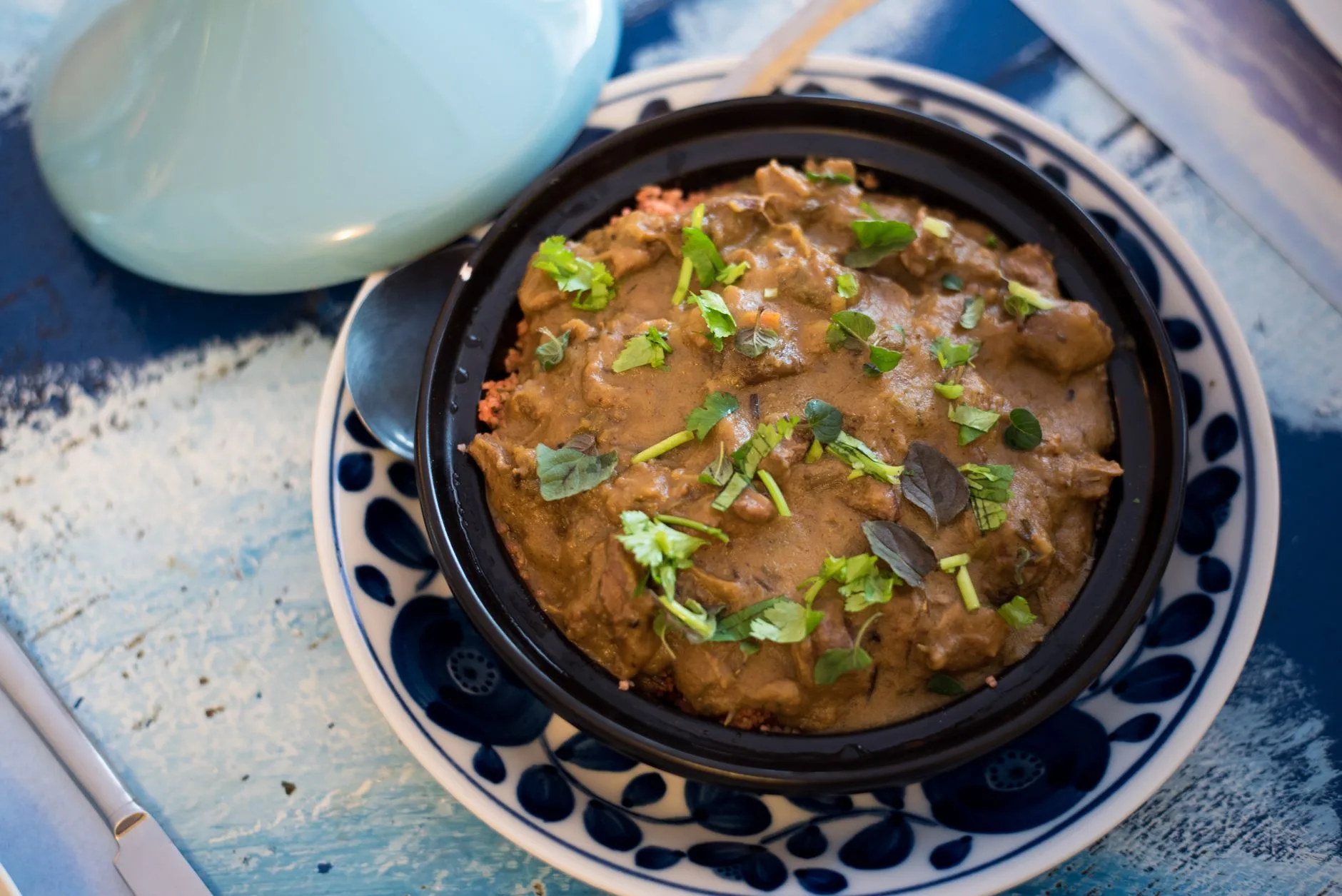
Moroccan Lamb Tagine with Prunes
Lamb with prunes is one of the dishes Moroccan families cook for weddings, Eid and big family lunches. Pieces of lamb shoulder braise slowly with onion, ginger, saffron and a cinnamon stick until they’re soft enough to pull apart with a piece of bread. The prunes are simmered separately in some of the cooking liquid with honey, so they come out glossy and whole, and go on top with fried almonds and sesame seeds.
It takes just under three hours from start to finish, but nearly all of that is the pot quietly doing its work. It also reheats perfectly, which makes it one of the easiest dinner-party mains there is.
Serves 6. Prep takes about 25 minutes, and cooking takes 2 ¼ to 2 ¾ hours.
Start with the right cut
Shoulder is the cut to use. It has enough fat and connective tissue to melt into the sauce over a long braise, leaving the meat moist and the sauce silky. Bone-in shoulder gives the most flavour; ask the butcher to saw it into 5–6 cm (2–2 ½ in) pieces through the bone. If you buy boneless shoulder, use about 1.1 kg (2 ½ lb) in place of the 1.5 kg bone-in weight.
Neck and shanks are also excellent. Allow one shank per person, and an extra 20–30 minutes of cooking. Leg is the cut to avoid: it’s lean, so after two hours it turns dry and grainy rather than tender.
The spices
The classic seasoning for this tagine is short: ginger, black pepper, turmeric, saffron and cinnamon. Ginger and pepper give warmth, turmeric gives colour, saffron gives aroma, and cinnamon links the savoury sauce with the sweet prunes. Many cooks add a little ras el hanout, the Moroccan spice blend that can include anything from cardamom and nutmeg to dried rosebuds. One teaspoon adds depth; much more can make the sauce taste muddy. If your ground ginger no longer smells sharp, replace it.
Ingredients
For the lamb
- 1.5 kg (3 ¼ lb) bone-in lamb shoulder, cut into 5–6 cm (2–2 ½ in) pieces, or 1.1 kg (2 ½ lb) boneless shoulder
- 3 tbsp (45 ml) olive oil
- 1 tbsp (15 g) butter or smen (optional)
- 2 large onions (about 450 g / 1 lb total), coarsely grated
- 4 garlic cloves, finely grated
- 1 ½ tsp fine sea salt, plus more to taste
- 1 tsp freshly ground black pepper
- 2 tsp ground ginger
- 1 tsp ground turmeric
- 1 tsp ras el hanout (optional)
- ¼ tsp loosely packed saffron threads (about 25 threads), crumbled
- 1 cinnamon stick
- 1 small bunch each of cilantro and flat-leaf parsley (about 20 g / ¾ oz each), tied with kitchen string
- 750 ml (3 cups) water
For the prunes
- 300 g (about 1 ¾ cups) soft pitted prunes
- 250 ml (1 cup) cooking liquid from the lamb
- 2 tbsp (40 g) honey
- ½ tsp ground cinnamon
- 1 tsp orange blossom water (optional)
To finish
- 60 g (½ cup) whole blanched almonds
- 1 tsp olive oil
- 1 tbsp toasted sesame seeds
- 2–3 hard-boiled eggs, halved (optional, but traditional at celebrations)
Method
Cook the meat with the spices (about 15 minutes)
- Put the lamb, olive oil, butter, grated onion, garlic, salt, pepper, ginger, turmeric, ras el hanout and saffron into a heavy 5–6 litre (5–6 quart) Dutch oven. Stir well so every piece is coated.
- Set the pot over medium heat and cook, stirring often, for 10–12 minutes. The onion will release its liquid and then cook down, and the meat will lose its raw colour. When the bottom of the pot looks almost dry and the spices smell toasted, it’s ready. If anything starts to catch, lower the heat and add a splash of water.
This is the traditional way of starting a Moroccan tagine: the meat isn’t seared separately, but cooks gently in fat with the spices. It gives a clean, rounded flavour. If you prefer a deeper, roasted note, brown the lamb in batches in the oil first, then carry on as above. It isn’t traditional, but it works.
Braise (1 ¾ to 2 ¼ hours)
- Pour in the water. It should come almost to the top of the meat. Add the cinnamon stick and the herb bundle and bring to a simmer.
- Cover, turn the heat to low, and cook at a gentle bubble for 1 ¾ to 2 ¼ hours, stirring every half hour or so. If the sauce gets thick before the meat is tender, add 120 ml (½ cup) water. The lamb is done when a piece falls apart when pressed with a fork and the meat slips off the bone. Start checking boneless shoulder at 1 ½ hours.
Cook the prunes (15 minutes, near the end)
- About 20 minutes before the lamb is done, ladle 250 ml (1 cup) of the cooking liquid into a small saucepan. Add the prunes, honey and ground cinnamon. Simmer uncovered for 10–15 minutes, until the prunes are plump and the liquid has reduced to a light syrup. Take off the heat and stir in the orange blossom water, if using.
Finish (10 minutes)
- Remove the herb bundle and cinnamon stick. If the sauce is thin, lift out the lamb and boil the sauce uncovered for 5–10 minutes until it’s thick enough to coat a spoon. The onions should have melted into it completely. Taste and add salt as needed.
- Heat 1 tsp oil in a small pan over medium-low heat and fry the almonds for 4–5 minutes, stirring, until evenly golden. Drain on paper towel.
- Return the lamb to the sauce, or arrange it on a platter and pour the sauce over. Top with the prunes and their syrup, then the almonds, sesame seeds and eggs.
Why the prunes are cooked separately
If prunes go into the pot early, they break down, darken the sauce and make all of it sweet. Cooking them separately keeps a clear contrast: a savoury, peppery sauce underneath, with sticky, honeyed prunes on top.
For a one-pot version, stir the prunes and honey into the lamb for the last 20–25 minutes instead. The sauce will be sweeter and darker, but still good. Choose soft, moist prunes; Agen-style prunes are ideal. If yours are dry and hard, soak them in hot water for 15 minutes first.
Oven, slow cooker and clay tagine
- Oven: after step 3, put the covered pot in the oven at 160°C (325°F, gas mark 3) for 2 to 2 ½ hours. The even heat means less risk of catching.
- Slow cooker: do steps 1–2 in a pan, then transfer everything to the slow cooker with only 400 ml (1 ⅔ cups) water, as almost nothing evaporates. Cook on Low for 7–8 hours or High for 4–5 hours. Cook the prunes separately, and reduce the sauce in a pan if needed.
- Clay tagine: use 400–500 ml (1 ⅔–2 cups) water, a heat diffuser and low heat, and allow 2 ½ to 3 hours. Check the liquid now and then, adding warm water rather than cold, so the clay doesn’t crack.
Common problems, and how to fix them
- The lamb is still tough after 2 hours. It needs more time, not more heat. Keep it covered at a gentle simmer and check every 15 minutes.
- The sauce is greasy. Shoulder releases plenty of fat. Tilt the pot and spoon it off the surface, or chill the tagine overnight and lift off the solid layer.
- The sauce is watery. Take the meat out and reduce the sauce on its own over higher heat. Boiling the meat in it will make the meat stringy.
- It tastes too sweet. Add a pinch of salt, a grind of pepper and a squeeze of lemon to the sauce, and serve fewer prunes per plate.
- It caught on the bottom. Don’t scrape it. Move everything that isn’t burnt into a clean pot, add a splash of water and carry on over lower heat.
Making it ahead
This is a good dish to cook a day or two before a gathering. Cook the lamb fully, cool it, and refrigerate it within 2 hours, with the prunes in a separate container. The next day, lift off the fat that has set on top. Reheat the lamb covered over low heat for 20–25 minutes with a splash of water, until the sauce bubbles and the meat is hot all the way through. Warm the prunes in a small pan and fry the almonds just before serving, so they stay crisp.
The cooked tagine keeps for 3–4 days in the fridge. It freezes well for up to 3 months, and the prunes freeze fine too. Thaw it overnight in the fridge before reheating.
How to serve it
In Morocco, this would come to the table on a large platter or in the tagine itself, eaten with khobz, the round everyday bread, which is used to pick up the meat and sauce. A good crusty loaf or warm flatbread does the same job. A meal for guests often starts with a few cooked salads, such as zaalouk (smoky aubergine and tomato) or taktouka (roasted peppers and tomato), and finishes with sweet mint tea.
Couscous is a popular side outside Morocco and goes well with the sauce. Steam it with a little butter and leave it plain, since the tagine has plenty of flavour. Something cold and crisp on the side helps with the richness; our Mediterranean chickpea salad is a good match.
For a full Moroccan meal, start with a bowl of harira or a plate of zaalouk with bread.
Substitutions
- Beef or goat: beef chuck in large chunks needs about the same time. Goat shoulder may take a little longer.
- Other fruit: dried apricots, dates or figs all work, cooked the same way as the prunes. With dates, cut the honey in half.
- Honey: use the same amount of sugar, or date syrup.
- No saffron: leave it out and add an extra ¼ tsp turmeric. You’ll keep the colour, though not the aroma.
- Dairy-free: skip the butter and use 4 tbsp olive oil in total.
- Nut-free: leave out the almonds and use a little more sesame.
- Gluten-free: the tagine itself is gluten-free. Serve it with rice or gluten-free bread rather than couscous or khobz.
For a quicker tagine with the same warm spices, try our Moroccan chicken tajine with apricots, which is ready in about an hour and a half. And if you want another one-pot comfort dinner with completely different flavours, our Thai green curry is ready in about 40 minutes.
New to these spices? Read our Moroccan spice guide.
Cooking in clay or a slow cooker? See how to cook a tagine.
Moroccan Lamb Tagine with Prunes
Equipment
- 5–6 litre (5–6 qt) Dutch oven, or clay tagine with heat diffuser; small saucepan
Ingredients
- 1.5 kg bone-in lamb shoulder cut into 5–6 cm pieces, or 1.1 kg boneless
- 3 tbsp olive oil
- 1 tbsp butter or smen optional
- 2 large onions 450 g / 1 lb total, coarsely grated
- 4 garlic cloves finely grated
- 1 ½ tsp fine sea salt plus more to taste
- 1 tsp freshly ground black pepper
- 2 tsp ground ginger
- 1 tsp ground turmeric
- 1 tsp ras el hanout optional
- ¼ tsp saffron threads about 25, crumbled
- 1 cinnamon stick
- 20 g cilantro and flat-leaf parsley tied in a bundle
- 750 ml water
- 300 g soft pitted prunes
- 250 ml cooking liquid from the lamb
- 2 tbsp honey
- ½ tsp ground cinnamon
- 1 tsp orange blossom water optional
- 60 g whole blanched almonds
- 1 tsp olive oil
- 1 tbsp toasted sesame seeds
- 2–3 hard-boiled eggs halved, optional
Instructions
- Put the lamb, olive oil, butter, grated onion, garlic, salt, pepper, ginger, turmeric, ras el hanout and saffron into a heavy Dutch oven and stir to coat.
- Cook over medium heat, stirring often, for 10–12 minutes, until the onion liquid has cooked off, the meat has lost its raw colour and the spices smell toasted.
- Pour in the water. It should come almost to the top of the meat. Add the cinnamon stick and herb bundle and bring to a simmer.
- Cover, turn the heat to low, and cook at a gentle bubble for 1 ¾–2 ¼ hours, stirring every 30 minutes and adding 120 ml (½ cup) water if it gets too thick, until the lamb falls apart under a fork. Check boneless lamb from 1 ½ hours.
- About 20 minutes before the end, simmer the prunes, 250 ml (1 cup) cooking liquid, honey and ground cinnamon in a small pan, uncovered, for 10–15 minutes until syrupy. Stir in the orange blossom water off the heat.
- Remove the herbs and cinnamon stick. If the sauce is thin, lift out the lamb and boil the sauce 5–10 minutes until it coats a spoon. Season to taste.
- Fry the almonds in 1 tsp oil over medium-low heat for 4–5 minutes until golden.
- Return the lamb to the sauce or arrange on a platter, and top with the prunes and syrup, almonds, sesame seeds and eggs. Serve with khobz, crusty bread or couscous.
Notes
Photo: Abby Chung on Pexels