Spanish Seafood Paella (Classic One-Pan Dish)
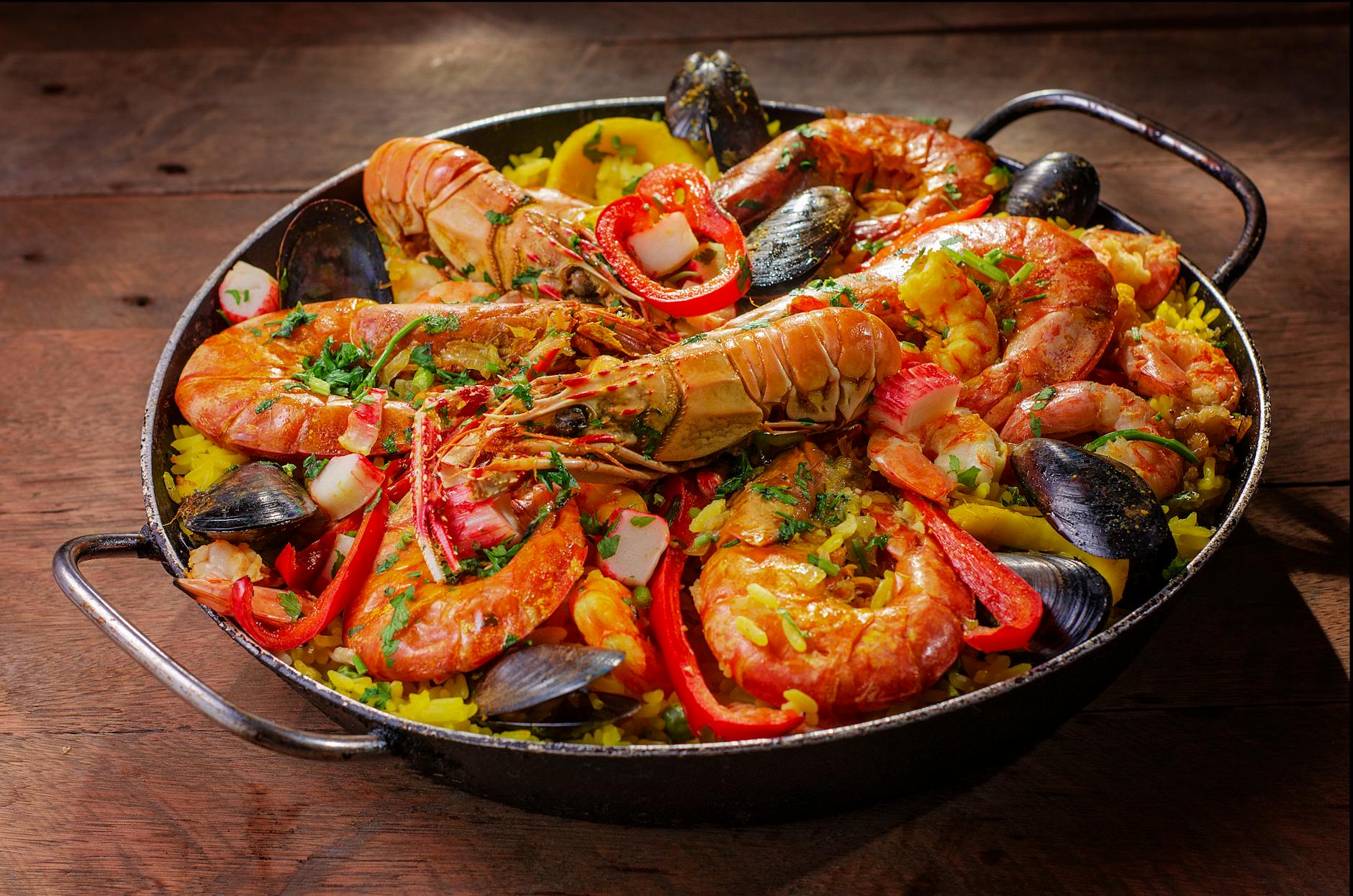
There is nothing like a big pan of Spanish seafood paella in the middle of the table to turn an ordinary night into a mini vacation. The saffron-scented rice, sweet shrimp, and briny mussels taste like summer on the coast of Spain, but this version is streamlined enough for a relaxed weekend dinner at home.
Why You’ll Love This Recipe
- Restaurant flavor at home: Classic Spanish seafood paella with saffron, smoky paprika, and fresh seafood using easy-to-find ingredients.
- One-pan showstopper: Everything cooks in a single wide pan, making it perfect for entertaining with minimal cleanup.
- Crispy socarrat: Clear steps to get that coveted golden crust of rice at the bottom without burning.
- Flexible and seasonal: Swap in your favorite shellfish or seasonal veggies while keeping the soul of traditional paella.
Ingredients
- 3 tbsp (45 ml) olive oil (extra-virgin, divided)
- 12 large (about 300 g) shrimp (peeled and deveined, tails on if possible)
- 1 lb (450 g) mussels (scrubbed and debearded)
- 8 oz (225 g) calamari rings (cleaned squid, sliced into rings)
- 8 oz (225 g) firm white fish (such as cod or hake, cut into bite-size pieces)
- 2 tsp (4 g) smoked Spanish paprika (pimentón ahumado, not hot paprika)
- 1/2 tsp (0.25 g) saffron threads (lightly crumbled)
- 4 cloves garlic (finely minced)
- 1 medium (about 150 g) yellow onion (finely chopped)
- 1 large (about 150 g) red bell pepper (diced)
- 2 medium (about 240 g) tomato (ripe, grated or very finely chopped)
- 2 cups (380 g) paella rice (short-grain like Bomba or Calasparra)
- 1/2 cup (120 ml) dry white wine (optional but recommended)
- 4 1/2 cups (1.05 L) seafood or fish stock (low-sodium, warmed)
- 1 1/2 to 2 tsp (9-12 g) salt (to taste, divided)
- 1/2 tsp (1 g) black pepper (freshly ground)
- 1 cup (140 g) frozen peas (no need to thaw)
- 1/4 cup (10 g) fresh parsley (chopped, plus extra for serving)
- 1-2 lemon (cut into wedges for serving)
- 1/4 tsp (0.5 g) optional red pepper flakes (for a gentle heat, not traditional but tasty)
Instructions
- Warm the stock: In a medium saucepan, add the seafood or fish stock, saffron threads, and 1/2 teaspoon (3 g) of salt. Bring just to a simmer over low heat, then keep warm on the lowest setting so the liquid is hot but not boiling when you add it to the rice.
- Prep the seafood: Pat the shrimp, mussels, calamari, and white fish dry with paper towels. Season the shrimp and fish lightly with a pinch of salt and pepper. Discard any mussels with broken shells or that do not close when tapped.
- Sear the shrimp: In a large 13-15 inch (33-38 cm) paella pan or wide heavy skillet, heat 2 tablespoons (30 ml) olive oil over medium-high heat. Add the shrimp in a single layer and cook 1-2 minutes per side until just turning pink but not fully cooked. Transfer to a plate and set aside.
- Build the sofrito: Reduce heat to medium. Add remaining 1 tablespoon (15 ml) olive oil to the pan along with the onion and red bell pepper. Cook, stirring often, for 5-7 minutes until softened and lightly golden. Stir in the garlic and cook 30 seconds until fragrant.
- Add tomato and spices: Stir in the grated tomato, smoked paprika, and optional red pepper flakes. Cook 4-5 minutes, stirring occasionally, until the mixture thickens and darkens slightly; this concentrated base (sofrito) adds deep flavor.
- Toast the rice: Add the paella rice to the pan and stir well to coat each grain in the sofrito. Toast for 2 minutes, stirring constantly, until the rice looks slightly translucent around the edges but not browned.
- Deglaze with wine: Pour in the white wine (if using) and scrape the bottom of the pan with a wooden spoon to release any browned bits. Let the wine simmer for 1-2 minutes until mostly reduced.
- Add the stock and spread rice: Pour in the hot saffron stock, distributing it evenly. Stir once to combine, then taste the liquid and adjust seasoning with more salt if needed. Use the back of the spoon to spread the rice in an even layer across the pan. From this point on, do not stir the rice.
- Simmer the paella base: Bring the mixture to a strong simmer over medium-high heat for about 8-10 minutes, uncovered. You should see small, steady bubbles across the surface. Rotate the pan occasionally for even cooking if your burner is smaller than the pan.
- Add peas and arrange seafood: When the rice is just visible through the liquid and about two-thirds of the stock has been absorbed, scatter the peas evenly over the surface. Nestle the calamari rings and fish pieces into the rice. Arrange the mussels hinge-side down so they stand up slightly, and tuck the par-cooked shrimp on top.
- Finish cooking the rice: Reduce heat to medium-low and continue cooking without stirring for 8-10 minutes more, or until the rice is al dente and most of the liquid is absorbed. The mussels should open and the seafood should be opaque and just cooked through. Discard any mussels that do not open.
- Create the socarrat (crispy bottom): To develop the classic crispy socarrat, increase the heat to medium-high for the last 1-2 minutes. Listen for a gentle crackling sound and watch for a toasty aroma; this means the bottom is caramelizing. Do not let it burn. If you smell scorching, immediately remove the pan from the heat.
- Rest the paella: Remove the pan from the heat, cover loosely with foil or a clean kitchen towel, and let rest for 5-10 minutes. This allows the rice to finish steaming and the flavors to meld.
- Garnish and serve: Sprinkle the paella with chopped fresh parsley and arrange lemon wedges around the pan. Serve directly from the pan at the table, encouraging everyone to squeeze lemon over their portion and dig down to the socarrat.
Pro Tips & Variations
- Use the right rice: Short-grain paella rice like Bomba or Calasparra absorbs more liquid without getting mushy. If needed, you can substitute Arborio, but reduce the liquid slightly and watch the texture closely.
- Resist stirring: Once the stock is added, avoid stirring the rice. This is key to developing a distinct top layer of fluffy grains and the golden socarrat on the bottom.
- Try seasonal twists: In summer, add halved cherry tomatoes or grilled zucchini on top. In cooler months, toss in roasted red peppers or artichoke hearts for extra depth.
- Customize the seafood: Swap or add clams, scallops, or langoustines depending on what looks freshest. Just keep the overall seafood weight similar so the cooking time stays consistent.
Storage & Serving
Seafood paella is best enjoyed fresh from the pan, but leftovers can be cooled completely and stored in an airtight container in the refrigerator for up to 2 days. Reheat gently in a covered skillet over medium-low heat with a splash of stock or water until the rice and seafood are warmed through; avoid high heat or microwaving for too long, which can make the seafood tough. For serving a crowd, pair this Spanish seafood paella with a simple green salad, crusty bread, and a crisp chilled white wine or sparkling water with lemon.
Nutrition (per serving)
Calories: 520 | Protein: 34g | Carbs: 58g | Fat: 15g | Fiber: 3g
Frequently Asked Questions
What is the best rice for Spanish seafood paella?
Short-grain paella rice such as Bomba or Calasparra is best because it absorbs a lot of flavorful liquid while staying separate and slightly firm. Arborio can work in a pinch, but the texture will be a bit creamier and less traditional.
Can I make Spanish seafood paella without a paella pan?
Yes. Use the widest heavy skillet you own, ideally 13-15 inches (33-38 cm) with a flat bottom. The key is a thin, even layer of rice so it cooks uniformly and you can develop a socarrat.
How do I know when the rice is done?
The rice should be al dente—tender with a slight bite in the center and no chalky core. Most of the liquid will be absorbed, and you should see small steam holes on the surface. If the liquid is gone but the rice is still firm, add a splash of hot stock around the edges and cook a few minutes more.
Can I prepare Spanish seafood paella ahead of time?
You can make the sofrito (onion, pepper, tomato, garlic, and spices) a day ahead and refrigerate it, and prep the seafood up to the same day. For the best texture and socarrat, cook the rice and finish the paella just before serving.
Is Spanish seafood paella gluten-free?
Yes, this Spanish seafood paella is naturally gluten-free as long as your stock and smoked paprika are certified gluten-free and you do not serve it with bread containing gluten.
You Might Also Like
- easy one-pan seafood dinner
- classic Spanish rice dishes
- gluten-free seafood recipes