Spanish Seafood Paella (Paella de Marisco)
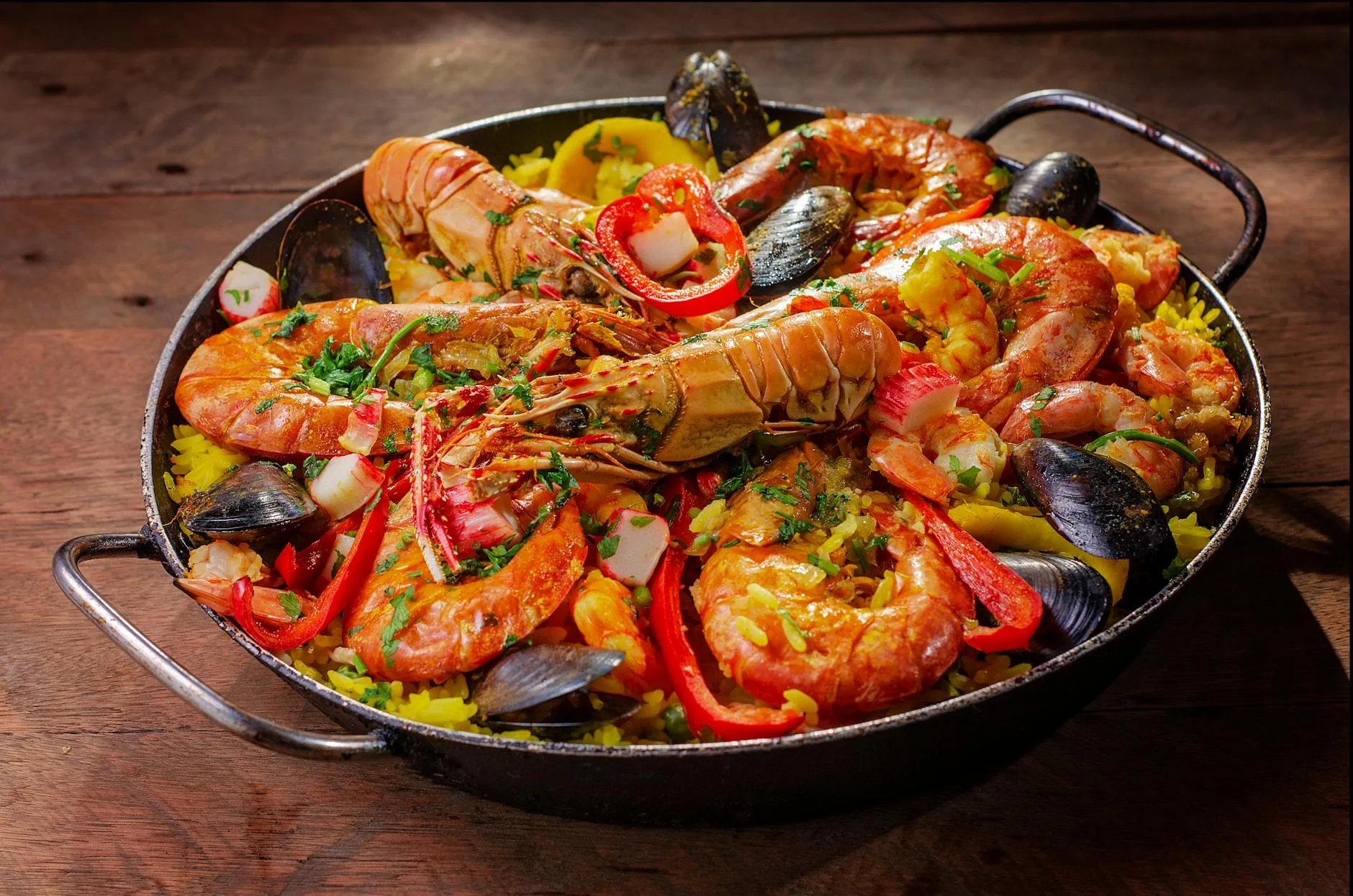
Seafood paella is cooked and served in one wide, shallow pan. Short-grain rice simmers in a saffron-scented seafood stock over a base of tomato, garlic, pepper and smoked paprika, with prawns, squid and mussels nestled on top. Unlike risotto, it isn’t stirred once the stock goes in, which lets the rice cook evenly in a thin layer and form the prized socarrat, a lightly toasted crust on the bottom.
Serves 4–6 in a 38–40 cm (15–16 in) paella pan. Allow 25 minutes of prep and about 40 minutes of cooking, plus a 5-minute rest.
A little background
Paella comes from the Valencia region of eastern Spain. The word is Valencian for the pan itself, from the Latin patella. The original paella valenciana was a farmhouse dish made over a wood fire with chicken, rabbit, flat green beans and large white garrofó beans, and sometimes snails. Along the coast, cooks made versions with fish and shellfish instead, which became paella de marisco. Seafood paella is the version most visitors to Spain know, and it’s a fixture of seaside restaurants and Sunday family lunches. Chorizo is not a traditional paella ingredient, and Valencians tend to be firm about that.
Ingredients
Stock
- 1.2 litres (5 cups) good fish or seafood stock, low in salt
- A generous pinch of saffron threads (about 0.3 g, or ½ tsp loosely packed)
Seafood
- 12 large shell-on raw prawns (about 400 g / 14 oz)
- 300 g (10 oz) cleaned squid, cut into rings, with tentacles if you have them
- 500 g (1 lb 2 oz) live mussels, scrubbed and debearded
- 200 g (7 oz) firm white fish such as monkfish or hake, in 3 cm (1 ¼ in) chunks (optional)
Sofrito and rice
- 5 tbsp (75 ml) extra-virgin olive oil
- 1 red pepper (about 150 g), diced
- 4 garlic cloves, finely chopped
- 2 large ripe tomatoes (about 300 g), halved and grated, skins discarded
- 2 tsp sweet smoked paprika (pimentón dulce)
- 350 g (1 ¾ cups) bomba rice, or another Spanish paella rice
- 1 ½ tsp fine salt, adjusted to your stock
- 100 g (⅔ cup) frozen peas or flat green beans, cut into pieces (optional)
To serve
- 2 lemons, cut into wedges
- 2 tbsp chopped flat-leaf parsley
- Allioli (garlic mayonnaise), optional
About the rice, pan and stock
Rice. Bomba is a short, round Spanish rice that absorbs about three times its volume of liquid while keeping its shape, which makes it forgiving. Calasparra is similar. Other Valencian varieties, such as Sénia and Bahía, absorb less liquid and cook a little faster; with those, start with 1 litre of stock and add more only if needed. Arborio will work in a pinch, but it releases more starch and tends to turn creamy.
The pan. A paella pan is wide and shallow, so the rice cooks in a layer about 1–2 cm (½–¾ in) deep. If you don’t have one, use your widest frying pan or a large shallow casserole. In a smaller pan, reduce the rice and stock proportionally so the layer stays thin.
Stock is the main flavour, so it’s worth using a good one. A quick option is to simmer the prawn heads and shells in 1.4 litres of water with a bay leaf, an onion and a splash of white wine for 20 minutes, then strain it.
Saffron gives colour and its distinctive aroma. Real saffron is expensive, but a little goes a long way. Avoid “paella colouring”, which adds colour but no flavour.
Smoked paprika. Spanish pimentón is made from peppers dried over oak smoke, and it’s sold sweet (dulce), bittersweet (agridulce) or hot (picante). This recipe uses sweet. Ordinary paprika gives the colour but not the smoky depth; our world pantry guide has more on where to find it.
Method
- Infuse the stock. Heat the stock until hot but not boiling. Crumble in the saffron and keep it warm on a back burner.
- Sear the seafood. Heat the oil in the paella pan over medium-high heat. Sear the prawns for about 1 minute a side, until pink, then lift them onto a plate. Add the squid and fish chunks, if using, and cook for 2 minutes, then remove those too. They’ll finish cooking later.
- Make the sofrito. Lower the heat to medium. Add the pepper to the oil and cook for 5 minutes, until soft. Add the garlic for 30 seconds, then the grated tomato. Cook, stirring often, for 6–8 minutes, until the tomato has darkened and reduced to a thick, jammy paste with the oil separating around it.
- Add the paprika and rice. Stir in the smoked paprika for just 10–15 seconds, as it burns easily. Add the rice and stir for 1–2 minutes so every grain is coated.
- Add the stock. Return the squid to the pan, pour in all the hot stock, add the salt and peas, and stir once to spread the rice evenly. Taste the liquid; it should be well seasoned. From now on, don’t stir.
- Cook on high, then low. Boil fairly briskly for 8–10 minutes, until the rice starts to appear through the surface of the liquid. Then reduce the heat to medium-low and simmer for 8–10 minutes more.
- Add the shellfish. With about 6 minutes to go, push the mussels into the rice with the hinge facing down, and lay the prawns and fish on top. The mussels open as they steam. Throw away any that stay firmly shut.
- Form the socarrat. When the liquid has been absorbed and the rice is just tender, with a slight bite, turn the heat up to medium-high for 1–2 minutes. You’ll hear the rice crackle and smell it toasting. Stop before it smells burnt.
- Rest. Take the pan off the heat, cover it loosely with a clean tea towel or foil and leave for 5 minutes. Scatter over the parsley and serve straight from the pan, with lemon wedges and allioli.
Cooking evenly on a home hob
A big paella pan is wider than most burners, so the middle can cook faster than the edges. Move and turn the pan every couple of minutes so each part sits over the heat in turn, or straddle it across two burners. An alternative is to finish it in the oven. After the 8–10 minutes of boiling in step 6, transfer the pan to an oven heated to 200°C (400°F), or 180°C (350°F) fan, for 12–15 minutes, adding the shellfish halfway through. Then return it to the hob for the socarrat.
Using a different size of pan
Paella is scaled to the pan rather than to the number of people, because the rice has to stay in a thin layer. The recipe above is for a 38–40 cm (15–16 in) pan, measured across the top. For other sizes, keep roughly the same ratio of rice to stock (350 g to 1.2 litres) and the same shallow depth:
- 30 cm (12 in): 200 g (1 cup) rice and about 700 ml (3 cups) stock. Serves 2–3.
- 34 cm (13–14 in): 260 g (1 ⅓ cups) rice and about 900 ml (3 ¾ cups) stock. Serves 3–4.
- 46 cm (18 in): 475 g (2 ⅓ cups) rice and about 1.6 litres (6 ¾ cups) stock. Serves 6–8.
Scale the seafood, sofrito and saffron by the same proportion. Because the depth of rice stays the same, the cooking time barely changes, but a large pan needs more moving around over the burner. Rice varies a little between brands and harvests, so keep a ladle of hot stock or water nearby in case the rice needs it before it’s tender.
Common mistakes
- Stirring. It releases starch and turns paella into risotto. Stir once when the stock goes in, then leave it alone.
- Too deep a layer. Rice more than 2 cm deep cooks unevenly and won’t form a crust.
- Under-salted stock. Rice can’t be seasoned once it’s absorbed the stock. Taste the liquid before the rice soaks it up.
- Overcooked seafood. Searing first and adding it back at the end keeps the prawns and squid tender.
- Burnt socarrat. Toasted is good; burnt is bitter. Trust the crackling sound and the toasty smell, and lift a corner with a spoon to check.
Variations
- Paella mixta: brown 400 g (14 oz) chicken thigh pieces before the sofrito and cook as above with half the seafood, using a mix of chicken and fish stock.
- Arroz negro: add 2 sachets (8 g) of squid ink to the stock for black rice. Serve with allioli.
- Vegetable paella: use vegetable stock, artichoke hearts, green beans, peppers and chickpeas.
Leftovers
Paella is best eaten as soon as it’s rested. Refrigerate leftovers within an hour, as cooked rice and shellfish both spoil quickly at room temperature, and eat within 1 day. Reheat until piping hot in a covered frying pan with a splash of stock or water, or in the microwave. The rice will be softer, but still good. Cooked rice needs particular care; our make-ahead, storage and freezing guide explains why.
Serving ideas
In Spain, paella is a midday meal, brought to the table in its pan for everyone to share. A simple green or tomato salad is all it needs, perhaps after a few tapas such as olives, almonds and pan con tomate. Our Mediterranean chickpea salad makes a good starter. For dessert, a light fruit salad is traditional, or for something richer, our chocolate lava cakes can be prepared ahead and go into the oven as you sit down to eat.
Common questions
Can I use frozen seafood? Yes. Thaw prawns and squid overnight in the fridge and pat them dry before searing. Frozen mussels are often sold already cooked, so check the packet: if they’re cooked, tuck them in for just the last 2–3 minutes to heat through, or they’ll turn rubbery.
Should I cover the pan while the rice cooks? No. The stock needs to evaporate as the rice absorbs it, and a lid traps steam, softens the top layer and stops the socarrat forming. Only cover it loosely for the 5-minute rest at the end.
The liquid has gone but the rice is still hard. What now? Sprinkle a few tablespoons of hot stock or water over the hard areas, cover just those areas loosely with foil and cook on low for 3–5 minutes. This usually happens when the heat was too high or the pan wasn’t moved, so one part dried out before the rest.
Can I make any of it ahead? The rice itself needs to be cooked just before eating, but the prep doesn’t. Make the stock a day ahead and keep it in the fridge, and the sofrito up to 2 days ahead. Clean the mussels and prepare the squid in the morning, then keep them covered and chilled.
Spanish Seafood Paella (Paella de Marisco)
Ingredients
Stock
- 1.2 litres (5 cups) low-salt fish or seafood stock
- a generous pinch of saffron threads (about 0.3 g)
Seafood
- 12 large shell-on raw prawns (about 400 g / 14 oz)
- 300 g (10 oz) cleaned squid, in rings
- 500 g (1 lb 2 oz) live mussels, scrubbed and debearded
- 200 g (7 oz) monkfish or hake chunks (optional)
Sofrito and rice
- 5 tbsp (75 ml) extra-virgin olive oil
- 1 red pepper (about 150 g), diced
- 4 garlic cloves, finely chopped
- 2 large tomatoes (about 300 g), grated, skins discarded
- 2 tsp sweet smoked paprika (pimentón dulce)
- 350 g (1 ¾ cups) bomba rice
- 1 ½ tsp fine salt, adjusted to the stock
- 100 g (⅔ cup) peas or flat green beans (optional)
To serve
- 2 lemons, in wedges
- 2 tbsp chopped parsley
- allioli (optional)
Instructions
- Heat the stock and add the saffron. Keep warm.
- Heat the oil in the paella pan over medium-high heat. Sear the prawns 1 minute a side and remove. Cook the squid and fish 2 minutes and remove.
- Over medium heat, cook the pepper 5 minutes, add the garlic for 30 seconds, then the grated tomato for 6–8 minutes until jammy.
- Stir in the paprika for 10–15 seconds, then the rice for 1–2 minutes.
- Return the squid, add all the hot stock, the salt and peas, stir once to spread evenly, and don’t stir again.
- Boil 8–10 minutes, then simmer on medium-low 8–10 minutes.
- With 6 minutes to go, push in the mussels hinge-down and lay the prawns and fish on top.
- When the rice is just tender and the liquid absorbed, raise the heat for 1–2 minutes until the rice crackles to form the socarrat.
- Cover loosely and rest 5 minutes. Serve with parsley, lemon and allioli.
Notes
- Bomba absorbs about three times its volume of stock. With Sénia or Bahía rice, start with 1 litre.
- Keep the rice layer 1–2 cm (½–¾ in) deep. Scale down rice and stock for a smaller pan.
- On a small burner, rotate the pan often, straddle two burners, or finish in a 200°C (400°F) oven for 12–15 minutes.
- Discard any mussels that don’t open.
- Refrigerate leftovers within an hour and eat within 1 day.
Photo: Marcelo Verfe on Pexels