Homemade Margherita Pizza Dough
There is nothing quite like a classic margherita pizza made with a dough you mixed yourself. This homemade margherita pizza dough is thin in the center, puffy on the edges, and surprisingly simple to master, even if you’re new to yeast. Make it once for pizza night and you may never go back to delivery.
Why You’ll Love This Homemade Margherita Pizza Dough Recipe
- Restaurant-style texture at home: Light, chewy crust with crisp edges that rivals wood-fired pizzerias.
- Simple pantry ingredients: Just flour, water, yeast, salt, and olive oil—no special equipment required.
- Flexible timing: Make it the same day or cold-ferment the dough overnight for even better flavor.
- Perfect base for margherita: Designed for fresh mozzarella, tomatoes, and basil so the crust stays sturdy, not soggy.
Ingredients
- 3/4 cup (180ml) warm water (around 100-110°F / 38-43°C)
- 2 1/4 tsp (7g) active dry yeast (one standard packet)
- 1 tsp (4g) sugar (helps activate the yeast)
- 2 1/2 to 2 3/4 cups (300-340g) bread flour (plus extra for dusting; use 00 flour if available)
- 1 1/4 tsp (7g) fine sea salt (for flavor and gluten strength)
- 1 1/2 tbsp (20ml) extra-virgin olive oil (plus more for greasing the bowl)
- 2 tbsp (15-20g) semolina or cornmeal (for dusting the peel or pan)
- 1 tsp (5ml) optional honey (adds a touch of flavor and browning)
Instructions
- Proof the yeast: In a medium bowl or the bowl of a stand mixer, combine the warm water, active dry yeast, and sugar. Stir gently and let sit for 5–10 minutes until the surface looks foamy and creamy. If there is no foam, the yeast is likely dead—start again with fresh yeast.
- Mix the dry ingredients: In a separate large bowl, whisk together 2 1/2 cups (300g) of bread flour and the fine sea salt until evenly combined. This helps the salt disperse so it does not directly hit the yeast in a high concentration.
- Form the dough: Add the olive oil and optional honey to the yeast mixture, then add about two-thirds of the flour mixture. Stir with a wooden spoon or use the dough hook on low speed until a shaggy dough forms. Gradually add more of the remaining flour, a few tablespoons at a time, until the dough comes together and pulls away from the sides of the bowl. It should be soft, slightly tacky, but not overly sticky.
- Knead the dough: Turn the dough out onto a lightly floured surface, or keep it in the stand mixer fitted with a dough hook. Knead by hand for 8–10 minutes or by mixer on medium-low speed for about 6 minutes, until smooth, elastic, and slightly springy. If the dough is very sticky, dust lightly with more flour, but avoid adding too much or the crust will be dense.
- First rise: Lightly oil a clean bowl with olive oil. Shape the dough into a ball and place it in the bowl, turning once to coat in oil. Cover tightly with plastic wrap or a clean kitchen towel. Let rise at warm room temperature for 60–90 minutes, or until doubled in size. If your kitchen is cool, place the bowl in an unheated oven with the light on to encourage rising.
- Optional cold ferment for extra flavor: For deeper, pizzeria-style flavor, refrigerate the covered risen dough for 12–24 hours. The next day, remove it from the fridge 45–60 minutes before shaping so it can come back toward room temperature and relax.
- Divide and pre-shape: Once the dough has doubled, gently punch it down to release excess gas. Turn it onto a lightly floured surface and divide into 2 equal pieces for two 10–12 inch (25–30cm) margherita pizzas. Shape each piece into a tight ball by tucking the edges underneath until the top is smooth.
- Bench rest: Cover the dough balls with a clean kitchen towel or lightly greased plastic wrap and let rest for 15–20 minutes. This rest allows the gluten to relax so the dough stretches easily without springing back.
- Preheat the oven and stone: Place a pizza stone or inverted baking sheet on the middle rack. Preheat the oven to its highest setting, ideally 475–500°F (245–260°C), for at least 30 minutes so the stone gets very hot. A hot surface is key for a crisp, blistered margherita crust.
- Shape the dough: Working with one dough ball at a time, lightly flour the work surface and your hands. Press the dough gently into a small disk with your fingertips, then lift and stretch it by rotating on your knuckles, letting gravity help. Aim for a thin center and a slightly thicker outer edge. Avoid using a rolling pin, which can press out the air bubbles and make the crust dense.
- Transfer to peel or pan: Dust a pizza peel or a flat baking sheet with semolina or cornmeal to prevent sticking. Transfer the shaped dough to the peel, adjusting the circle so there are no tears. If using a baking sheet instead of a stone, lightly grease it and sprinkle with a little semolina or flour before adding the dough.
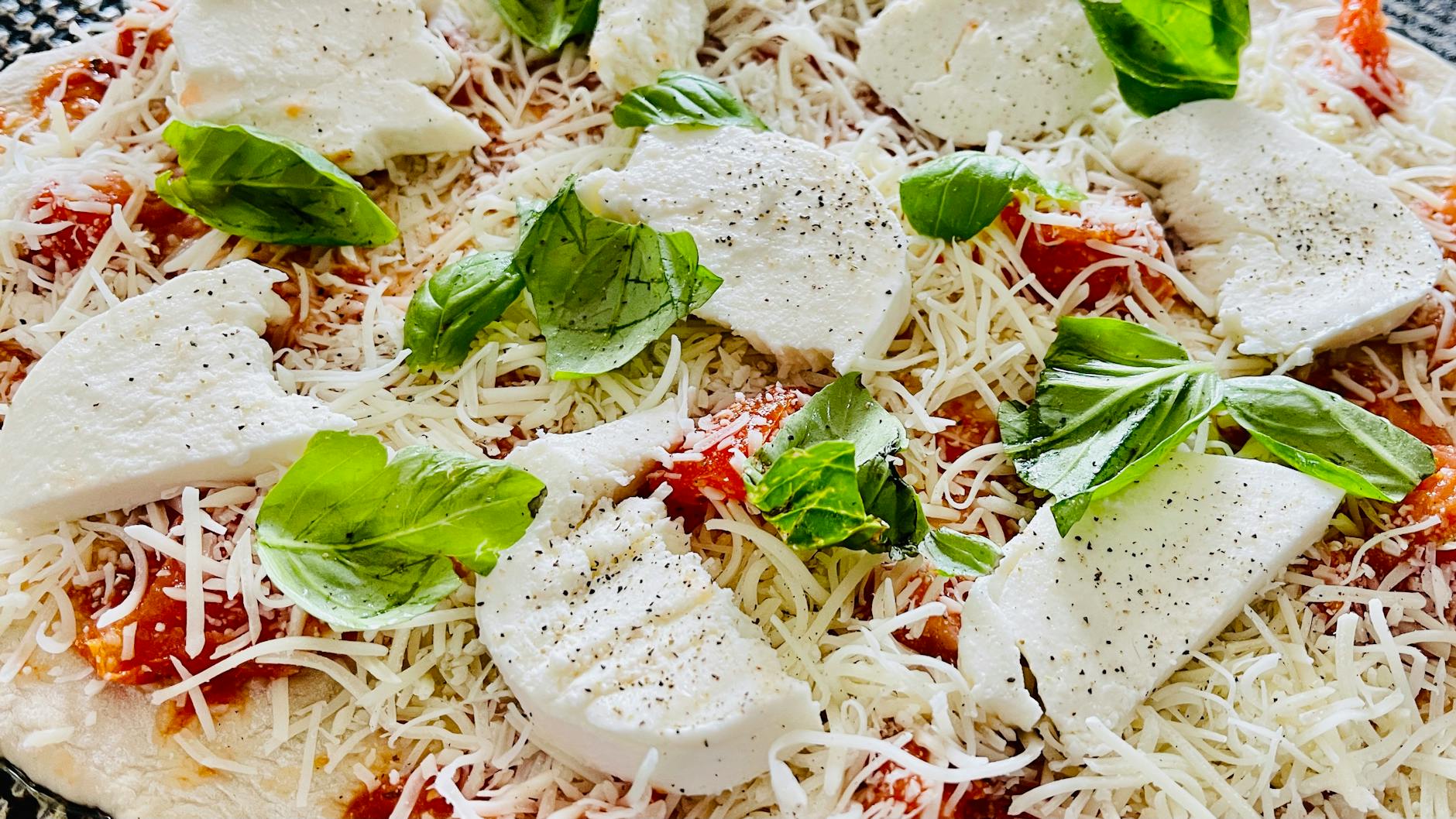
- Top for margherita: Add a thin layer of tomato sauce or crushed canned San Marzano tomatoes, leaving a border around the edges. Scatter sliced fresh mozzarella and a drizzle of olive oil. Keep toppings light so the dough bakes through and stays crisp under the cheese.
- Bake: Slide the pizza onto the preheated stone or place the pan in the hot oven. Bake for 10–14 minutes, depending on your oven, until the crust is puffed with golden brown spots and the cheese is melted and bubbly with a few charred edges.
- Finish and serve: Remove the pizza from the oven and immediately top with fresh basil leaves and a light drizzle of olive oil. Let cool for 2–3 minutes, slice, and serve hot. Repeat with the second dough ball and remaining toppings.
Pro Tips & Variations
- Choose the right flour: Bread flour or Italian 00 flour will give you the classic margherita chew and airy crust; all-purpose flour works in a pinch but may be slightly less elastic.
- Hydration matters: If the dough feels dry or tough, add 1–2 teaspoons of water at a time; if it is very sticky, dust with flour sparingly. A slightly tacky dough bakes into a lighter crust.
- Try an overnight rise: For a weekend or date-night pizza, refrigerate the dough for up to 48 hours. The slow fermentation develops a deeper, more complex flavor that pairs beautifully with simple margherita toppings.
- Make ahead and freeze: After the first rise, portion the dough into balls, oil lightly, and freeze in airtight bags for up to 3 months. Thaw in the fridge overnight, then bring to room temperature before stretching and baking.
Storage & Serving
If you have leftover dough, lightly coat it with olive oil, place it in an airtight container, and refrigerate for up to 3 days. Let it sit at room temperature for 30–45 minutes before shaping so it stretches easily. Baked margherita pizza slices keep in the refrigerator for 3–4 days; reheat on a hot skillet or in a 400°F (200°C) oven for 5–8 minutes until the crust crisps back up. For longer storage, freeze baked slices in a single layer, then transfer to a freezer bag and store for up to 2 months. Serve this crust with classic margherita toppings—tomatoes, fresh mozzarella, basil, and a drizzle of good olive oil—or use it as a base for seasonal variations with summer tomatoes or roasted winter vegetables.
Nutrition (per serving)
Calories: 320 | Protein: 12g | Carbs: 40g | Fat: 10g | Fiber: 4g
Frequently Asked Questions
Can I use instant yeast instead of active dry yeast?
Yes. Replace the active dry yeast with the same amount of instant yeast. Skip the proofing step and mix the instant yeast directly with the flour and salt, then add the warm water and olive oil and proceed as directed.
Why is my pizza dough not rising?
If your dough does not rise, the yeast may be expired, the water too hot or too cold, or the room temperature too cool. Make sure the yeast foams during proofing, use warm—not hot—water, and let the dough rise in a warm, draft-free spot.
Can I make this dough without a stand mixer?
Absolutely. This homemade margherita pizza dough is easy to mix by hand. Use a wooden spoon to bring the dough together, then knead on a lightly floured surface for 8–10 minutes until smooth and elastic.
What is the best thickness for margherita pizza dough?
Margherita pizza is traditionally thin in the center with a slightly puffed outer edge. Aim for a 10–12 inch (25–30cm) circle from each dough ball, with the center about 1/8–1/4 inch (3–6mm) thick so it cooks quickly and stays light.
Can I grill this margherita pizza dough?
Yes. Preheat the grill to medium-high and oil the grates. Grill one side of the stretched dough for 2–3 minutes, flip, quickly add margherita toppings to the grilled side, then close the lid and cook until the cheese melts and the crust is cooked through.
You Might Also Like
- easy homemade pizza night
- classic Italian dinner recipes
- beginner friendly yeast dough