Classic British Fish and Chips
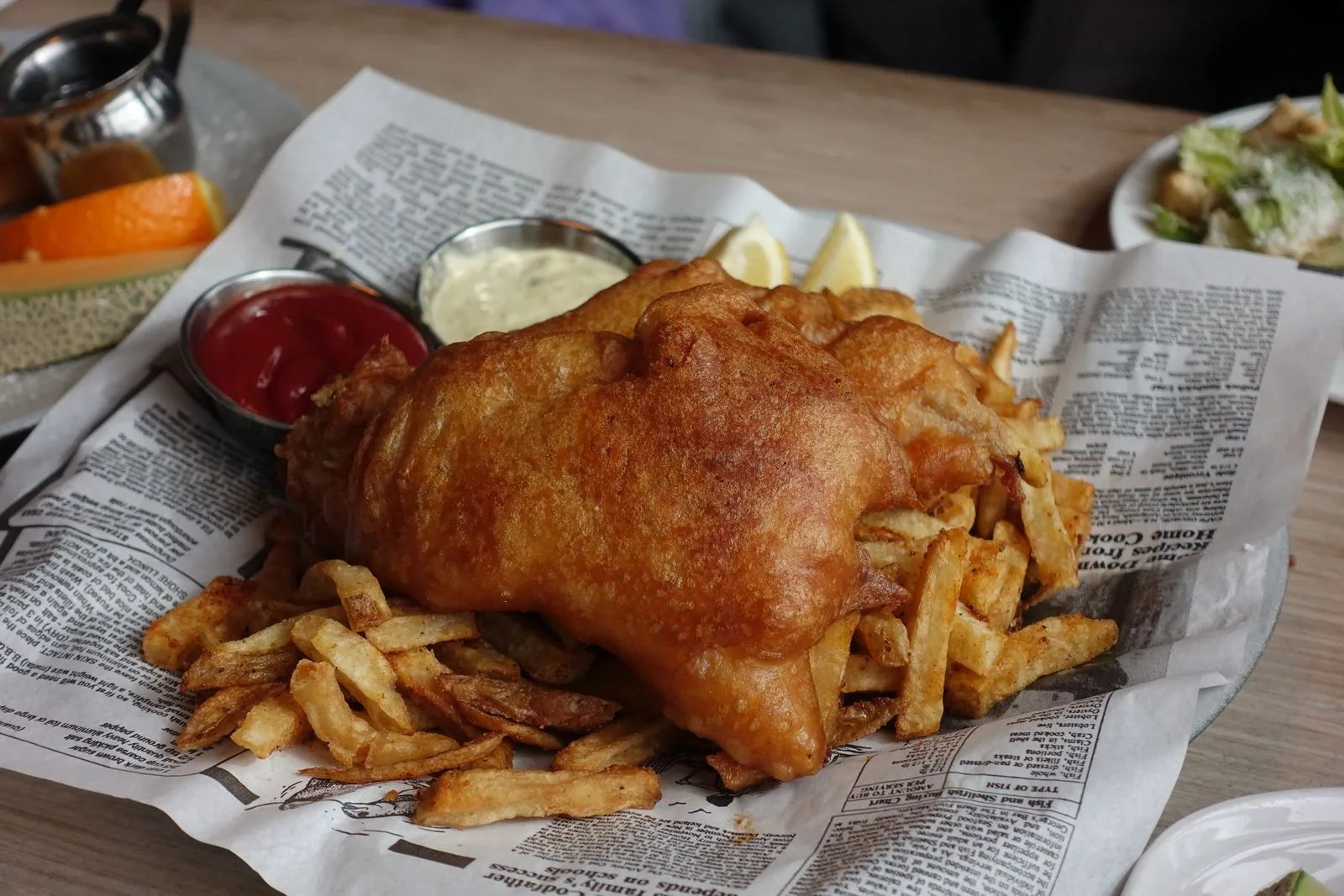
Proper fish and chips needs three things: thick chips that are fluffy inside and crisp outside, a light, crackly batter that clings to the fish, and fish that’s just cooked, moist and flaking into big white flakes. At home, the key is controlling the oil temperature. This recipe uses the chip shop’s method of cooking the chips twice, plus a cold beer batter, with timings and temperatures for each stage.
Serves 4. Allow about 30 minutes of prep, plus 30 minutes soaking the potatoes, and a little over an hour of parboiling and frying in batches.
A short history
Fried fish and chips arrived in Britain by different routes. Fish fried in batter is usually traced to the Sephardic Jewish community in London, who fried fish to eat cold on the Sabbath. Fried potatoes were being sold in the industrial north of England by the mid-19th century. The first shops to sell the two together opened in the 1860s, with both London and Lancashire claiming the first one. By the early 20th century there were tens of thousands of chip shops across Britain, and fish and chips had become a national dish. Cod and haddock remain the classic fish, wrapped in paper, with salt and malt vinegar.
Ingredients
Chips
- 1 kg (2 lb 3 oz) floury potatoes, such as Maris Piper, King Edward or russet
- Fine salt and malt vinegar, to serve
Fish and batter
- 4 thick skinless, boneless white fish fillets, 150–170 g (5–6 oz) each and about 2.5 cm (1 in) thick
- 200 g (1 ½ cups plus 2 tbsp) plain (all-purpose) flour, plus 30 g (¼ cup) for dusting
- 50 g (6 tbsp) cornflour (cornstarch)
- 1 tsp baking powder
- 1 tsp fine salt, plus extra for the fish
- 330 ml (1 ⅓ cups) very cold lager or sparkling water
For frying
- About 2 litres (2 quarts) neutral oil with a high smoke point, such as sunflower, groundnut or rapeseed, or beef dripping for a traditional flavour
Quick mushy peas
- 300 g (2 cups) frozen garden peas or petits pois
- 15 g (1 tbsp) butter
- 2 tbsp chopped mint (optional)
- Salt, pepper and a squeeze of lemon
Tartare sauce
- 120 g (½ cup) mayonnaise
- 1 tbsp finely chopped gherkins
- 1 tbsp chopped capers
- 1 tbsp chopped parsley or dill
- 1 tsp lemon juice
Choosing the fish and potatoes
Fish. Cod and haddock are the classics. Haddock is a little sweeter and is preferred in parts of Scotland and northern England. Hake, pollock and coley (saithe) are good, often more sustainable, alternatives. Choose thick pieces from the centre of the fillet. Thin tail pieces overcook before the batter is crisp.
Potatoes. You need a floury, high-starch potato for chips that are fluffy inside. Waxy potatoes give dense, greasy chips. Maincrop potatoes fry more evenly than new potatoes. Potatoes stored in the fridge build up sugar and brown in dark patches, so keep them somewhere cool and dark, but not refrigerated.
The method
Prepare the chips
- Peel the potatoes and cut them into chips about 1.5 cm (⅝ in) thick. Rinse in cold water until the water runs clear, then soak for 30 minutes to remove surface starch.
- Drain, then simmer in a pan of salted water for 4–6 minutes, until the edges are just starting to soften but the chips still hold together. Lift them out carefully, spread on a rack or tray and leave to steam dry and cool for 10–15 minutes. They should look dry and slightly rough on the surface.
First fry the chips
- Pour the oil into a large, deep, heavy pan, no more than one-third full, or use a deep fryer. Heat it to 140°C (285°F), using a thermometer.
- Fry the chips in 2 or 3 batches for 6–8 minutes, until they’re soft and pale, with a slight skin, but not coloured. Drain on a rack. They can now wait for up to an hour.
Fry the fish
- Heat the oven to 120°C (250°F) and put a wire rack on a baking tray inside.
- Whisk the 200 g flour, cornflour, baking powder and salt in a bowl. Just before frying, whisk in the very cold lager until smooth and about as thick as double cream. A few small lumps are fine. Don’t make the batter ahead; the bubbles fade.
- Heat the oil to 180°C (355°F). Pat the fish completely dry, season lightly with salt and dust it with the extra flour, shaking off the excess.
- Dip a piece of fish in the batter, let the excess drip off for a few seconds, then lower it into the oil away from you, holding it by one end for 2–3 seconds so it starts to set before you let go. Fry 1 or 2 pieces at a time for 5–7 minutes, turning once, until deep golden and crisp. The fish should be opaque throughout and reach 63°C (145°F) in the thickest part.
- Lift the fish onto the rack in the oven. Bring the oil back to 180°C (355°F) before the next batch.
Second fry the chips
- Heat the oil to 190°C (375°F). Fry the chips in batches for 2–4 minutes, until deep golden and crisp. Drain, then toss in a bowl with plenty of salt.
Peas and sauce
- While the chips are on their first fry, cook the peas in boiling water for 3 minutes, drain and roughly mash with the butter, mint, salt, pepper and lemon. Mix all the tartare sauce ingredients in a small bowl.
A timing plan
Fish and chips at home is mostly about doing things in the right order, with the oil moving up in temperature as you go. This is the sequence that gets everything to the table hot at the same time:
- About 2 hours before eating: cut, rinse and soak the chips. Make the tartare sauce and refrigerate it. Put the lager in the coldest part of the fridge.
- After 30 minutes: parboil the chips and leave them to steam dry. Start heating the oil to 140°C (285°F).
- First fry: fry the chips in batches and leave them on a rack. Cook and mash the peas while they fry, and keep them covered.
- Fish: heat the oven to 120°C (250°F) with a rack inside. Bring the oil up to 180°C (355°F), mix the batter and fry the fish, one or two pieces at a time, moving each piece to the oven as it’s done.
- Second fry: raise the oil to 190°C (375°F), fry the chips until crisp, salt them and serve at once.
The fish waits in the oven while the chips have their second fry, so keep that last stage quick. If you’re converting oven settings or cup measures, our kitchen conversions guide has the tables.
Frying safely at home
Use a heavy, deep pan on a back burner, filled no more than one-third full, and a thermometer clipped to the side. Never leave hot oil unattended. Lower food in gently with a spider or slotted spoon. Keep a lid or baking tray nearby: if the oil catches fire, turn off the heat and cover the pan to smother it. Never use water on an oil fire. Let the oil cool completely before moving it. Once cooled, strained oil can be reused once or twice for more frying.
Common mistakes
- Oil too cool. Batter soaks up oil and goes pale and greasy. Check the temperature before every batch.
- Overcrowding. Too many pieces drop the temperature sharply. Fry in small batches.
- Wet fish. Batter slides off moisture. Dry the fish thoroughly and dust it with flour.
- Warm batter. Cold batter hitting hot oil is what makes it crisp. Keep the lager in the fridge until the last moment.
- Draining on paper. Paper towels trap steam underneath, so the bottom softens. A wire rack keeps everything crisp.
- Skipping the first chip fry. Chips fried once at high heat brown before they’re cooked through.
Substitutions
- Alcohol-free: sparkling water makes an equally light batter. A splash of vinegar adds a little of the flavour beer brings.
- Gluten-free: use a gluten-free plain flour blend with the cornflour and gluten-free beer or sparkling water. Rice flour also gives an especially crisp batter.
- Oven chips: after parboiling and drying, toss the chips in 3 tbsp oil and roast at 220°C (425°F), or 200°C (400°F) fan, for 35–45 minutes, turning once, until golden.
Make ahead and reheating
Battered fish is best eaten straight away. The chips can be par-fried (the first fry) up to 2 hours ahead and finished just before serving. Leftovers keep in the fridge for 1 day. Reheat both on a rack in a 200°C (400°F) oven for 10–12 minutes, or in an air fryer at 190°C (375°F) for 5–6 minutes, until hot and crisp again. The microwave makes them soggy. Our make-ahead, storage and freezing guide has more on reheating fried food.
How to serve it
The traditional chip-shop plate is fish and chips with salt and malt vinegar, a wedge of lemon, mushy peas and tartare sauce, often with a slice of buttered bread and a mug of tea. Curry sauce and gravy are popular in some regions, and pickled onions or gherkins are often offered at the counter. For another British comfort-food classic, try our vegan lentil shepherd’s pie. If you enjoy the double-fry method, our crispy Korean fried chicken uses the same idea for an extra-crisp coating.
Common questions
Can I make fish and chips in an air fryer? Not with this batter. A wet batter drips through the basket before it sets. For an air-fryer version, coat the fish in flour, beaten egg and panko breadcrumbs, spray it with oil and cook at 200°C (400°F) for about 10–12 minutes, turning halfway, until it reaches 63°C (145°F) inside. Parboiled, dried chips tossed in 1 tbsp oil take about 20–25 minutes at the same temperature, shaken now and then. It’s a different dish, but a good one.
Which beer is best for the batter? A cold, fizzy lager gives a light, pale, crisp batter, which is why it’s the usual choice. An ale gives a darker colour and a maltier taste. What matters most is that it’s very cold and freshly opened, so the bubbles are still there.
Why did my batter go soft after frying? Most often the oil was too cool, the pan was overcrowded, or the fish was left to drain on paper or covered while keeping warm. Steam is the enemy: keep fried food on a rack, uncovered.
What do chip shops fry in? Most use vegetable oil today. Some, particularly in the north of England, still fry in beef dripping, which gives a richer flavour. Either works at home; dripping isn’t suitable for vegetarians.
How do I get rid of the oil afterwards? Let it cool completely, then pour it into a bottle or jar with a lid. Many recycling centres accept used cooking oil; otherwise follow your local waste rules. Never pour it down the sink, where it sets and blocks drains.
Classic British Fish and Chips
Ingredients
Chips
- 1 kg (2 lb 3 oz) floury potatoes (Maris Piper, King Edward or russet)
- fine salt and malt vinegar, to serve
Fish and batter
- 4 thick skinless white fish fillets (cod, haddock, hake or pollock), 150–170 g (5–6 oz) each
- 200 g (1 ½ cups plus 2 tbsp) plain flour, plus 30 g (¼ cup) for dusting
- 50 g (6 tbsp) cornflour (cornstarch)
- 1 tsp baking powder
- 1 tsp fine salt, plus extra for the fish
- 330 ml (1 ⅓ cups) very cold lager or sparkling water
For frying
- about 2 litres (2 quarts) neutral high-smoke-point oil or beef dripping
Quick mushy peas
- 300 g (2 cups) frozen peas
- 15 g (1 tbsp) butter
- 2 tbsp chopped mint (optional)
- salt, pepper and lemon juice
Tartare sauce
- 120 g (½ cup) mayonnaise
- 1 tbsp chopped gherkins
- 1 tbsp chopped capers
- 1 tbsp chopped parsley or dill
- 1 tsp lemon juice
Instructions
- Cut the potatoes into 1.5 cm (⅝ in) chips, rinse and soak 30 minutes.
- Parboil in salted water for 4–6 minutes until the edges soften. Drain and steam dry for 10–15 minutes.
- Heat the oil, no more than one-third full, to 140°C (285°F). Fry the chips in batches for 6–8 minutes until soft and pale. Drain on a rack.
- Heat the oven to 120°C (250°F) with a rack on a tray inside. Make the peas and tartare sauce.
- Whisk the flour, cornflour, baking powder and salt, then whisk in the cold lager until smooth.
- Heat the oil to 180°C (355°F). Dry, season and flour the fish, dip in batter and fry 1–2 pieces at a time for 5–7 minutes, turning once, until golden and 63°C (145°F) inside. Keep warm in the oven.
- Heat the oil to 190°C (375°F) and fry the chips again for 2–4 minutes until deep golden. Salt well.
- Serve with malt vinegar, lemon, mushy peas and tartare sauce.
Notes
- Make the batter just before frying, and keep the lager very cold.
- Check the oil temperature before every batch and never leave hot oil unattended.
- Gluten-free: use a gluten-free flour blend and sparkling water or gluten-free beer.
- Oven chips: after parboiling, toss in 3 tbsp oil and roast at 220°C (425°F) for 35–45 minutes.
- Reheat leftovers on a rack at 200°C (400°F) for 10–12 minutes.
Photo: casper lin on Pexels