Authentic Italian Carbonara
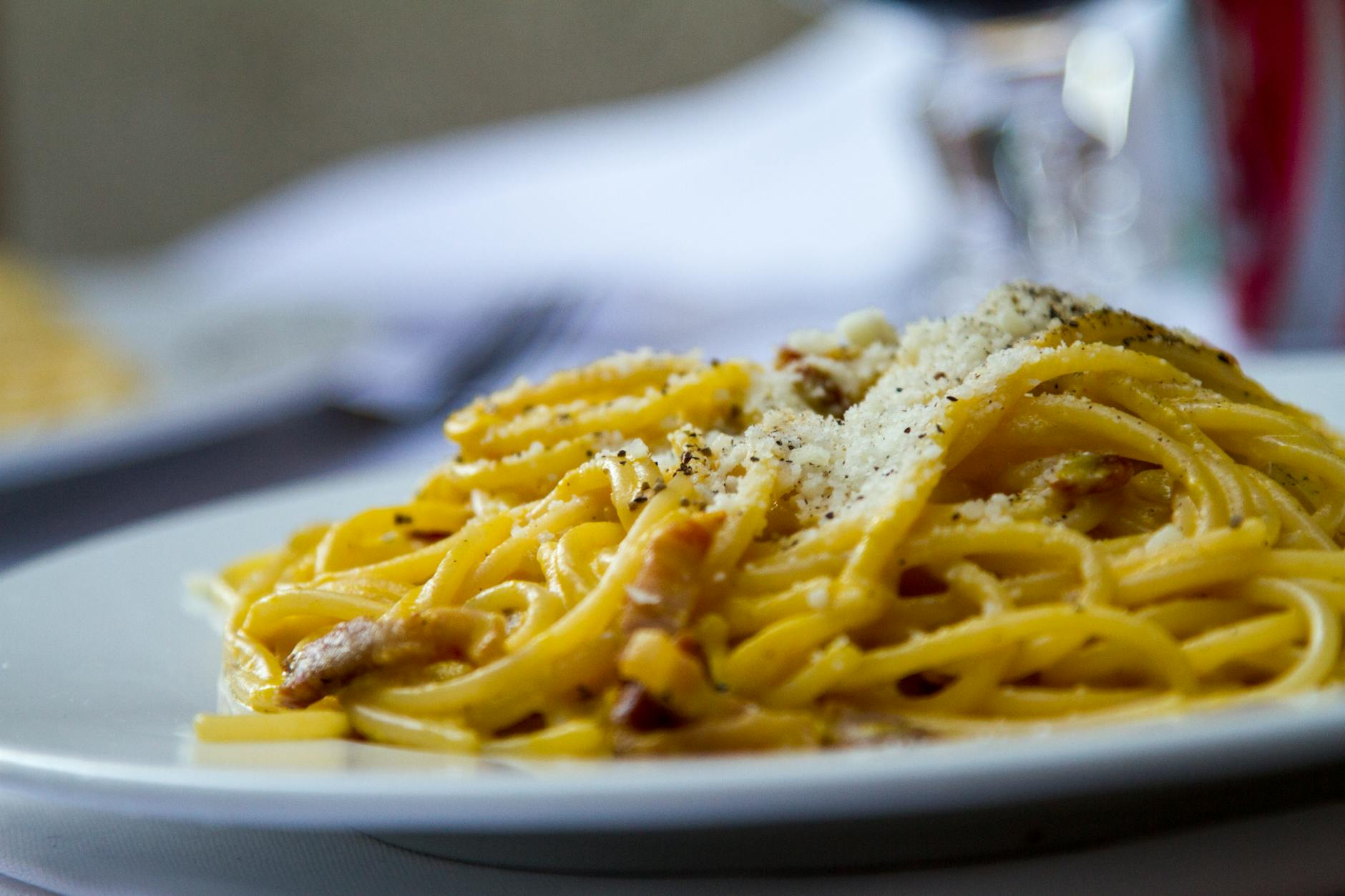
If you want the real thing, authentic Italian carbonara is all about a few simple ingredients and perfect technique. This Roman pasta is creamy without cream, rich without being heavy, and fast enough for a weeknight.
When the pasta hits the egg and cheese mixture just right, you get a silky sauce that clings to every strand. It’s the kind of recipe that feels restaurant-worthy but is easy to master at home.
Why You’ll Love This Recipe
- Truly authentic: Made the traditional Roman way with guanciale, eggs, Pecorino Romano, and black pepper.
- No cream needed: The sauce turns silky from residual heat, not heavy dairy.
- Quick to make: Dinner is on the table in about 40 minutes, including prep.
- Big flavor, simple pantry steps: A short ingredient list delivers bold, satisfying results.
Ingredients
- 12 oz (340g) Spaghetti (or tonnarelli, bucatini, or linguine)
- 5 oz (140g) Guanciale (cut into thin strips; pancetta can be used, but guanciale is traditional)
- 6 large (about 108g) Egg yolks (room temperature)
- 1 large (about 50g) Whole egg (room temperature; helps loosen the sauce)
- 1 cup finely grated (about 100g) Pecorino Romano (plus more for serving)
- 2 tsp freshly ground (about 4g) Black pepper (plus more to taste)
- 1 tbsp (15g) Kosher salt (for pasta water only; season lightly because cheese and guanciale are salty)
- 1 to 1 1/2 cups (240 to 360ml) Reserved pasta water (used to emulsify the sauce)
Instructions
- Bring a large pot of water to a boil. Add the kosher salt, then cook the spaghetti until just al dente, following the package time as a guide. Before draining, reserve 1 1/2 cups (360ml) of the starchy pasta water.
- While the pasta cooks, place the guanciale in a large skillet over medium heat. Cook for 6 to 8 minutes, stirring often, until the fat renders and the pieces are crisp and golden. Turn off the heat and keep the rendered fat in the pan.
- In a medium bowl, whisk together the egg yolks, whole egg, Pecorino Romano, and black pepper until thick and smooth. The mixture should look like a paste rather than a thin sauce.
- Add the hot drained pasta directly to the skillet with the guanciale and toss well so the noodles are coated in the rendered fat. Let it cool for 30 to 60 seconds so the pan is hot but not scorching.
- Pour in about 1/2 cup (120ml) of the reserved pasta water and toss until the pasta starts to look glossy. Remove the pan from the heat if you have not already done so.
- Quickly add the egg and cheese mixture and toss vigorously for 1 to 2 minutes, adding more pasta water a little at a time until the sauce becomes creamy and clings to the pasta. If needed, use tongs to lift and toss the noodles continuously so the eggs do not scramble.
- Taste and adjust with more black pepper. Serve immediately with extra Pecorino Romano on top and a final grind of black pepper.
Pro Tips & Variations
- Keep the heat low: The skillet should be off the heat before the egg mixture goes in, or the sauce can scramble.
- Use enough pasta water: Starchy water is the key to a glossy, restaurant-style sauce.
- Grate the cheese finely: Fine Pecorino melts more smoothly and helps the sauce emulsify.
- For a seasonal twist: Add a few spoonfuls of pea shoots or sautéed spring peas for a lighter June dinner, but skip them for a fully traditional version.
Storage & Serving
Carbonara is best served immediately, since the sauce is at its silkiest right after tossing. If you have leftovers, store them in an airtight container in the refrigerator for up to 2 days, then reheat very gently with a splash of water over low heat. Serve with a simple green salad, roasted asparagus, or crusty bread for a full dinner.
Nutrition (per serving)
Calories: 620 | Protein: 28g | Carbs: 62g | Fat: 29g | Fiber: 3g
Frequently Asked Questions
Is authentic Italian carbonara made with cream?
No. Traditional carbonara gets its creamy texture from egg, Pecorino Romano, rendered guanciale fat, and pasta water.
Can I use pancetta instead of guanciale?
Yes, pancetta is the most common substitute, but guanciale gives the most authentic flavor and texture.
Why did my carbonara scramble?
The pan was likely too hot. Remove it from the heat before adding the egg mixture and toss quickly with pasta water to create a smooth sauce.
What pasta works best for carbonara?
Spaghetti is classic, but tonnarelli, bucatini, and linguine also work well because they hold the sauce nicely.
You Might Also Like
- how to cook pasta perfectly
- easy Italian dinner recipes
- classic Roman pasta dishes