Filipino Chicken Adobo
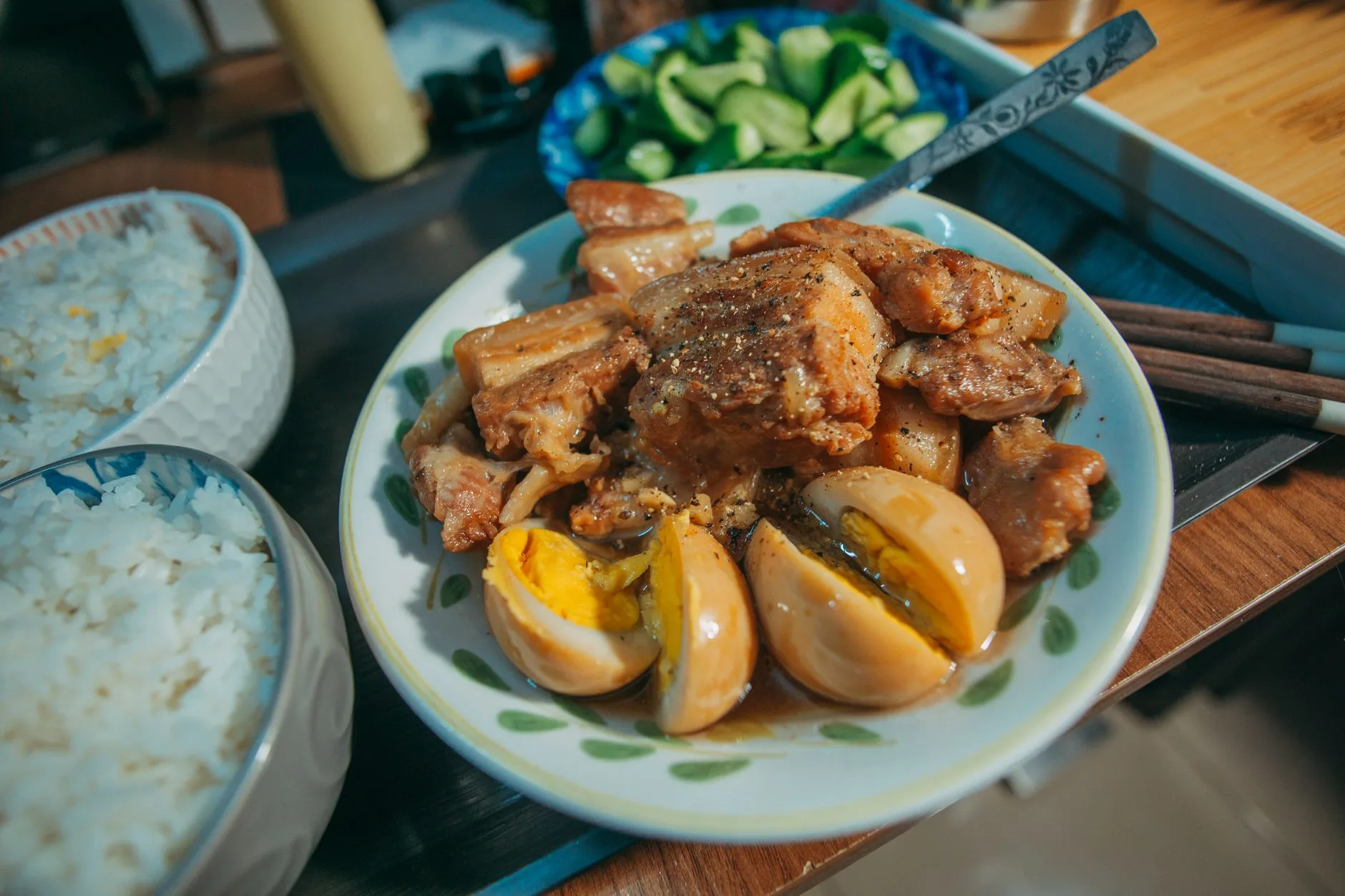
Chicken adobo is chicken braised in vinegar, soy sauce, a whole head of garlic, black peppercorns and bay leaves until the meat is tender and the sauce has reduced to a dark, glossy, sharp-and-salty glaze. It takes about an hour, most of it hands-off, uses a handful of cheap ingredients, and tastes even better the next day.
It’s often called the national dish of the Philippines, but there’s no single correct adobo. Families and regions make it differently, and arguments about the right ratio of vinegar to soy are part of the fun. This is a classic Tagalog-style version with soy sauce, browned chicken and a reduced sauce, with notes on the common variations further down.
Serves 4. Prep takes about 10 minutes, plus 30 minutes or more of marinating if you have time, and cooking takes about an hour.
A short note on where adobo comes from
Cooking meat in vinegar and salt was a way of keeping it in the warm, humid islands long before refrigeration, and long before the Spanish arrived in the 16th century. The Spanish gave the dish its name, from adobar, to marinate, but Philippine adobo has little in common with Spanish adobo. Soy sauce came later, through Chinese trade and settlement, which is why some older or regional versions use salt instead.
Ingredients
- 1.2 kg (2 ½ lb) bone-in, skin-on chicken thighs and drumsticks (about 8 pieces)
- 80 ml (⅓ cup) soy sauce, preferably Filipino
- 1 whole head of garlic (10–12 cloves, about 50 g / 1 ¾ oz), peeled and lightly crushed
- 1 tsp whole black peppercorns, lightly cracked
- 1 tbsp (15 ml) neutral oil
- 120 ml (½ cup) Filipino cane vinegar
- 120 ml (½ cup) water
- 3 dried bay leaves
- 1–2 tsp brown sugar (optional)
- Sliced spring onions and steamed rice, to serve
Choosing the vinegar and soy sauce
Vinegar is the backbone of adobo, so it’s worth getting the right one. Filipino cane vinegar (often labelled sukang maasim, or the darker, fermented sukang Iloko) is made from sugarcane and tastes mellow and faintly sweet next to Western distilled vinegar. Datu Puti is the most widely sold brand outside the Philippines; look for it in Asian grocers. Coconut vinegar (sukang tuba) is cloudier and slightly funky, and also very good here.
If you can’t find either, use rice vinegar or apple cider vinegar. Distilled white vinegar works, but it’s harsher, so start with 90 ml (6 tbsp) plus an extra 2 tbsp of water, and add more at the end if you want it.
Filipino soy sauce (Silver Swan and Datu Puti are common brands) is thinner and saltier than Japanese or Chinese soy. Kikkoman or another all-purpose soy sauce is fine. Avoid dark or sweet soy, which will make the sauce heavy and sugary.
Garlic. A whole head is not a mistake. Simmered in the sauce, crushed cloves soften and turn sweet, and some cooks fry extra sliced garlic until crisp to scatter on top.
Chicken. Bone-in thighs and drumsticks stay juicy through the braise and give the sauce body. Breast dries out quickly; see the substitutions below.
How to make it
- Marinate (optional but worth it). Put the chicken in a bowl with the soy sauce, half the garlic and the cracked peppercorns. Turn to coat and leave for 30 minutes at room temperature, or cover and refrigerate for up to 12 hours.
- Brown the chicken. Lift the chicken out of the marinade, saving the marinade, and pat the skin dry with paper towels. Heat the oil in a wide, heavy pan or Dutch oven over medium-high heat. Lay the chicken in skin-side down, in batches if needed so the pieces aren’t crowded, and cook for 5–6 minutes, without moving them, until the skin is deep golden. Turn and cook 2 minutes more, then set aside.
- Toast the garlic. Pour off all but about 1 tbsp of the fat. Lower the heat to medium, add the rest of the garlic and cook for about 1 minute, stirring, until fragrant and just turning golden.
- Add the liquids. Return the chicken skin-side up, with the saved marinade and any juices. Add the vinegar, water and bay leaves.
- Boil, then leave it alone. Bring to a boil and let it bubble uncovered for 2–3 minutes without stirring, until the sharp smell of the vinegar softens.
- Braise. Cover, turn the heat to low and simmer gently for 30 minutes, turning the chicken once halfway through.
- Reduce. Uncover, raise the heat to medium and simmer for 10–15 minutes, spooning the sauce over the chicken, until it has reduced by about half and looks glossy and slightly syrupy. The chicken is done when the meat pulls easily from the bone; thighs should read at least 74°C (165°F) near the bone, and are more tender at around 80–85°C (175–185°F).
- Taste and adjust. If it tastes too sharp, add the brown sugar or a few more minutes of simmering. If it’s too salty, add a splash of water. If it seems flat, add a teaspoon more vinegar. Remove the bay leaves and serve with the sauce spooned over.
For crisp skin, a common and very good finish: after step 7, lift the chicken out and fry it skin-side down in a separate hot pan with a little oil for 2–3 minutes, or put it under a hot grill (broiler) for 3–4 minutes. Pour the sauce over at the table.
Why “don’t stir the vinegar”?
Many Filipino cooks are taught never to stir adobo until the vinegar has boiled for a few minutes, or it will taste raw. The chemistry is debated, but the practical point holds: letting the vinegar boil uncovered briefly drives off some of the harsh, volatile acid smell before the lid goes on and traps it. It costs nothing, so we follow the rule.
Variations you’ll find around the Philippines
- Adobong puti (“white adobo”): no soy sauce. Season with about 1 ½ tsp salt instead, and the sauce stays pale, sharp and garlicky.
- Adobo sa gata: stir in 240 ml (1 cup) coconut milk for the last 10 minutes of reducing. It’s common in the Bicol region, often with chillies.
- Adobong dilaw: fresh or ground turmeric instead of soy, which turns the sauce yellow. It is especially associated with Batangas.
- Chicken and pork adobo: add 500 g (1 lb) pork belly or shoulder in 4 cm (1 ½ in) cubes in step 4, and give it 20 minutes’ head start before the chicken goes back in.
- Spicy: add 2–3 whole bird’s eye chillies or a few dried chillies with the bay leaves.
Looking for more? See our easy chicken dinner recipes from around the world, sorted by time.
Common mistakes
- Using too strong a vinegar. A harsh distilled vinegar at full strength is the usual reason adobo tastes sour rather than tangy.
- Crowding the pan when browning. The chicken steams instead of colouring and the skin stays flabby.
- Boiling hard under the lid. A rolling boil toughens the meat. Keep it at a lazy simmer.
- Skipping the reduction. If the sauce is thin and watery, keep going. It should coat a spoon.
- Adding salt. Soy sauce and reduction bring plenty. Taste only at the end.
Substitutions
- Boneless thighs: brown for 4 minutes, then braise for 20 minutes covered and 8–10 uncovered.
- Chicken breast: use bone-in breast if you can, cut into two pieces each, and braise for just 15–20 minutes covered, until it reaches 74°C (165°F).
- Gluten-free: use tamari in place of soy sauce.
- Lower sodium: use reduced-salt soy sauce and add a little more water.
Make ahead, storage and reheating
Adobo was built to keep, and the flavours settle and round out overnight, so it’s a good dish to make a day ahead. Cool it and refrigerate within 2 hours of cooking.
- Fridge: up to 4 days in a covered container. The fat sets on top; scrape some off if you like.
- Freezer: up to 3 months. Thaw overnight in the fridge.
- Reheating: warm gently in a covered pan with 2–3 tbsp water over medium-low heat until the sauce bubbles and the chicken is hot all the way through (74°C / 165°F), or crisp the skin under the grill as above.
Leftover meat makes good adobo flakes: shred it off the bone and fry in a little oil until crisp at the edges.
What to serve with it
Rice, and plenty of it, to soak up the sauce. Plain steamed jasmine rice is standard. For breakfast, Filipinos often eat leftover adobo with sinangag, garlic fried rice made from day-old rice and a lot of garlic, and a fried egg. If you like the idea of turning leftover rice into something good, our kimchi fried rice uses the same day-old rice trick.
Something fresh and sharp on the side helps: sliced tomatoes and onion, atchara (pickled green papaya), or simple stir-fried greens such as kangkong (water spinach) or bok choy with garlic.
For another Southeast Asian dinner to eat over rice, try our Thai green curry, which is just as forgiving.
Can’t find cane vinegar? Our world pantry guide lists the closest swaps.
Filipino Chicken Adobo
Ingredients
Chicken and marinade
- 1.2 kg (2 ½ lb) bone-in, skin-on chicken thighs and drumsticks (about 8 pieces)
- 80 ml (⅓ cup) soy sauce, preferably Filipino
- 1 whole head of garlic (10–12 cloves, about 50 g / 1 ¾ oz), peeled and lightly crushed, divided
- 1 tsp whole black peppercorns, lightly cracked
Braise
- 1 tbsp (15 ml) neutral oil
- 120 ml (½ cup) Filipino cane vinegar (or rice or apple cider vinegar)
- 120 ml (½ cup) water
- 3 dried bay leaves
- 1–2 tsp brown sugar (optional)
To serve
- Sliced spring onions
- Steamed jasmine rice
Instructions
- Mix the chicken with the soy sauce, half the garlic and the peppercorns. Marinate 30 minutes at room temperature or up to 12 hours in the fridge.
- Lift out the chicken, saving the marinade, and pat the skin dry. Heat the oil in a wide heavy pan over medium-high heat and brown the chicken skin-side down for 5–6 minutes without moving it, then 2 minutes on the other side, in batches if needed. Set aside.
- Pour off all but about 1 tbsp fat. Over medium heat, cook the remaining garlic for about 1 minute until fragrant and just golden.
- Return the chicken skin-side up with the saved marinade, then add the vinegar, water and bay leaves.
- Bring to a boil and let it bubble uncovered for 2–3 minutes without stirring.
- Cover and simmer on low for 30 minutes, turning the chicken once.
- Uncover and simmer over medium heat for 10–15 minutes, spooning the sauce over, until it has reduced by about half and looks glossy. The meat should pull easily from the bone (at least 74°C / 165°F; ideally 80–85°C / 175–185°F for thighs).
- Taste and adjust with brown sugar, a splash of water or a little more vinegar. Remove the bay leaves and serve over rice with spring onions.
Notes
- Vinegar: Filipino cane vinegar (such as Datu Puti) is mellow. If using distilled white vinegar, start with 90 ml (6 tbsp) plus 2 tbsp extra water.
- Crisp skin (optional): fry the braised chicken skin-side down in a hot pan for 2–3 minutes, or grill (broil) for 3–4 minutes, then pour the sauce over.
- Adobo sa gata: stir in 240 ml (1 cup) coconut milk for the last 10 minutes. Adobong puti: replace the soy sauce with about 1 ½ tsp salt.
- Gluten-free: use tamari.
- Storage: fridge up to 4 days, freezer up to 3 months. Reheat gently, covered, with 2–3 tbsp water until piping hot (74°C / 165°F).
Photo: FOX ^.ᆽ.^= ∫ on Pexels