Moroccan Zaalouk (Smoky Eggplant and Tomato Salad)
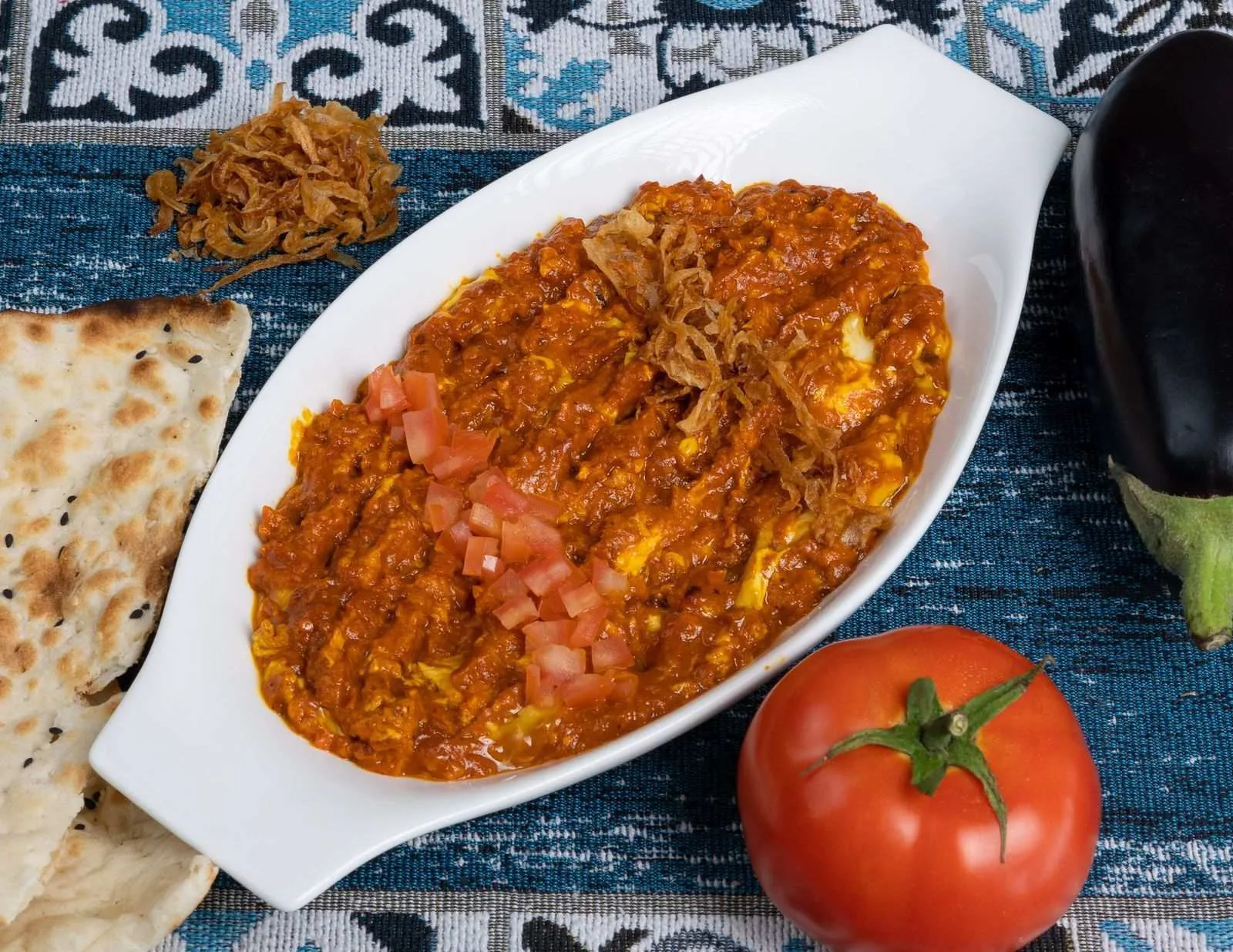
Zaalouk is a cooked eggplant and tomato salad, and it is one of the dishes most likely to be on the table when a Moroccan meal starts. It is called a salad, but it is closer to a thick, soft relish: charred eggplant mashed into tomato that has been cooked down with garlic, cumin, paprika and a generous amount of olive oil. You scoop it up with bread rather than eat it with a fork.
The version below chars the eggplant first, which gives the finished dish a gentle smoky edge. Further down there is also the all-stovetop method many home cooks use when they don’t want to stand over a flame. Both end up in the same place if you cook the mixture long enough.
Makes about 3 cups (720 ml), enough for 6 as a side. Allow 15 minutes of prep and about 45 minutes of cooking.
Where zaalouk fits on a Moroccan table
In Morocco, a lunch or dinner often opens with several small cooked salads set out together: zaalouk, taktouka (peppers and tomato), carrots with cumin, beetroot, and so on. They are made ahead, served warm or at room temperature, and eaten with khobz, the round everyday bread. Then the main dish arrives, often a tagine such as chicken tajine with apricots or lamb tagine with prunes.
Recipes vary from house to house and region to region. Some cooks add a spoon of tomato paste, some finish with lemon or vinegar, some leave out the cilantro. What stays the same is eggplant, tomato, garlic, cumin, paprika and olive oil, cooked until the mixture is thick and the oil begins to separate.
What you need
For the eggplant
- 2 medium eggplants (about 700 g / 1½ lb total)
For the tomato base
- 4 ripe medium tomatoes (about 500 g / 1 lb 2 oz), halved and grated on a box grater, skins thrown away
- 4 garlic cloves, finely grated or crushed
- 60 ml (¼ cup) olive oil, plus extra to finish
- 1½ tsp sweet paprika
- 1 tsp ground cumin, plus a pinch to finish
- ¼ tsp cayenne or hot paprika (optional)
- ¾ tsp fine sea salt, plus more to taste
- 1 tsp tomato paste, only if your tomatoes are pale or out of season
To finish
- 1 small handful flat-leaf parsley (10 g / ⅓ oz), chopped
- 1 small handful cilantro (10 g / ⅓ oz), chopped
- 1–2 tsp lemon juice or white wine vinegar (optional)
- Bread for serving: khobz, pita or any crusty loaf
You also need a gas burner, grill or oven broiler, a pair of tongs, and a wide frying pan or saucepan, about 26 cm (10 in) across. A wide pan matters because the mixture has to reduce, and it reduces faster with more surface area.
Method
1. Char the eggplant
- Prick each eggplant 4–5 times with the tip of a knife so steam can escape.
- Gas flame or grill: set the eggplants directly on the grate over a medium-high flame. Turn them with tongs every 4–5 minutes for 15–20 minutes, until the skin is black and blistered all over and the eggplant slumps when you press it.
- Oven: line a tray with foil and broil the eggplants about 10 cm (4 in) below the element for 30–35 minutes, turning every 8–10 minutes. You get less smoke flavour, but the texture is the same.
- Put the hot eggplants in a bowl and cover with a plate for 10 minutes. The trapped steam loosens the skin.
- Split each one lengthways and scrape the flesh away from the skin with a spoon. A few flecks of charred skin are fine and add flavour. Leave the flesh in a sieve for 5 minutes so the brown, bitter juice drains off, then chop it roughly.
2. Cook the tomato base
- Put the grated tomato, garlic, olive oil, paprika, cumin, cayenne (if using), salt and tomato paste (if using) in the wide pan, still off the heat. Stir together.
- Set over medium heat and simmer 10–12 minutes, stirring now and then, until the tomato no longer smells raw and has reduced to a thick, glossy sauce.
3. Add the eggplant and cook it down
- Add the chopped eggplant and half the herbs. Mash everything together with a fork or potato masher right in the pan.
- Lower the heat to medium-low and cook 12–15 minutes, stirring and mashing every couple of minutes so it doesn’t catch. It is ready when the liquid has gone, a spoon dragged across the pan leaves a clear trail, and the oil starts to pool around the edges.
- Take the pan off the heat. Stir in the rest of the herbs and the lemon juice or vinegar, if using. Taste and add salt; eggplant takes more than you expect.
- Spread on a plate, drizzle with a little more olive oil and dust with a pinch of cumin. Serve warm, at room temperature or cold, with bread.
Getting the texture right
Cook it longer than seems necessary. The most common problem with zaalouk is stopping too early, which leaves it wet and a little sour. The finished texture should be thick enough to hold its shape on bread. When the oil separates and shines at the edges of the pan, the water has cooked out.
Grate the tomatoes. Cut each tomato in half and rub the cut side against the large holes of a box grater. The pulp goes into the bowl and the skin stays in your hand. This is faster than peeling and gives a smoother base than chopping.
Drain the eggplant. The juice that runs out of roasted eggplant is bitter. Five minutes in a sieve removes most of it.
Mash, don’t blend. Zaalouk should be soft but still have some texture. A food processor turns it into a paste that is closer to a dip like baba ghanoush.
The stovetop-only method
Many Moroccan cooks never char the eggplant at all. Instead they peel it in stripes (alternating strips of skin left on), cut it into 2 cm (¾ in) cubes, and put it in the pan with the grated tomatoes, garlic, spices, olive oil and 120 ml (½ cup) water. Cover and simmer for about 20 minutes, until the eggplant is completely soft. Then uncover, mash, and cook down exactly as in step 3 until thick and the oil separates. It loses the smoky note but is easier, and it is the version you will find in a lot of family kitchens.
Serving and keeping
Serve zaalouk as one of a few small plates before a main course, or as a side with grilled meat or fish. It also works alongside chicken souvlaki or a fresh salad like this Mediterranean chickpea salad for a mezze-style spread. If you have more eggplant to use up, Greek moussaka is a very different, baked way to use it.
Keep leftovers in a covered container in the fridge for up to 4 days. Most people find it tastes better the next day, once the garlic and spices have settled. Let it come back to room temperature or warm it gently, and add a fresh drizzle of olive oil before serving. Freezing is not recommended because the eggplant goes watery when it thaws.
New to these spices? Read our Moroccan spice guide.
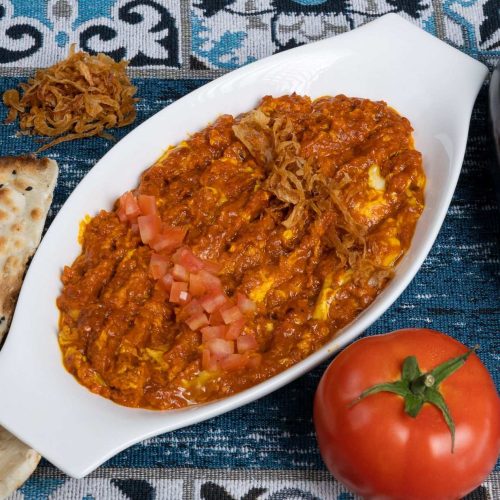
Moroccan Zaalouk
Ingredients
Eggplant
- 2 medium eggplants (about 700 g / 1½ lb total)
Tomato base
- 4 ripe medium tomatoes (about 500 g / 1 lb 2 oz), halved and grated, skins discarded
- 4 garlic cloves, finely grated or crushed
- 60 ml (¼ cup) olive oil, plus extra to finish
- 1½ tsp sweet paprika
- 1 tsp ground cumin, plus a pinch to finish
- ¼ tsp cayenne or hot paprika (optional)
- ¾ tsp fine sea salt, plus more to taste
- 1 tsp tomato paste (only if your tomatoes are pale)
To finish
- 1 small handful flat-leaf parsley (10 g / ⅓ oz), chopped
- 1 small handful cilantro (10 g / ⅓ oz), chopped
- 1–2 tsp lemon juice or white wine vinegar (optional)
- Bread (khobz or any crusty loaf), for serving
Instructions
- Prick each eggplant 4–5 times with a knife. Char directly over a gas flame or on a grill, turning with tongs every 4–5 minutes, for 15–20 minutes until the skin is black and blistered all over and the flesh collapses. Or broil on a foil-lined tray 10 cm (4 in) from the heat for 30–35 minutes, turning every 8–10 minutes.
- Put the eggplants in a bowl, cover with a plate and leave 10 minutes to steam. Split them open, scoop the flesh away from the skin with a spoon, and leave it in a sieve for 5 minutes to drain the bitter juice. Chop the flesh roughly.
- In a wide pan over medium heat, combine the grated tomato, garlic, olive oil, paprika, cumin, cayenne (if using), salt and tomato paste (if using). Simmer 10–12 minutes, stirring now and then, until the tomato loses its raw smell and reduces to a thick sauce.
- Add the chopped eggplant and half the herbs. Mash everything together with a fork or potato masher, right in the pan.
- Cook 12–15 minutes more over medium-low heat, stirring and mashing often, until the mixture is thick, the liquid has gone, and the oil starts to pool at the edges.
- Off the heat, stir in the remaining herbs and the lemon juice or vinegar (if using). Taste and adjust salt.
- Spread on a plate, drizzle with olive oil and dust with a pinch of cumin. Serve warm, at room temperature or chilled, with bread.
Notes
- Stovetop-only version (common in Moroccan homes): peel the eggplant in stripes, cut into 2 cm cubes, and simmer with the tomatoes, garlic, spices and 120 ml (½ cup) water, covered, for 20 minutes. Then uncover, mash and cook down as in step 5. Less smoky, still very good.
- Keeps 4 days in a covered container in the fridge. The flavour improves after a night. Do not freeze; the texture turns watery.
Questions people ask
Is zaalouk the same as baba ghanoush? No. Both start with roasted eggplant, but baba ghanoush is blended with tahini and lemon and served cold as a dip. Zaalouk has no tahini, is cooked a second time with tomato and spices, and is often served warm.
Do I have to peel the eggplant? For the charred method, yes; the blackened skin is scraped off. For the stovetop method, peeling in stripes is traditional, but you can leave the skin on entirely if you don’t mind a few chewy pieces.
Can I use canned tomatoes? Yes. Use 400 g (14 oz) crushed tomatoes in place of fresh and skip the tomato paste. Simmer the base a few minutes longer, as canned tomatoes are wetter.
Is it vegan? Yes, as written it is plant-based and gluten-free. Serve with gluten-free bread or crackers if needed.
Photo: Shameel mukkath on Pexels