Easy Vegan Banana Bread
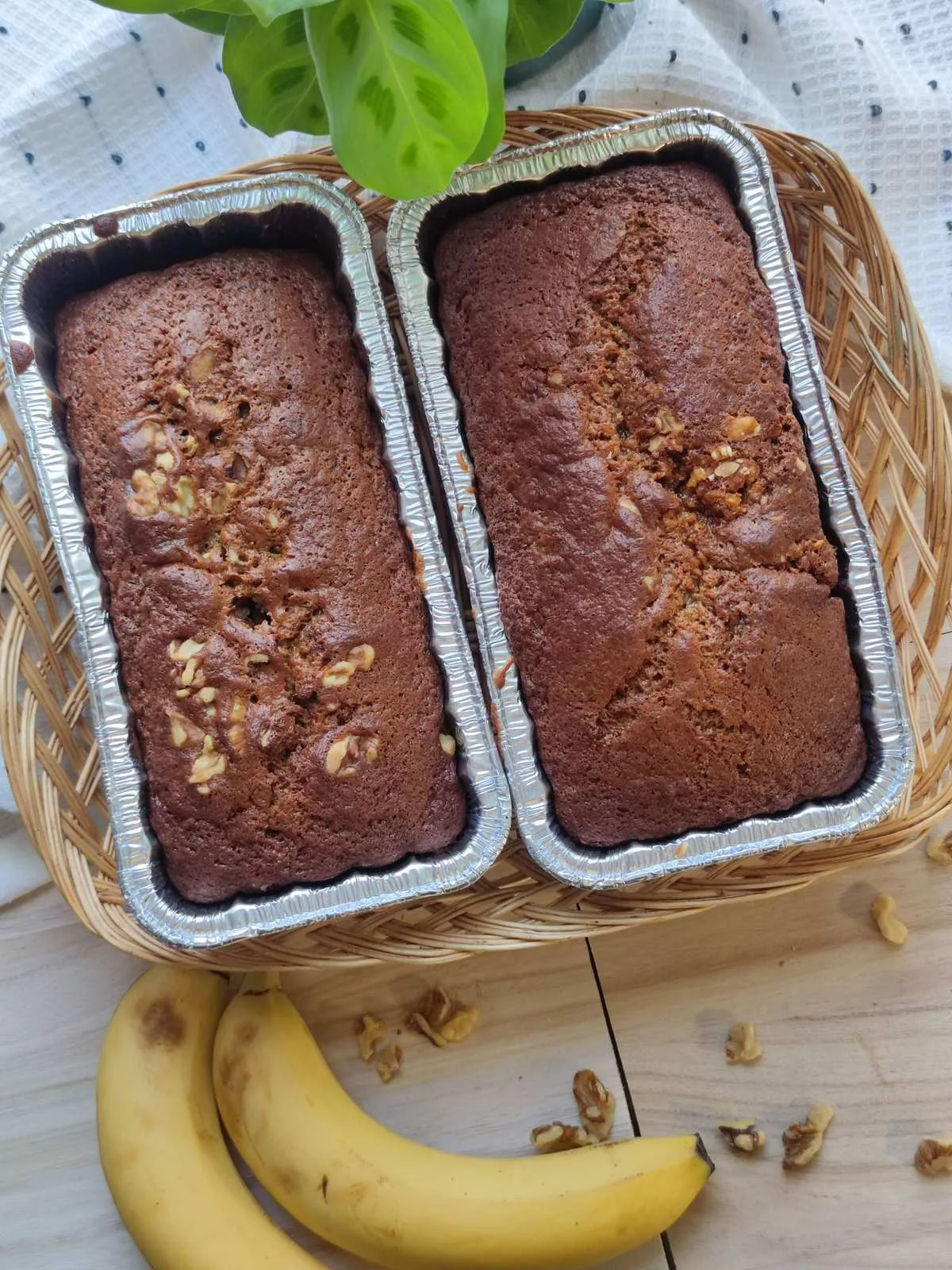
This vegan banana bread is moist, tender and full of banana flavour, with a domed, crackled top, and it’s made in one bowl without eggs or dairy. Very ripe bananas do most of the work: they sweeten the loaf, bind it in place of eggs and keep it moist for days.
Egg-free cakes are less forgiving of guesswork than ordinary ones, so this page gives weights for everything that matters, clear signs for when the batter is mixed and the loaf is baked, and what happens if your loaf tin isn’t the standard size.
Makes one 23 × 13 cm (9 × 5 in) loaf, about 10 slices. Allow about 15 minutes to mix, an hour to bake and an hour to cool.
Ingredients
- 350 g (12 oz) peeled, very ripe bananas (3 large or 4 medium), about 1 ½ cups mashed
- 110 g (½ cup, packed) light brown sugar
- 80 ml (⅓ cup) neutral oil, such as sunflower or rapeseed (canola), or melted coconut oil
- 60 ml (¼ cup) unsweetened plant milk, such as oat or soy
- 1 tsp apple cider vinegar or lemon juice
- 2 tsp vanilla extract
- 1 tsp (5 g) baking soda
- 1 tsp (4 g) baking powder
- ½ tsp (3 g) fine sea salt
- 1 tsp ground cinnamon (optional)
- 250 g (2 cups) plain (all-purpose) flour, spooned and levelled
- 75 g (⅔ cup) chopped walnuts or dairy-free dark chocolate chips (optional)
- 1 tbsp (12 g) demerara or turbinado sugar, for the top (optional)
The ingredients that matter most
Bananas. They need to be properly ripe, with skins heavily freckled or mostly brown and flesh that’s soft and fragrant. As bananas ripen, their starch turns to sugar, so a ripe banana is much sweeter and mashes into a smooth, wet purée. Under-ripe bananas give a dry, bland, pale loaf. Weigh them after peeling, since bananas vary so much in size. A little over or under 350 g is fine; much more makes the loaf heavy and gummy in the middle.
If you freeze overripe bananas, thaw them in a bowl and use the liquid that seeps out too. It’s mostly banana sugar and flavour. Ripening yellow bananas in a low oven until the skins go black softens them, but doesn’t develop the same sweetness as ripening naturally.
Flour and sugar by weight. 250 g of plain flour is 2 cups if you spoon it into the cup and level it. Scooping the cup straight into the bag packs in as much as 300 g, which is the most common cause of a dry, dense banana bread. The 110 g of brown sugar is enough for a lightly sweet loaf with ripe bananas. You can go down to 80 g if your bananas are very ripe, but sugar also keeps the crumb moist and helps it brown, so don’t cut it further.
Vinegar and baking soda. With no eggs to help lift the loaf, the leavening does more of the work. The acid in the vinegar and the bananas reacts with the baking soda for an immediate rise, and the baking powder gives a second rise in the oven. Once the wet and dry ingredients meet, the reaction starts, so get the batter into the oven promptly.
Method
- Prepare the tin and oven. Heat the oven to 175°C (350°F), or 160°C (325°F) fan, with a rack in the middle. Grease a 23 × 13 cm (9 × 5 in) loaf tin and line it with a strip of parchment that overhangs the long sides.
- Mash the bananas. In a large bowl, mash the bananas with a fork or potato masher until mostly smooth and liquid, with a few pea-sized lumps left.
- Add the wet ingredients. Add the sugar, oil, plant milk, vinegar and vanilla and whisk for about 30 seconds, until the mixture is smooth and glossy and the sugar has mostly dissolved.
- Add the leaveners. Sprinkle the baking soda, baking powder, salt and cinnamon over the surface and whisk for 15–20 seconds to spread them evenly. This is how a one-bowl method avoids pockets of baking soda, which taste soapy.
- Fold in the flour. Add the flour and fold it in with a spatula, scraping the bottom of the bowl, just until there are no dry pockets left. Stop as soon as you no longer see dry flour. A few small lumps are fine. The batter should be thick and soft, and fall from the spatula in heavy blobs rather than pour. Overmixing develops gluten and gives a tough loaf with tunnels.
- Add the extras. Fold in the nuts or chocolate with a few strokes.
- Fill the tin. Scrape the batter into the tin and level it. It should come no more than three-quarters of the way up. Scatter the demerara sugar over the top.
- Bake. Bake for 55–65 minutes. If the top is dark brown by the 40-minute mark, lay a loose sheet of foil over it.
- Check that it’s done. The loaf is ready when the top is deep golden and springs back when pressed, the crack along the middle looks dry rather than shiny and wet, and a skewer pushed into the centre comes out with a few moist crumbs but no wet batter. An instant-read thermometer in the centre should read 93–96°C (200–205°F).
- Cool. Cool in the tin on a rack for 15 minutes, then lift it out using the parchment and let it cool completely, at least 1 hour. Vegan banana bread is especially soft and gummy while warm and needs that time to set. Cut it with a serrated knife.
How tin size changes the bake
Recipes are written for one tin, but loaf tins vary more than people expect. The batter fills a 23 × 13 cm (9 × 5 in) tin about three-quarters full.
- Smaller loaf tin, 21 × 11 cm (8 ½ × 4 ½ in): the loaf is taller and takes longer to cook in the middle. Allow 65–75 minutes, cover with foil after 40 minutes, and check with a thermometer. If the batter comes more than three-quarters of the way up, bake the extra as 2–3 muffins.
- Long, narrow tins: the loaf is shallower and bakes faster. Start checking at 45 minutes.
- Square tin, 20 cm (8 in): a flat snack cake. Bake for 30–35 minutes.
- Muffins: divide between 12 lined muffin cups and bake at 190°C (375°F) for 18–22 minutes.
- Mini loaf tins: about 30–35 minutes for tins holding roughly 250 g (9 oz) of batter.
- Glass or ceramic tins heat slowly but hold heat, so the edges can brown before the middle cooks. Lower the oven to 165°C (325°F) and add about 10 minutes. Dark metal tins brown faster; check 5–10 minutes early.
Common mistakes
- Under-ripe bananas. The loaf will be pale, dry and bland. Wait for brown skins.
- Packing the flour. Weigh it, or spoon and level it.
- Overmixing. Fold, don’t beat, and stop once the flour has disappeared.
- Pulling it out too early. A sunken, gummy line through the middle means it was underbaked. Trust the skewer and the thermometer over the clock.
- Slicing it hot. It’s tempting, but the crumb won’t have set yet.
Substitutions
- Gluten-free: replace the flour with 250 g of a 1:1 gluten-free baking flour that contains xanthan gum, the same type we recommend for our gluten-free chocolate chip cookies. Let the batter rest for 15 minutes before baking, and expect a slightly denser, more fragile loaf.
- Wholemeal: swap up to half the flour for wholemeal (whole wheat) flour, and add 1 extra tbsp of plant milk.
- Oil: melted vegan butter works in place of oil. Unsweetened apple purée can replace up to half the oil, but the loaf will be less tender.
- Sugar: coconut sugar or dark brown sugar swap in gram for gram. Dark brown sugar gives a deeper, more molasses-like flavour.
- Plant milk: any unsweetened plant milk works. Water is fine in a pinch.
- Spice: add ¼ tsp ground nutmeg or ½ tsp ground ginger with the cinnamon.
Storage and freezing
- Room temperature: wrap the cooled loaf well and keep it for up to 3 days. It actually tastes better on the second day, when the moisture has spread evenly.
- Fridge: it keeps for up to a week but dries out faster, so wrap it tightly and toast or warm slices before serving.
- Freezer: wrap individual slices in parchment and put them in a freezer bag for up to 3 months. Thaw at room temperature for 30 minutes, or toast straight from frozen.
Serving ideas
A slice is good plain with coffee or tea. For breakfast, toast it and spread with peanut butter or vegan butter, or serve it with dairy-free yogurt and fresh berries. Day-old slices make an excellent base for French toast with a plant-based batter.
If you’ve got the weekend baking bug, our homemade brioche cinnamon rolls are a bigger project to try next (they aren’t vegan, as brioche uses butter and eggs).
A little background
Banana bread is a quick bread, raised with baking soda and baking powder rather than yeast. It became a fixture of American home baking in the 1930s, when bananas were cheap and widely available and chemical leaveners were standard in every kitchen. Vegan versions are an easy adaptation, because a ripe banana already does much of what an egg does in a cake.
Measuring in cups or need a different oven setting? See our kitchen conversions guide.
Easy Vegan Banana Bread
Ingredients
Wet ingredients
- 350 g (12 oz) peeled, very ripe bananas (3 large or 4 medium), about 1 ½ cups mashed
- 110 g (½ cup, packed) light brown sugar
- 80 ml (⅓ cup) neutral oil or melted coconut oil
- 60 ml (¼ cup) unsweetened plant milk
- 1 tsp apple cider vinegar or lemon juice
- 2 tsp vanilla extract
Dry ingredients
- 1 tsp (5 g) baking soda
- 1 tsp (4 g) baking powder
- ½ tsp (3 g) fine sea salt
- 1 tsp ground cinnamon (optional)
- 250 g (2 cups) plain (all-purpose) flour, spooned and levelled
Optional extras
- 75 g (⅔ cup) chopped walnuts or dairy-free dark chocolate chips
- 1 tbsp (12 g) demerara or turbinado sugar, for the top
Instructions
- Heat the oven to 175°C (350°F), or 160°C (325°F) fan. Grease and line a 23 × 13 cm (9 × 5 in) loaf tin with a parchment sling.
- Mash the bananas in a large bowl until mostly smooth, with a few pea-sized lumps.
- Whisk in the sugar, oil, plant milk, vinegar and vanilla for about 30 seconds until smooth and glossy.
- Sprinkle over the baking soda, baking powder, salt and cinnamon and whisk 15–20 seconds to distribute.
- Fold in the flour just until no dry pockets remain. The batter should be thick and fall from the spatula in heavy blobs. Fold in any nuts or chocolate.
- Scrape into the tin (no more than three-quarters full), level, and sprinkle with demerara sugar.
- Bake 55–65 minutes, covering loosely with foil if very dark by 40 minutes, until the top springs back, the centre crack looks dry and a skewer comes out with moist crumbs but no wet batter (93–96°C / 200–205°F inside).
- Cool 15 minutes in the tin, lift out and cool completely on a rack, at least 1 hour, before slicing.
Notes
- Weigh the flour: scooping the cup straight into the bag can add up to 50 g and make a dense loaf.
- Tin sizes: 21 × 11 cm (8 ½ × 4 ½ in) tin 65–75 minutes, foil after 40 minutes; 20 cm (8 in) square tin 30–35 minutes; 12 muffins at 190°C (375°F) 18–22 minutes. Glass or ceramic: lower to 165°C (325°F) and add about 10 minutes. Dark metal: check 5–10 minutes early.
- Gluten-free: use 250 g 1:1 gluten-free baking flour with xanthan gum and rest the batter 15 minutes before baking.
- Sugar can go down to 80 g with very ripe bananas.
- Storage: wrapped, 3 days at room temperature or up to 1 week in the fridge; sliced and frozen up to 3 months.
Photo: Kurtz on Pexels