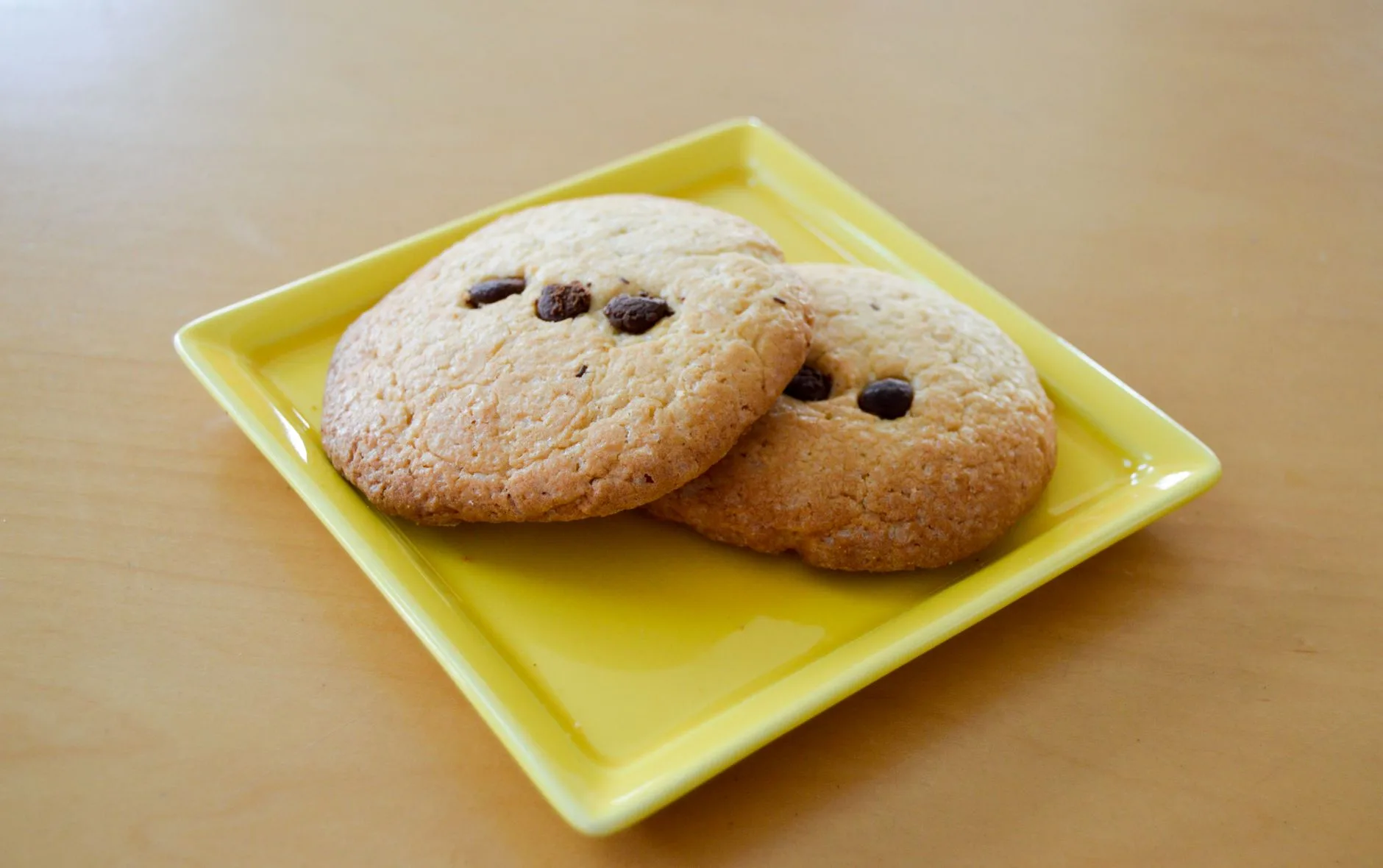
Gluten-Free Chocolate Chip Cookies
These gluten-free chocolate chip cookies have crisp, golden edges, soft and chewy middles and pools of melted chocolate, and nobody eating them should be able to tell they’re gluten-free. The recipe uses melted butter, so you need only a bowl and a whisk, and a short rest in the fridge, which matters more with gluten-free flour than with wheat.
The most important decision is the flour. Most of this page is about choosing the right blend, measuring it properly, and reading the dough and the cookies as they bake, so you get the same result every time.
Makes about 16 cookies (40 g / 1 ½ oz of dough each).
Ingredients
- 115 g (½ cup / 1 stick) unsalted butter
- 110 g (½ cup, packed) light brown sugar
- 50 g (¼ cup) granulated sugar
- 1 large egg, at room temperature
- 2 tsp vanilla extract
- 190 g (about 1 ½ cups, see below) gluten-free 1:1 baking flour that contains xanthan gum
- ½ tsp baking soda
- ½ tsp fine sea salt
- 170 g (6 oz / 1 cup) dark or semi-sweet chocolate chips or chopped chocolate
- Flaky sea salt, for the tops (optional)
Which gluten-free flour to use
Use a 1:1 (also sold as “cup-for-cup” or “measure-for-measure”) gluten-free baking flour. These are blends of rice flour, other gluten-free flours and starches, designed to replace wheat flour directly. Bob’s Red Mill Gluten Free 1-to-1 Baking Flour and King Arthur Gluten-Free Measure for Measure Flour are two widely sold examples; this recipe is written for that type of blend.
Is xanthan gum needed? Yes, but most 1:1 blends, including the two above, already contain it, so don’t add more. Check the ingredients list. Xanthan gum does part of gluten’s job, binding the dough so the cookies are chewy rather than sandy and don’t crumble when you pick them up. Too much makes them gummy.
If your blend doesn’t contain xanthan gum, which is often the case with blends labelled simply “all-purpose” or “plain” (Doves Farm Freee Plain White Flour in the UK is one), whisk ½ tsp (about 1.5 g) xanthan gum into the flour.
Avoid single flours. Almond flour, coconut flour, rice flour or oat flour on their own won’t work as a straight swap in this recipe.
Weigh the flour if you can. Gluten-free blends vary a lot in weight: one cup can be anywhere from about 120 g to 150 g depending on the brand. That’s why the cup measure above is only approximate. If you must use cups, spoon the flour into the cup and level it, without packing.
A note on cross-contamination
If you’re baking for someone with coeliac disease, the flour isn’t the only thing to check. Use chocolate, baking soda and vanilla labelled gluten-free, since some chocolate chips are made on shared lines or contain barley malt. Wash bowls, whisks, trays and cooling racks well beforehand, and use fresh parchment. A wooden spoon or old baking tray can hold traces of wheat flour.
Method
- Melt the butter. Melt it in a small pan over low heat or in the microwave, then pour it into a large bowl and let it cool for 5 minutes. It should be warm, not hot, or it will cook the egg.
- Whisk the sugars. Add both sugars to the butter and whisk for 30–45 seconds until smooth and glossy, with no dry lumps of brown sugar.
- Add the egg. Add the egg and vanilla and whisk hard for about 1 minute. The mixture should turn thicker, lighter in colour and smooth, like caramel sauce. Whisking well here dissolves some of the sugar and gives the cookies shiny, crackly tops.
- Add the dry ingredients. Sprinkle the baking soda and salt over the mixture and whisk briefly to spread them evenly. Add the flour and fold it in with a spatula until there are no dry streaks. Since there’s no gluten, you can’t overmix it in the way you can with wheat, but stop once it’s combined. The dough will be soft, glossy and quite loose.
- Add the chocolate. Fold in the chocolate, keeping a few pieces back for the tops if you like.
- Rest the dough. Cover the bowl and refrigerate for at least 30 minutes and up to 72 hours. Gluten-free flours, especially rice flour, absorb liquid slowly. Resting lets them hydrate, which removes any gritty texture and firms the dough so the cookies spread less. After resting, the dough should be firm enough to scoop and hold a ball shape, like soft modelling clay.
- Heat the oven. Heat the oven to 180°C (350°F), or 160°C (325°F) fan, with a rack in the middle. Line two baking trays with parchment.
- Scoop. Roll the dough into balls of about 40 g (1 ½ oz), roughly 2 tablespoons. Place them 7.5 cm (3 in) apart, about 8 per tray. Press the extra chocolate pieces on top.
- Bake. Bake one tray at a time for 10–12 minutes. They’re ready when the edges are set and golden brown and the centres are puffed and look pale and slightly underbaked. They’ll keep cooking on the hot tray. If you bake them until the centres look done, they’ll be crunchy all the way through once cool.
- Settle and cool. For flatter cookies with rippled edges, rap the tray once on the counter as soon as it comes out. Sprinkle with flaky salt. Leave them on the tray for 10 minutes. Gluten-free cookies are fragile while hot and firm up as they cool. Then move them to a wire rack.
How trays, pans and scoop size change things
- Tray colour. Light-coloured aluminium trays give even, golden cookies. Dark or non-stick trays absorb more heat and brown the bottoms faster, so check them 1–2 minutes early or lower the oven by 10°C (25°F). Insulated trays brown less and may need an extra minute or two.
- Tray size and crowding. On a standard half-sheet tray (about 33 × 46 cm / 13 × 18 in) 8 cookies fit comfortably. Crowded cookies spread into each other and bake unevenly. On a smaller tray, bake 6 at a time.
- Scoop size. For large, bakery-style cookies, make 8 balls of about 80 g (2 ¾ oz), bake 4–5 per tray for 13–15 minutes, and expect softer centres. For small cookies of about 20 g, bake for 8–9 minutes.
- Cookie bars. Press the rested dough into a 20 cm (8 in) square tin lined with parchment and bake for 22–26 minutes, until golden at the edges and just set in the centre. In a 23 × 33 cm (9 × 13 in) tin, double the recipe and allow 25–30 minutes. Cool completely in the tin before cutting.
Troubleshooting
- Cookies spread too much and turned thin. The butter was too hot, the dough wasn’t rested long enough, or the flour was measured light. Weigh the flour and chill the dough for longer.
- Cookies stayed in tall domes. Too much flour, usually from scooping the cup straight into the bag, or the dough was very cold. Let fridge-cold dough sit for 10 minutes before baking, and press the balls down slightly.
- Gritty texture. The dough didn’t rest long enough, or the blend is heavy on coarse rice flour. Rest it overnight.
- Crumbly and falling apart. The blend has no xanthan gum, or the cookies were moved while hot.
Substitutions
- Dairy-free: use a plant-based butter sold in a block, ideally around 80% fat, and dairy-free chocolate. Spreads in tubs contain more water and make the cookies spread.
- Brown butter: cook the butter until it smells nutty and the milk solids turn brown, about 5–6 minutes, then cool it. It adds a toffee-like depth. Add 1 tbsp water to the dough to make up for the water that evaporates.
- Sugar: all brown sugar makes softer, chewier cookies, and more white sugar makes them crisper. Keep the total at 160 g.
- Add-ins: swap 50 g (½ cup) of the chocolate for chopped toasted walnuts or pecans.
Storage and make-ahead
- Baked cookies keep in an airtight container at room temperature for 3–4 days. Gluten-free baking goes stale a little faster than wheat, so freeze any you won’t eat within a couple of days. They freeze well for up to 3 months. Warm in a 150°C (300°F) oven for 3–5 minutes to refresh them.
- Cookie dough keeps in the fridge for up to 72 hours, and the flavour improves. Scooped dough balls freeze for up to 3 months. Bake from frozen, adding 1–2 minutes.
A short history
The chocolate chip cookie is generally traced to Ruth Wakefield, who ran the Toll House Inn in Whitman, Massachusetts, and published her recipe in the late 1930s. Gluten-free versions only became easy to make at home much more recently, once ready-made 1:1 blends with built-in xanthan gum appeared in ordinary supermarkets.
More gluten-free baking
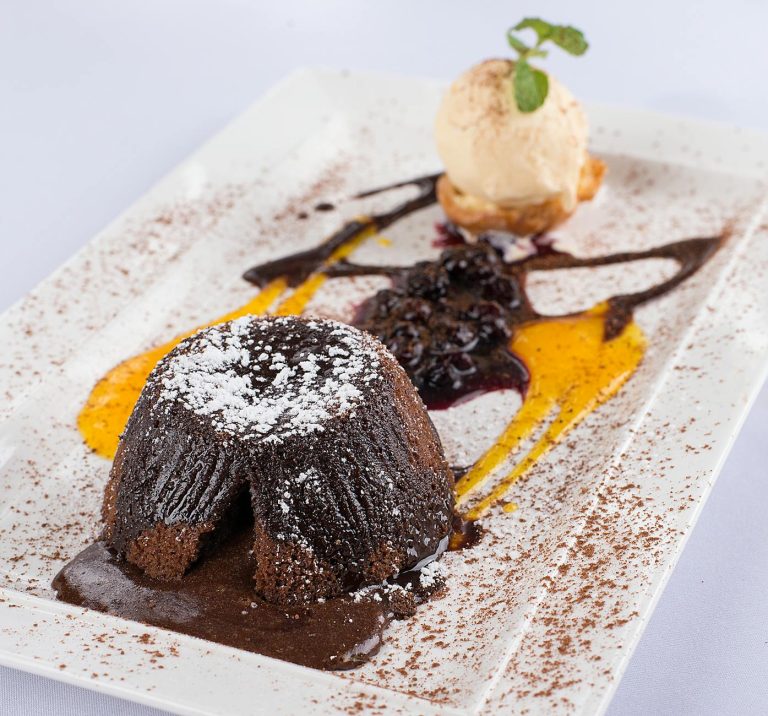
The same 1:1 flour works in our vegan banana bread, swapped gram for gram for the wheat flour. And our chocolate lava cakes use so little flour that a gluten-free blend makes almost no difference to the result.
Measuring in cups or need a different oven setting? See our kitchen conversions guide.
Gluten-Free Chocolate Chip Cookies
Ingredients
Wet ingredients
- 115 g (½ cup / 1 stick) unsalted butter, melted and cooled 5 minutes
- 110 g (½ cup, packed) light brown sugar
- 50 g (¼ cup) granulated sugar
- 1 large egg, at room temperature
- 2 tsp vanilla extract (gluten-free)
Dry ingredients
- 190 g (about 1 ½ cups) gluten-free 1:1 baking flour containing xanthan gum, such as Bob’s Red Mill 1-to-1 or King Arthur Measure for Measure
- ½ tsp baking soda
- ½ tsp fine sea salt
Chocolate
- 170 g (6 oz / 1 cup) dark or semi-sweet chocolate chips or chopped chocolate, labelled gluten-free
- flaky sea salt, for the tops (optional)
Instructions
- Melt the butter, pour it into a large bowl and cool for 5 minutes until warm, not hot.
- Whisk in both sugars for 30–45 seconds until smooth and glossy.
- Add the egg and vanilla and whisk hard for about 1 minute until thick, lighter in colour and smooth.
- Whisk in the baking soda and salt, then fold in the flour with a spatula just until no dry streaks remain. The dough will be soft and glossy.
- Fold in the chocolate, keeping a few pieces for the tops.
- Cover and refrigerate at least 30 minutes and up to 72 hours, until firm enough to scoop.
- Heat the oven to 180°C (350°F), or 160°C (325°F) fan. Line two baking trays with parchment.
- Roll 40 g (1 ½ oz) balls and place 7.5 cm (3 in) apart, about 8 per tray. Press extra chocolate on top.
- Bake one tray at a time for 10–12 minutes, until the edges are set and golden and the centres are puffed and look slightly underbaked.
- Rap the tray once on the counter, sprinkle with flaky salt and cool on the tray for 10 minutes before moving to a wire rack.
Notes
- Xanthan gum: most 1:1 blends already contain it; don’t add more. If your blend has none (for example Doves Farm Freee Plain White Flour), whisk ½ tsp (about 1.5 g) xanthan gum into the flour.
- Weigh the flour: 1:1 blends weigh about 120–150 g per cup depending on the brand.
- Dark or non-stick trays: check 1–2 minutes early or lower the oven by 10°C (25°F). Large 80 g cookies: 13–15 minutes. Small 20 g cookies: 8–9 minutes. Bars in a 20 cm (8 in) square tin: 22–26 minutes.
- Coeliac baking: use gluten-free-labelled chocolate, baking soda and vanilla, and clean equipment.
- Storage: baked cookies 3–4 days airtight or 3 months frozen; dough 72 hours in the fridge; dough balls 3 months frozen (bake from frozen, adding 1–2 minutes).
Photo: StockPhotosHub.com on Pexels