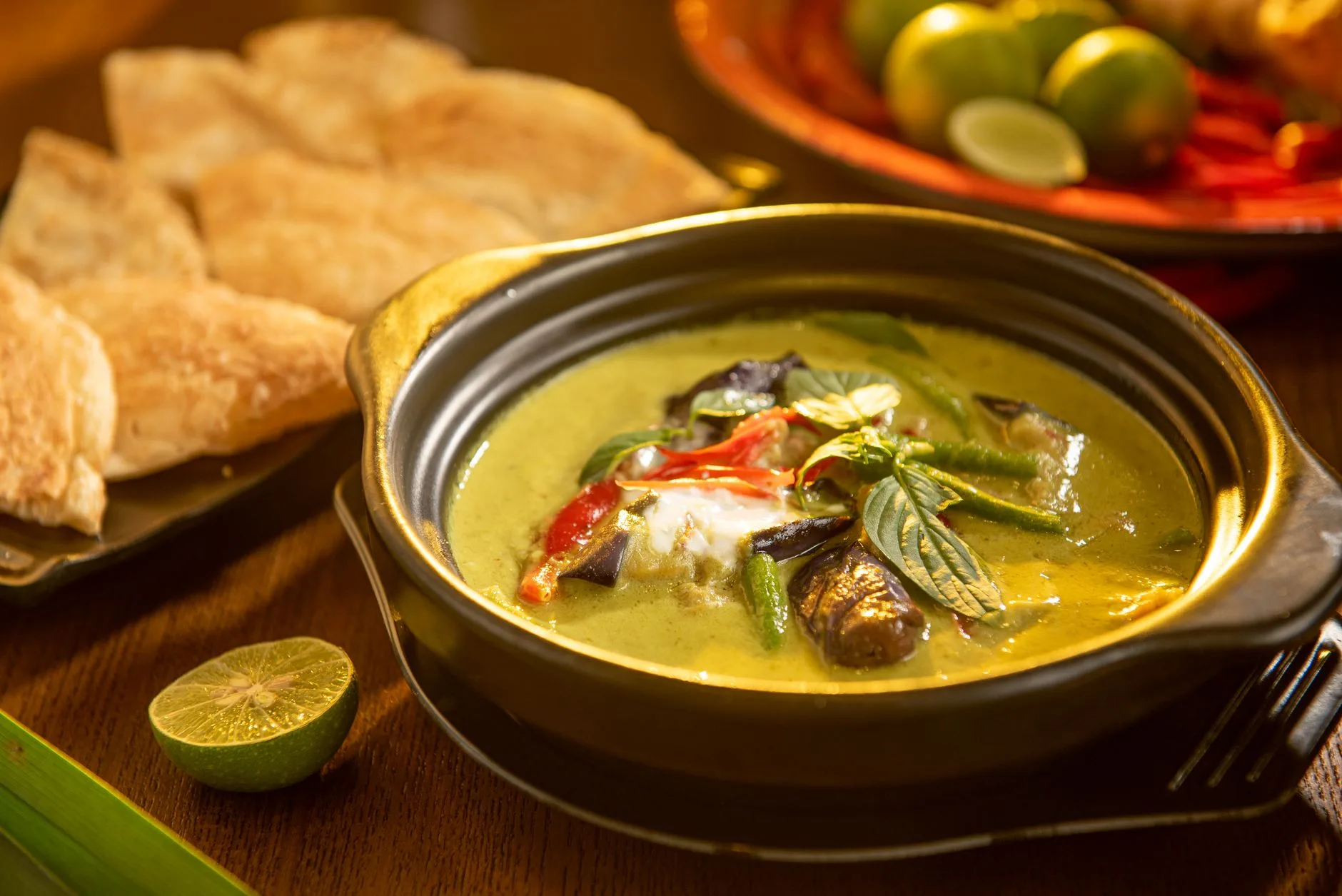
Authentic Thai Green Curry
Thai green curry, gaeng keow wan, is the sweet-green curry of central Thailand. “Sweet” refers to the soft green of the colour, not the taste: it’s one of the hotter Thai curries, made from fresh green chillies, and it should taste hot, salty, fragrant and only slightly sweet. Thai cooks make it by frying the curry paste in thick coconut cream until the oil separates, then adding the rest of the coconut milk, the meat and the vegetables. That first step is the one most Western recipes leave out, and it’s what gives the curry its depth.
With a good shop-bought paste, it takes about 40 minutes, including the rice.
Serves 4.
Ingredients
Curry
- 2 cans (400 ml / 13.5 oz each) full-fat coconut milk, not shaken
- 1 tbsp (15 ml) neutral oil, if needed
- 50–60 g (3–4 tbsp) Thai green curry paste
- 500 g (1 lb 2 oz) boneless, skinless chicken thighs, sliced into thin bite-sized pieces
- 120 ml (½ cup) chicken stock or water
- 5 makrut lime leaves, torn, with the central rib removed
- 2 tbsp (30 ml) fish sauce, plus more to taste
- 1–2 tsp palm sugar or light brown sugar
- 200 g (7 oz) Thai eggplants, quartered, or 1 small Asian eggplant cut into chunks
- 100 g (⅔ cup) canned bamboo shoots, drained and rinsed
- 1 long red chilli, sliced on the diagonal
- A large handful of Thai basil leaves (about 15 g / 1 cup loosely packed)
To serve
- 300 g (1 ½ cups) jasmine rice
- 450 ml (1 ¾ cups + 2 tbsp) water
About the ingredients
Curry paste. The paste is where the flavour comes from: fresh green chillies, lemongrass, galangal, shallots, garlic, makrut lime zest, coriander root and seeds, cumin, white pepper and shrimp paste, pounded together. Thai-made pastes in small cans or tubs are what many Thai home cooks use, and they’re good. Brands vary a lot in heat and salt, so start with 3 tbsp, taste the curry after the coconut milk goes in, and add more if needed. Check the label if you need it vegetarian, since most contain shrimp paste.
Coconut milk. Full-fat milk with no added stabilisers will separate when fried, which is what you want. Don’t shake the cans: you need to scoop the thick cream from the top. Light coconut milk won’t separate and gives a thin, watery curry.
Makrut lime leaves (often sold as kaffir lime leaves) have a strong citrus scent. Frozen leaves are almost as good as fresh, and the freezer is the best place to keep them. Dried ones have little flavour.
Thai eggplants are small, round and green-and-white, about the size of a golf ball. They stay crisp and slightly bitter in the curry. Asian eggplant becomes soft and silky. Either is fine.
Thai basil has purple stems and an aniseed scent. Italian basil isn’t the same, but it’s a reasonable substitute.
Method
- Start the rice. Rinse the rice in a sieve until the water runs mostly clear. Put it in a pot with the water, bring to a boil, then cover and cook on the lowest heat for 12 minutes. Turn off the heat and leave covered for 10 minutes.
- Crack the coconut cream. Open the coconut milk cans and scoop out the thick cream from the top, about 200 ml (¾ cup) in total. Heat it in a wok or wide pan over medium-high heat, stirring, for 3–5 minutes until it bubbles, thickens and the oil begins to separate into clear spots. If your coconut milk won’t separate after 5 minutes, add the tablespoon of oil and carry on.
- Fry the paste. Add the curry paste and stir it into the coconut oil. Fry for 2–3 minutes, stirring all the time, until it smells strongly fragrant and the oil turns green. The paste should sizzle steadily but not burn.
- Add the chicken. Add the chicken and stir to coat it in the paste. Cook for 2 minutes until the outside is no longer pink.
- Add the liquid. Pour in the rest of the coconut milk and the stock. Add the lime leaves, fish sauce and 1 tsp palm sugar. Bring to a simmer.
- Add the vegetables. Add the eggplant and bamboo shoots and simmer for 6–8 minutes until the eggplant is tender and the chicken is cooked through (74°C / 165°F). Thai eggplants should still have a little bite.
- Taste and season. The curry should be hot first, then salty, with only a hint of sweetness in the background. Add fish sauce for more salt, a pinch of sugar if it’s harsh, or a splash of water if it’s too thick. The consistency should be like single cream, not thick like a sauce.
- Finish. Turn off the heat, stir in the basil and sliced chilli, and let them wilt for a minute. Serve with the rice.
Looking for more? See our easy chicken dinner recipes from around the world, sorted by time.
Mistakes to avoid
- Pouring all the coconut milk in at once. The paste ends up simmering, not frying, and the curry tastes flat and raw.
- Boiling the chicken hard. Thin slices cook in minutes; long boiling makes them tough.
- Adding lime juice. Green curry isn’t meant to be sour. Lime leaves give it a citrus note without acid.
- Adding the basil early. It goes black and loses its scent. Stir it in at the end.
- Sweetening too much. Many Western recipes taste like dessert. Add sugar a little at a time.
Making your own paste
Homemade green curry paste is brighter and more fragrant than shop-bought. For enough for this recipe, toast 1 tsp coriander seeds and ½ tsp cumin seeds, then grind them with ½ tsp white peppercorns. In a mortar or small food processor, pound or blend this with 10–15 green bird’s eye chillies, 2 sliced lemongrass stalks (tender part only), 1 tbsp chopped galangal, 3 small shallots, 5 garlic cloves, 1 tsp makrut lime zest, 2 tbsp chopped coriander roots or stems, 1 tsp shrimp paste and ½ tsp salt. Work it until you have a fairly smooth paste; a processor may need a tablespoon of water. It keeps for a week in the fridge or 3 months in the freezer.
Substitutions and variations
- Other proteins: prawns (shrimp) go in for the last 3 minutes, just until pink. Firm tofu, pressed and cubed, can go in with the vegetables. Sliced beef sirloin is common in Thailand; add it for the last 2–3 minutes.
- Other vegetables: green beans, courgettes (zucchini), baby corn or pea eggplants all work. Bell peppers are common in restaurants abroad but aren’t traditional.
- Vegan version: use a vegan curry paste, firm tofu, vegetable stock, and soy sauce or a vegan fish sauce instead of fish sauce. Bulk it up with pumpkin or sweet potato cubes added with the stock, simmering 10–12 minutes until tender.
- Red curry instead: red curry paste is made from dried red chillies, so it’s earthier and less herbal, but the method is identical. Use the same quantities, and try it with roast duck, pumpkin, or pineapple chunks.
- Milder: use 2 tbsp of paste and add 1 tbsp more coconut cream.
Storage and reheating
Green curry keeps for up to 3 days in the fridge in a covered container. The flavour deepens overnight, though the basil turns dark. Reheat it gently in a pan until it’s simmering and the chicken is hot all the way through; don’t boil it hard, or the coconut milk can turn oily and grainy. You can add fresh basil when reheating.
It freezes for up to 3 months, but the eggplant and bamboo shoots get softer. Freeze cooked rice separately for up to a month, and reheat it covered in the microwave with a splash of water until steaming.
Serving
In Thailand, curry is one part of a shared meal, eaten with rice, alongside something fried and something fresh, rather than as a main course on its own. At home, jasmine rice with a cucumber salad or a plate of raw vegetables is plenty. Rice noodles (khanom jeen) are a traditional alternative.
Leftover jasmine rice is ideal for fried rice the next day; our kimchi fried rice is a good use for it. If you like this curry, try our chicken tikka masala for a richer, tomato-based curry.
Can’t find fish sauce? Our world pantry guide lists the closest swaps.
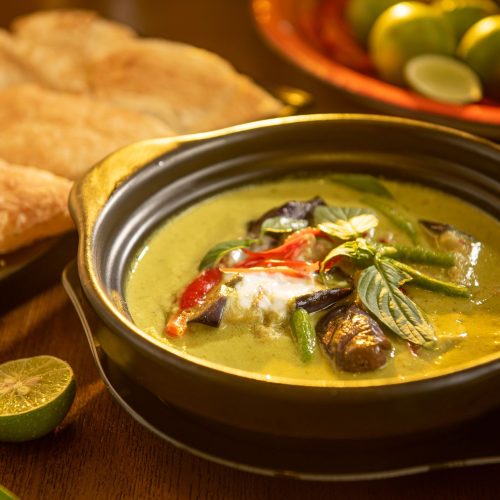
Authentic Thai Green Curry
Ingredients
- 2 cans full-fat coconut milk 400 ml / 13.5 oz each, not shaken
- 1 tbsp neutral oil 15 ml, if needed
- 50–60 g Thai green curry paste 3–4 tbsp
- 500 g boneless, skinless chicken thighs 1 lb 2 oz, thinly sliced
- 120 ml chicken stock or water ½ cup
- 5 makrut lime leaves torn, central rib removed
- 2 tbsp fish sauce 30 ml, plus more to taste
- 1–2 tsp palm sugar or light brown sugar
- 200 g Thai eggplants 7 oz, quartered, or 1 small Asian eggplant in chunks
- 100 g canned bamboo shoots ⅔ cup, drained and rinsed
- 1 long red chilli sliced diagonally
- 15 g Thai basil leaves 1 cup, loosely packed
- 300 g jasmine rice 1 ½ cups
- 450 ml water 1 ¾ cups + 2 tbsp
Instructions
- Rinse the rice until the water runs mostly clear. Bring to a boil with the water, cover and cook on the lowest heat 12 minutes, then rest covered 10 minutes.
- Scoop the thick cream from the top of the coconut milk cans (about 200 ml / ¾ cup). Heat it in a wok over medium-high heat, stirring, 3–5 minutes until it thickens and the oil separates. Add the oil if it won’t separate.
- Add the curry paste and fry 2–3 minutes, stirring, until very fragrant and the oil turns green.
- Add the chicken and stir 2 minutes until no longer pink outside.
- Add the remaining coconut milk, stock, lime leaves, fish sauce and 1 tsp palm sugar. Bring to a simmer.
- Add the eggplant and bamboo shoots and simmer 6–8 minutes until the eggplant is tender and the chicken reaches 74°C (165°F).
- Taste: it should be hot, then salty, with only a little sweetness. Adjust with fish sauce, sugar or a splash of water.
- Off the heat, stir in the basil and chilli. Serve with the rice.
Notes
Photo: Sai Kuen Leung on Pexels