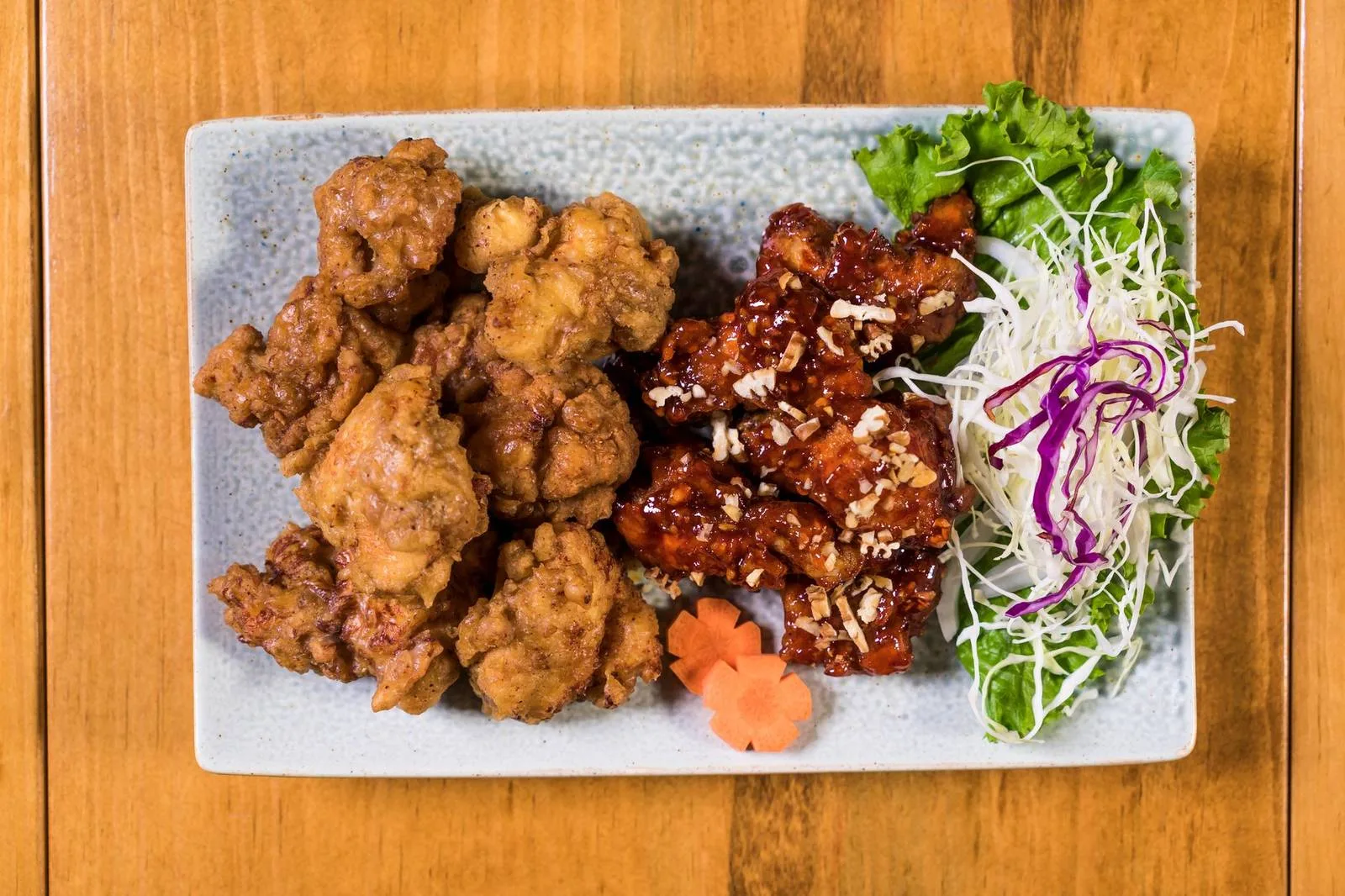
Crispy Korean Fried Chicken
Korean fried chicken is all about the crust: thin, light and so crisp it crackles, even after it has been tossed in a sticky sauce. The method is what gets it there. The chicken goes into a thin starch batter, then into the oil twice, first at a moderate heat to cook it through, then hotter to set the shell. This version is yangnyeom chicken, coated in a sweet, garlicky, gently spicy glaze built on gochujang, with a soy-garlic sauce as an alternative.
It takes about an hour, and most of that is frying in batches. Wings are traditional and the most fun to eat, but boneless thighs work just as well.
Serves 4 as a main, or 6–8 as a snack.
A little background
Fried chicken spread in South Korea from the 1960s and 70s, influenced by American-style fried chicken, and Korean cooks soon made it their own with lighter batters and double frying. Yangnyeom chicken, sauced in a sweet and spicy red glaze, is generally credited to chicken shops of the early 1980s. Today fried chicken is a takeaway staple there, ordered by the box with cold beer, a pairing so common it has its own name: chimaek, from chicken and maekju (beer).
Ingredients
Chicken
- 1 kg (2 ¼ lb) chicken wings, split into drumettes and flats, tips removed (about 24 pieces), or boneless, skinless thighs cut into 5 cm (2 in) pieces
- 1 tsp fine sea salt
- ½ tsp freshly ground black pepper
- 2 garlic cloves, finely grated
- 1 tsp finely grated fresh ginger
Batter
- 100 g (⅔ cup) potato starch or cornstarch
- 30 g (¼ cup) plain (all-purpose) flour
- ½ tsp baking powder
- ½ tsp fine sea salt
- 150 ml (⅔ cup) ice-cold water
- About 1.5 litres (6 cups) neutral oil, such as peanut, rapeseed (canola) or sunflower
Yangnyeom sauce
- 2 tbsp (40 g) gochujang
- 2 tbsp (30 g) ketchup
- 3 tbsp (60 g) rice syrup (ssal-jocheong), honey or light corn syrup
- 1 tbsp (15 ml) soy sauce
- 1 tbsp (12 g) brown sugar
- 3 garlic cloves, finely grated
- 2 tbsp (30 ml) water
- 1 tsp gochugaru (Korean chilli flakes), optional, for more heat
- 1 tsp toasted sesame oil
To finish
- 1 tbsp (9 g) toasted sesame seeds
- 2 tbsp crushed roasted peanuts (optional)
- 2 spring onions (scallions), thinly sliced
Notes on the key ingredients
Potato starch is what many Korean cooks use. It fries up very crisp and glassy, and stays crisp longer than wheat flour alone. Cornstarch is a good substitute. The small amount of flour helps the crust brown, and the baking powder makes tiny bubbles that keep it light.
Gochujang is a fermented paste of chilli, glutinous rice and soybeans. It’s sweet, savoury and only moderately hot. Brands vary in heat, and most tubs are labelled from mild to very hot. Once opened, keep it in the fridge.
Rice syrup gives Korean glazes their particular shine and stays glossy without crystallising. Honey is sweeter and more floral but works well. Corn syrup is closest in texture.
Method
- Season. Pat the chicken very dry with paper towels. Toss it with the salt, pepper, garlic and ginger and leave for 15 minutes while you make the sauce and heat the oil, or refrigerate for up to 8 hours.
- Make the sauce. In a small saucepan, stir together everything except the sesame oil. Bring to a simmer over medium-low heat and bubble gently for 2–3 minutes, stirring, until glossy and thick enough to coat a spoon. Off the heat, stir in the sesame oil. Set aside.
- Heat the oil. Pour the oil into a heavy pot or wok to a depth of about 5 cm (2 in), no more than a third full, and heat to 160°C (325°F).
- Make the batter. Whisk the starch, flour, baking powder and salt in a large bowl, then whisk in the ice-cold water. It should be thin, like single (light) cream, and should coat a finger in a translucent layer. Add the chicken and turn to coat.
- First fry. Lift the pieces out one at a time, letting the excess batter drip off, and lower them into the oil. Fry in 3 or 4 batches, so the pieces aren’t crowded, turning now and then: 8–10 minutes for wings, 5–6 minutes for boneless thigh pieces. They should be pale golden and cooked through (at least 74°C / 165°F; wings are more tender at 80°C / 175°F or above). Drain on a wire rack and let them rest for at least 5 minutes.
- Second fry. Heat the oil to 185°C (365°F). Fry the chicken again in batches for 2–3 minutes until deep golden and very crisp. You’ll hear the difference: the crust sounds hollow and crackly when you tap it with tongs. Drain on the rack.
- Sauce and serve. Warm the sauce if it has thickened. Put the chicken in a large bowl, pour the sauce over and toss quickly with a spatula until coated. Scatter with sesame seeds, peanuts and spring onions and serve straight away.
Why it stays crisp
Starch batters contain little or no gluten, so they fry into a thin, brittle shell rather than a bready one. The first fry cooks the chicken and drives off most of the water. During the rest, moisture from inside moves out to the crust. The hotter second fry then crisps that layer again and leaves it drier than one long fry would. A drier shell absorbs less sauce, which is why the chicken stays crunchy under the glaze for a good 20–30 minutes.
Looking for more? See our easy chicken dinner recipes from around the world, sorted by time.
Common mistakes
- Wet chicken. Surface moisture makes the batter slide off and the oil spit. Dry it well.
- Thick batter. A heavy coating turns doughy. If yours is like pancake batter, whisk in another tablespoon of cold water.
- Crowding the pot. The oil temperature drops, and the crust soaks up oil. Fry in batches and let the oil recover between them.
- Draining on paper towels. The underside steams and softens. Use a wire rack.
- Saucing too early. Toss the chicken only when you’re ready to eat, and sauce only what you’ll serve.
Other sauces
Soy garlic (ganjang): simmer 3 tbsp (45 ml) soy sauce, 3 tbsp (60 g) rice syrup or honey, 3 tbsp (45 ml) water, 1 tbsp (15 ml) rice vinegar, 4 grated garlic cloves and 1 tsp grated ginger for 3–4 minutes, until syrupy. Many Korean shops offer this alongside yangnyeom, and it’s milder and very good with wings.
Plain (huraideu): serve the chicken unsauced with a little salt mixed with black pepper, and the yangnyeom sauce on the side for dipping. Ordering half plain and half sauced is a common choice in Korea.
Without deep-frying
Air fryer: skip the wet batter. Toss the seasoned chicken in the starch, flour and baking powder mixture, shake off the excess, rest for 10 minutes so the coating hydrates, then spray all over with oil. Cook in a single layer at 200°C (400°F) for 20–25 minutes for wings, or 14–16 minutes for boneless pieces, turning halfway, until golden and cooked through. It’s lighter and less crackly, but good.
Oven: coat the same way, arrange on an oiled rack over a baking tray and bake at 220°C (425°F) for 40–45 minutes for wings, turning once.
Make ahead, storage and reheating
You can season the chicken and make the sauce up to a day ahead. The sauce keeps in the fridge for a week. Warm it gently before tossing.
Fried chicken is best eaten fresh. Refrigerate leftovers within 2 hours and eat within 3 days. Reheat on a rack in a 200°C (400°F) oven for 10–12 minutes, or in an air fryer at 190°C (375°F) for 6–8 minutes, until hot through (74°C / 165°F). The crust comes back surprisingly well, especially on unsauced pieces. Avoid the microwave, which makes it soggy.
What to serve with it
In Korea, fried chicken almost always comes with chicken-mu, small cubes of sweet, sharp pickled radish that cut through the richness. To make it, dissolve 100 g (½ cup) sugar and 1 tsp salt in 120 ml (½ cup) rice vinegar and 120 ml (½ cup) water, pour over 400 g (14 oz) daikon radish in 1.5 cm (½ in) cubes, and refrigerate for at least 2 hours, or up to 2 weeks. A crunchy cabbage salad with a sesame or Thousand Island-style dressing is another common side, and so is cold beer.
For a full Korean meal, serve it with our 30-minute Korean bulgogi beef bowl. If you like this style of crisp, sauced chicken, our Chinese honey sesame chicken uses the same double fry with a milder honey and soy glaze.
Can’t find gochujang? Our world pantry guide lists the closest swaps.
Crispy Korean Fried Chicken (Yangnyeom Chicken)
Ingredients
Chicken
- 1 kg (2 ¼ lb) chicken wings, split into drumettes and flats, tips removed (about 24 pieces), or boneless, skinless thighs in 5 cm (2 in) pieces
- 1 tsp fine sea salt
- ½ tsp freshly ground black pepper
- 2 garlic cloves, finely grated
- 1 tsp finely grated fresh ginger
Batter
- 100 g (⅔ cup) potato starch or cornstarch
- 30 g (¼ cup) plain (all-purpose) flour
- ½ tsp baking powder
- ½ tsp fine sea salt
- 150 ml (⅔ cup) ice-cold water
- about 1.5 litres (6 cups) neutral oil, for frying
Yangnyeom sauce
- 2 tbsp (40 g) gochujang
- 2 tbsp (30 g) ketchup
- 3 tbsp (60 g) rice syrup (ssal-jocheong), honey or light corn syrup
- 1 tbsp (15 ml) soy sauce
- 1 tbsp (12 g) brown sugar
- 3 garlic cloves, finely grated
- 2 tbsp (30 ml) water
- 1 tsp gochugaru (optional)
- 1 tsp toasted sesame oil
To finish
- 1 tbsp (9 g) toasted sesame seeds
- 2 tbsp crushed roasted peanuts (optional)
- 2 spring onions (scallions), thinly sliced
Instructions
- Pat the chicken very dry and toss with the salt, pepper, garlic and ginger. Leave 15 minutes, or refrigerate up to 8 hours.
- Simmer all the sauce ingredients except the sesame oil over medium-low heat for 2–3 minutes until glossy and spoon-coating. Stir in the sesame oil off the heat.
- Heat oil about 5 cm (2 in) deep in a heavy pot (no more than a third full) to 160°C (325°F).
- Whisk the starch, flour, baking powder and salt with the ice-cold water to a thin batter, like single (light) cream. Add the chicken and coat.
- Let excess batter drip off and fry in 3–4 batches: 8–10 minutes for wings, 5–6 minutes for boneless pieces, until pale golden and cooked through (at least 74°C / 165°F). Rest on a wire rack at least 5 minutes.
- Heat the oil to 185°C (365°F) and fry again in batches for 2–3 minutes until deep golden and very crisp. Drain on the rack.
- Toss the hot chicken with the warm sauce, scatter with sesame seeds, peanuts and spring onions, and serve immediately.
Notes
- Soy garlic sauce: simmer 3 tbsp (45 ml) soy sauce, 3 tbsp (60 g) rice syrup or honey, 3 tbsp (45 ml) water, 1 tbsp (15 ml) rice vinegar, 4 grated garlic cloves and 1 tsp grated ginger for 3–4 minutes until syrupy.
- Air fryer: coat with the dry starch mix instead of batter, rest 10 minutes, spray with oil and cook at 200°C (400°F) for 20–25 minutes (wings) or 14–16 minutes (boneless), turning halfway. Oven: on an oiled rack at 220°C (425°F) for 40–45 minutes.
- Pickled radish (chicken-mu): pour 100 g (½ cup) sugar and 1 tsp salt dissolved in 120 ml (½ cup) rice vinegar and 120 ml (½ cup) water over 400 g (14 oz) cubed daikon; chill at least 2 hours.
- Storage: sauce up to 1 week in the fridge; fried chicken up to 3 days. Reheat on a rack in a 200°C (400°F) oven for 10–12 minutes until hot through (74°C / 165°F).
Photo: Luis Becerra Fotógrafo on Pexels