Homemade Potato Gnocchi
Good potato gnocchi are light and tender, holding together in the pot but almost melting when you bite them. Heavy, gummy gnocchi are just as common, and the difference comes down to three things: the kind of potato you use, how much water is left in it, and how little flour you can get away with.
The method is simple: cook the potatoes in their skins, rice them while hot, mix in just enough flour to make a soft dough, shape and boil. This page goes through each step, along with the reasons it matters, so you can adjust for the potatoes you actually have. Allow about 2 hours, of which the potatoes spend an hour in the oven on their own.
Serves 4 as a main course, or 6 as a first course.
Ingredients
Gnocchi
- 1 kg (2 ¼ lb) floury potatoes, such as russet, Idaho, Maris Piper or King Edward, all about the same size
- 150–200 g (1 ¼–1 ⅔ cups) “00” or plain (all-purpose) flour, plus extra for dusting
- 1 large egg yolk (optional)
- 1 tsp (6 g) fine sea salt
- Semolina or extra flour, for the tray
- 1 ½ tbsp (about 27 g) fine sea salt, for 5 litres (5 quarts) cooking water
Brown butter and sage sauce
- 60 g (4 tbsp) unsalted butter
- 12 fresh sage leaves
- 40 g (about ½ cup) finely grated Parmigiano Reggiano, plus extra to serve
- Freshly ground black pepper
How to choose potatoes for gnocchi
This matters more than anything else. You want floury (starchy) potatoes, the kind that fall apart when boiled and make fluffy baked potatoes. Russets and Idahos in North America, and Maris Piper or King Edward in the UK, are reliable. They hold less water, so they need less flour to form a dough, and less flour means lighter gnocchi.
Older is better than new. Potatoes that have been stored for a few months have lost moisture. Italian cooks often specify patate vecchie, old potatoes, for exactly this reason. Avoid new potatoes and waxy varieties like Charlotte or red-skinned salad potatoes; they make sticky, gluey dough that takes far too much flour.
All-purpose potatoes such as Yukon Gold work in a pinch. They taste buttery, but expect to need the upper end of the flour range.
Choose potatoes of a similar size so they’re all cooked at the same time.
How to make the gnocchi
- Bake the potatoes. Heat the oven to 200°C (400°F, gas mark 6). Prick the potatoes a few times with a fork and bake them directly on the oven rack for 50–70 minutes, until a thin knife slides into the centre with no resistance. Baking dries the flesh, where boiling adds water.
- Rice them hot. Holding each potato in a tea towel, cut it in half and scoop out the flesh, or peel it. Pass it through a potato ricer or food mill onto a clean work surface or a large tray. Spread it out in a thin layer and leave for 10–15 minutes, until steam stops rising and it’s just warm to the touch.
- Weigh it. You should have about 750–800 g (1 ⅔–1 ¾ lb) of riced potato. A useful guide is flour equal to 20–25% of the potato’s weight, so roughly 150–200 g here. Start with the lower amount.
- Make the dough. Sprinkle the salt over the potato, add the egg yolk if using, and scatter about three-quarters of the flour over the top. Using a bench scraper or your fingertips, cut and fold the flour through until it looks like shaggy crumbs, then press it together into a ball. Knead gently for 30 seconds, no more, until it’s smooth and soft and only slightly tacky. Add more flour, a spoonful at a time, only if it sticks badly to your hands.
- Test one. Bring 5 litres (5 quarts) of water to a boil in a large pot and add the salt. Pinch off a piece of dough, roll it into a small gnocco and drop it in. If it holds together and rises in a minute or two, the dough is ready. If it starts to fall apart, knead in another tablespoon of flour and test again. This step saves a lot of disappointment.
- Roll and cut. Divide the dough into 4 pieces. Keeping the work surface lightly floured, roll each piece under your palms into a rope about 2 cm (¾ in) thick. Cut the rope into 2 cm (¾ in) pieces.
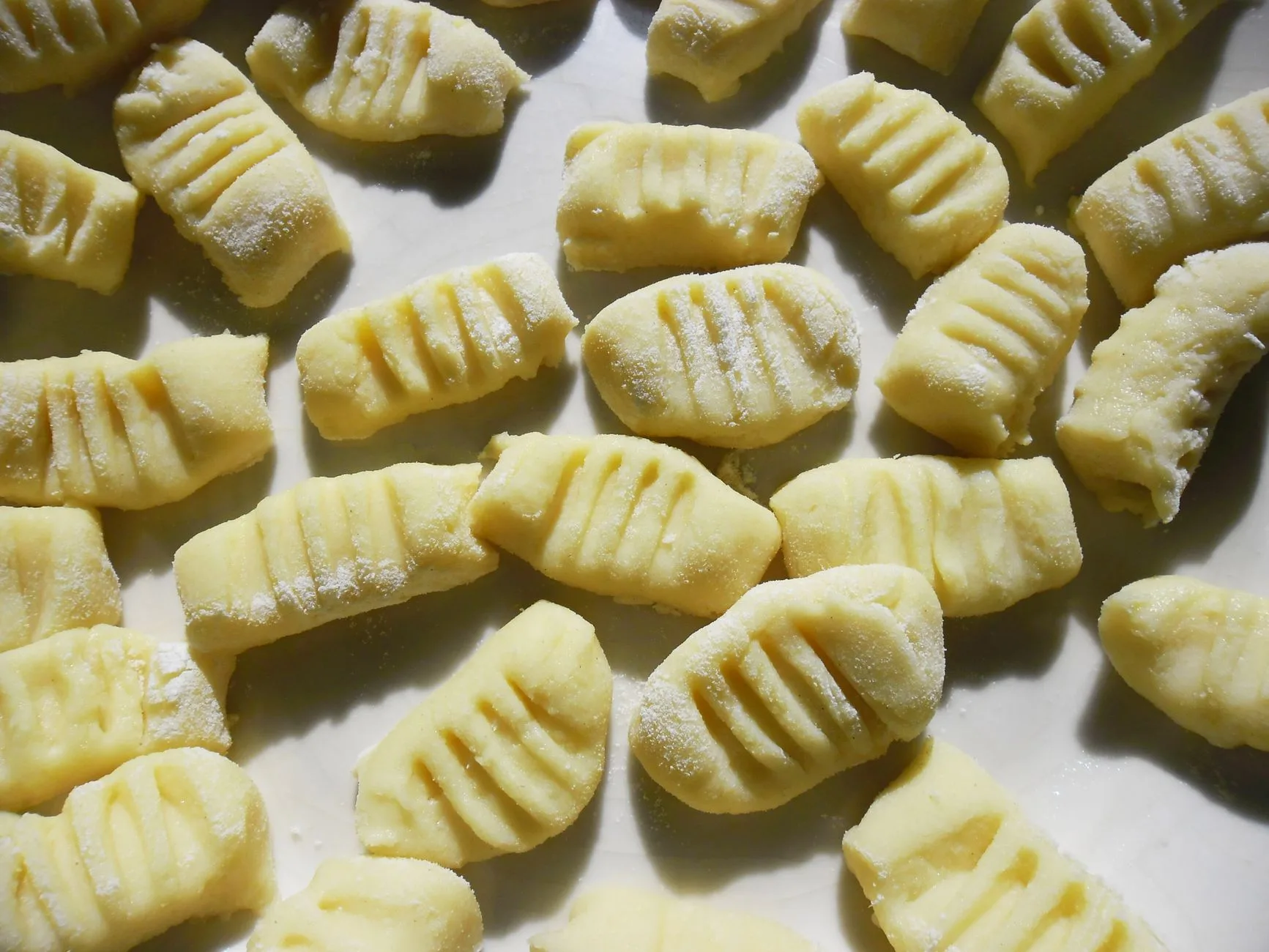
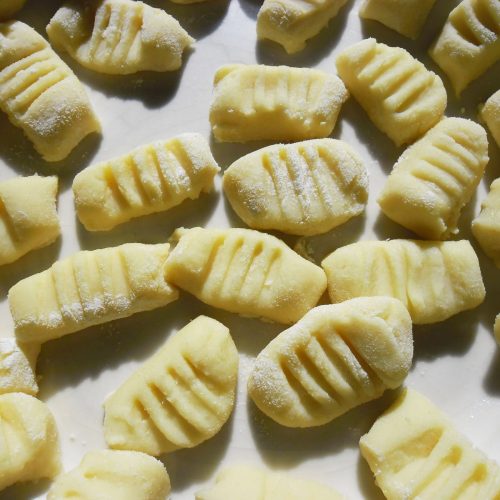
- Shape (optional). Roll each piece down the back of a fork or a ridged gnocchi board with your thumb, so it gets ridges on one side and a small dent on the other. Both help the sauce cling. Plain cut pillows taste just as good.
- Lay them out. Spread the gnocchi in a single layer on a tray dusted with semolina or flour, not touching. Cook them within an hour or two, or freeze them (see below).
- Cook. Drop the gnocchi into the boiling water in 2 or 3 batches so the water keeps boiling. After about 1 ½–2 minutes they’ll rise to the surface. Let them cook for 30–60 seconds more, then lift them out with a slotted spoon or spider.
Brown butter and sage
While the first batch cooks, melt the butter in a large frying pan over medium heat. Add the sage leaves and cook for 3–4 minutes, swirling, until the butter foams, smells nutty and turns light hazelnut brown, and the sage is crisp. Move the cooked gnocchi straight into the pan with 2–3 tbsp of the cooking water and toss gently for 30 seconds, until glossy. Off the heat, add the Parmigiano and plenty of pepper, toss once more and serve. For a crisp, golden finish, let the gnocchi sit in the butter for 1–2 minutes per side before adding the cheese.
Common mistakes
- Boiling peeled, cut potatoes. They soak up water and need much more flour. If you must boil, cook them whole and unpeeled, starting in cold salted water, for 25–35 minutes, then peel and rice while hot.
- Using a food processor or blender. Fast blades burst the starch cells and turn potato into glue. A masher leaves lumps. Use a ricer, food mill or a sieve and the back of a spoon.
- Adding all the flour at once. Add it gradually and stop as soon as the dough holds together.
- Kneading like bread. Long kneading develops gluten and makes the gnocchi chewy.
- Letting shaped gnocchi sit too long. After a few hours at room temperature or in the fridge they turn sticky and grey. Cook or freeze them.
- Crowding the pot. Too many at once lowers the water temperature, and they stick together and turn soggy.
Substitutions and variations
- No egg: leave out the yolk. Many cooks in Italy do. The dough is a little more delicate but lighter.
- Flour: “00” flour gives a fine, silky texture, but plain flour works perfectly well. For gluten-free gnocchi, use a gluten-free plain flour blend and add an egg yolk to help bind.
- Ricotta gnocchi: for something quicker, mix 500 g (2 cups) well-drained ricotta with 1 egg, 50 g (⅔ cup) grated Parmigiano and about 120 g (1 cup) flour. No potatoes to cook.
- Sweet potato: sweet potatoes are much wetter. Bake them, rice them, and expect to use nearly double the flour.
- Herb gnocchi: work 2 tbsp finely chopped parsley or chives into the dough.
Make ahead, freezing and leftovers
To freeze: put the tray of uncooked gnocchi straight into the freezer for about 1 hour, until the gnocchi are hard, then tip them into a freezer bag. They keep for up to 2 months, best within 1. Cook them from frozen, without thawing, in smaller batches; they take 1–2 minutes longer to float.
To make ahead the same day: boil the gnocchi, toss them with a little olive oil, spread them on a tray to cool and refrigerate for up to 24 hours. Pan-fry them in butter until golden, or drop them back into boiling water for 30 seconds.
Leftovers: refrigerate sauced gnocchi within 2 hours and eat within 2 days. Pan-fry in a little butter over medium heat until crisp and hot through. They don’t microwave well.
Other ways to serve them
Brown butter and sage is the classic, but gnocchi go with almost any sauce that would suit pasta. A simple tomato sauce with basil and a little mozzarella, baked until bubbling, is gnocchi alla sorrentina. Basil pesto, a light Gorgonzola cream, or a meat ragù all work well. Keep sauces fairly loose, since gnocchi absorb more than pasta does. Serve with a green salad or roasted vegetables.
For another comforting Italian dinner of ricotta and tomato sauce, try our spinach and ricotta stuffed shells, and finish the meal with a make-ahead classic tiramisu.
A short history
Gnocchi are far older than the potato in Italy. Earlier versions were made from flour, breadcrumbs, semolina or cheese, and some still are: Rome’s gnocchi alla romana are baked rounds of semolina. Potatoes arrived from the Americas in the 16th century but took a long time to become common, and potato gnocchi spread mainly in the 19th century, especially in the north. In Rome there’s a saying, “giovedì gnocchi”, from the custom of eating them on Thursdays. Italian emigrants took them to Argentina and Uruguay, where ñoquis are still eaten on the 29th of each month.
For more on cooling, freezing and reheating, see our make-ahead, storage and freezing guide.
Homemade Potato Gnocchi with Brown Butter and Sage
Ingredients
Gnocchi
- 1 kg (2 ¼ lb) floury potatoes (russet, Idaho, Maris Piper or King Edward), similar in size
- 150–200 g (1 ¼–1 ⅔ cups) “00” or plain (all-purpose) flour, plus extra for dusting
- 1 large egg yolk (optional)
- 1 tsp (6 g) fine sea salt
- semolina or extra flour, for the tray
- 1 ½ tbsp (about 27 g) fine sea salt, for 5 litres (5 quarts) cooking water
Brown butter and sage sauce
- 60 g (4 tbsp) unsalted butter
- 12 fresh sage leaves
- 40 g (about ½ cup) finely grated Parmigiano Reggiano, plus extra to serve
- freshly ground black pepper
Instructions
- Heat the oven to 200°C (400°F, gas mark 6). Prick the potatoes and bake directly on the rack for 50–70 minutes, until a thin knife slides in with no resistance.
- While hot, scoop out or peel the flesh and pass it through a ricer or food mill onto a work surface. Spread it out and leave 10–15 minutes until just warm and no longer steaming.
- Weigh the potato (about 750–800 g / 1 ⅔–1 ¾ lb) and plan on flour equal to 20–25% of its weight.
- Sprinkle over the salt, add the yolk if using and about three-quarters of the flour. Cut and fold together with a bench scraper, press into a ball and knead gently for 30 seconds until smooth and only slightly tacky, adding more flour only if needed.
- Bring 5 litres (5 quarts) water to a boil with the salt. Cook one test gnocco; if it falls apart, knead in 1 tbsp more flour and test again.
- Divide the dough into 4, roll into 2 cm (¾ in) ropes on a lightly floured surface, and cut into 2 cm (¾ in) pieces. Roll over a fork or gnocchi board if you like.
- Spread on a semolina-dusted tray in a single layer.
- Melt the butter in a large frying pan over medium heat with the sage, swirling, for 3–4 minutes until nutty and light brown and the sage is crisp.
- Boil the gnocchi in 2–3 batches. When they float, after about 1 ½–2 minutes, cook 30–60 seconds more, then lift into the butter with 2–3 tbsp cooking water.
- Toss gently until glossy. Off the heat, add the Parmigiano and pepper, and serve.
Notes
- Avoid waxy or new potatoes. Yukon Gold works but needs more flour.
- If boiling instead of baking, cook the potatoes whole and unpeeled from cold salted water for 25–35 minutes, then peel and rice hot.
- Never use a food processor or blender; it turns the potato gluey.
- Freeze uncooked gnocchi on the tray until hard (about 1 hour), then bag for up to 2 months. Cook from frozen in smaller batches, allowing 1–2 minutes longer.
- Make ahead: boil, toss with olive oil, cool and refrigerate up to 24 hours, then pan-fry in butter.
- Leftovers: fridge up to 2 days; pan-fry until hot and crisp.
Photo: Erna Daalman on Pexels