Peruvian Lomo Saltado
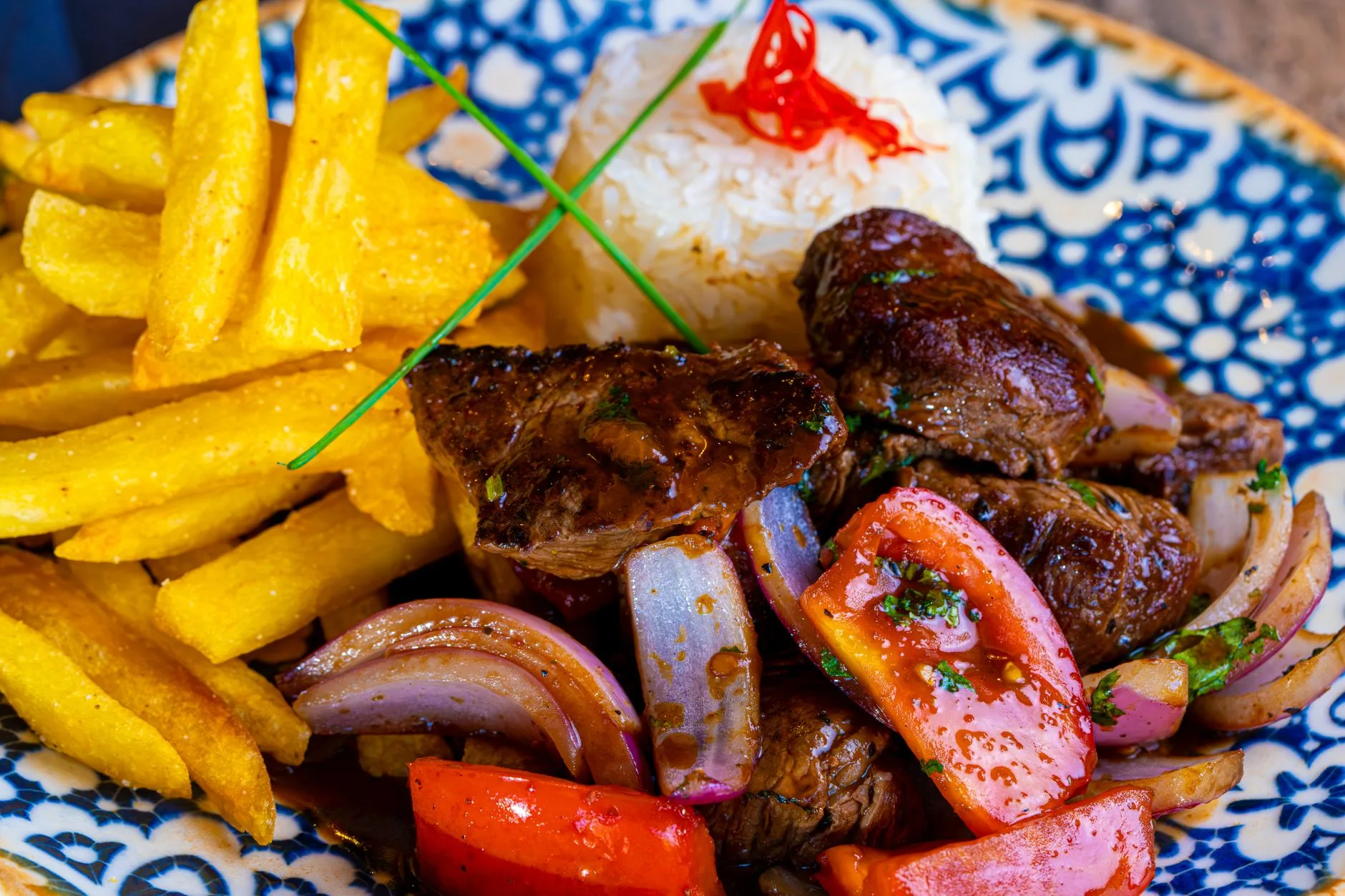
Lomo saltado is one of Peru’s best-loved dishes. Strips of beef are seared hard in a very hot wok, then tossed with red onion, tomato, ají amarillo, soy sauce and vinegar until there’s just enough glossy sauce to coat everything. It’s piled onto plates with chips folded through or alongside, and rice on the side, so the juices soak into both. It cooks in about 10 minutes once everything is prepared.
Serves 4. Allow 25 minutes of prep, including the short marinade, and about 15 minutes of cooking, not counting the chips.
Where lomo saltado comes from
Lomo saltado comes from chifa, the Chinese-Peruvian cooking that grew out of the Cantonese communities who settled in Peru from the mid-19th century. Chinese cooks brought woks, soy sauce and the stir-fry technique. Peruvian kitchens supplied beef, red onions, tomatoes, ají chillies and potatoes. The result, served with both rice and fried potatoes, is so thoroughly Peruvian now that it appears on criollo restaurant menus right next to ceviche. “Saltado” comes from saltear, to sauté or toss.
Ingredients
Beef and marinade
- 600 g (1 lb 5 oz) beef sirloin, rump or tenderloin, trimmed
- 2 tbsp (30 ml) soy sauce
- 2 garlic cloves, finely chopped
- ½ tsp ground cumin
- ½ tsp freshly ground black pepper
- ½ tsp fine salt
Stir-fry
- 3 tbsp (45 ml) neutral high-heat oil, such as vegetable or groundnut
- 1 large red onion (about 250 g), cut into wedges about 1.5 cm (½ in) thick
- 3 ripe plum tomatoes (about 300 g), cut into 8 wedges each, seeds removed
- 1–2 tbsp (15–30 g) ají amarillo paste, or 1 yellow chilli, seeded and cut into strips
- 1 garlic clove, finely chopped
- 3 tbsp (45 ml) soy sauce
- 2 tbsp (30 ml) red wine vinegar
- 2 tbsp (30 ml) beef stock or water
- 1 small handful fresh coriander (cilantro), roughly chopped
- 1 spring onion, sliced (optional)
To serve
- 600 g (1 lb 5 oz) chips (French fries), homemade or oven-baked
- Hot cooked white rice, about 150 g (1 cup) per person
The key ingredients
Beef. Peruvian restaurants usually use tenderloin (lomo), which stays tender after a fast sear. Sirloin or rump steak is a good, less expensive choice. Cut it against the grain into strips about 1 cm (⅜ in) thick and 5 cm (2 in) long. Thinner strips overcook before they brown.
Ají amarillo is a yellow-orange Peruvian chilli with a fruity flavour and medium heat. The paste is sold in jars in Latin American shops and online. If you can’t find it, use a fresh yellow or orange chilli, or half a yellow pepper with a pinch of cayenne.
Vinegar sharpens the sauce. Red wine vinegar is common. Some cooks use a splash of pisco instead, and restaurant cooks often let it flare up in the hot wok.
Tomatoes should be firm and ripe. Seeding them keeps the sauce from becoming watery, and they go in at the last minute so the wedges hold their shape.
Before you start
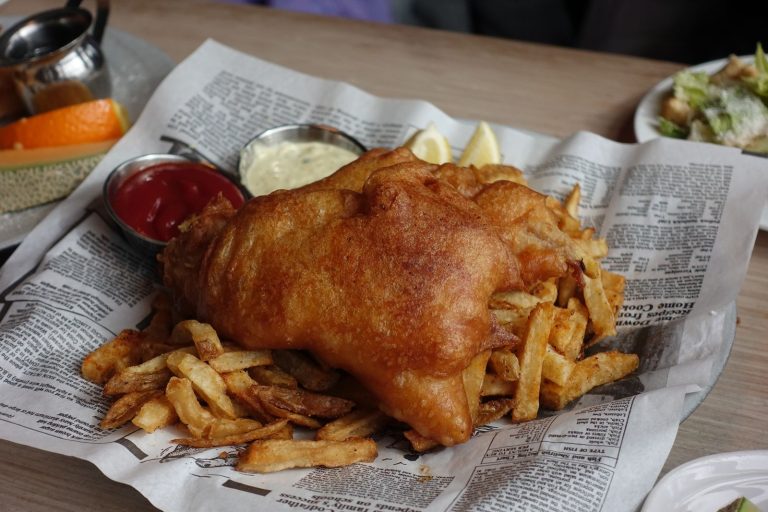
The stir-fry itself takes minutes, so get everything ready first. Have the chips cooking or nearly done, the rice warm, the onion and tomato cut, and the sauce mixed in a cup by the stove: the 3 tbsp soy sauce, vinegar and stock. For homemade chips, the double-fry method in our classic fish and chips works well here, cut a little thinner. Good-quality frozen chips cooked in the oven or air fryer are a common and perfectly reasonable shortcut.
Method
- Marinate the beef. Toss the beef strips with the 2 tbsp soy sauce, garlic, cumin, pepper and salt. Leave for 15–20 minutes at room temperature while you prepare everything else.
- Heat the wok. Set a wok or large heavy frying pan over the highest heat until it just starts to smoke. Add 1 tbsp oil and swirl.
- Sear the beef in batches. Lift half the beef out of the marinade, letting the excess drip off, and spread it in a single layer. Leave it untouched for 1 minute to brown, then toss for 30–60 seconds more, until browned outside but still pink inside. Tip onto a plate. Repeat with another 1 tbsp oil and the rest of the beef.
- Char the onion. Add the last 1 tbsp oil and the onion. Stir-fry for 1–2 minutes, until charred at the edges but still crunchy. Add the ají amarillo and garlic for 20 seconds.
- Add the sauce. Return the beef and its juices to the wok. Pour the sauce around the hot sides of the pan and toss for 30 seconds, until it bubbles and coats the meat.
- Add the tomatoes. Add the tomato wedges and toss for 30–60 seconds, just until warmed through and starting to soften at the edges. Turn off the heat, toss in most of the coriander and taste for salt.
- Serve immediately. Either fold the chips through the stir-fry in the pan, or pile the chips on plates and spoon the lomo saltado over them. Serve with a mound of rice, and scatter over the rest of the coriander and the spring onion.
Getting the stir-fry right
A domestic hob is weaker than a restaurant wok burner, which is why cooking the beef in batches matters so much. Crowd the pan and the temperature drops, the meat releases its juices and it stews to grey instead of browning. Work in two or even three batches, and wait for the pan to smoke again between them. The aim is beef that’s browned and slightly smoky outside and juicy inside, onions that are charred but crunchy, tomatoes that are only just softened, and a modest amount of sauce. Lomo saltado should be saucy enough to moisten the rice and chips, not swimming.
Common mistakes
- Overcooking the beef. It goes back into the pan with the sauce, so take it out while still pink.
- Cooking the tomatoes to a mush. They need under a minute.
- Soggy chips. If you fold the chips into the pan, do it at the very last second and serve straight away. Otherwise serve them underneath or alongside.
- Cutting the onion too thin. Thin slices go limp. Thick wedges give the right texture.
Substitutions
- Chicken: pollo saltado uses chicken thigh strips the same way. Cook them through, until no pink remains.
- Vegetarian: use thick strips of portobello mushroom or extra-firm tofu, pressed and patted dry.
- Gluten-free: use tamari or another certified gluten-free soy sauce, and check that your chips are gluten-free.
- Mild version: use half a yellow pepper instead of ají amarillo for colour without heat.
Cooking for more people
Don’t try to double the recipe in one wok. A domestic burner can’t keep a double load hot enough to sear. For 6–8 people, prepare a double quantity of everything, but cook it in two complete rounds, wiping out the wok between them, and keep the first round warm in a low oven for no more than 10 minutes. The tomatoes and coriander should go into each round at the end, so they stay fresh. If you want to flame the pan with pisco the way some restaurants do, take the pan off the heat before you add it, keep your face and sleeves clear, and never pour straight from the bottle.
Storage and reheating
Lomo saltado is best eaten straight from the wok. Leftovers keep in the fridge for up to 3 days, stored separately from the chips and rice if you can. Reheat the meat mixture quickly in a hot pan for 1–2 minutes, and crisp the chips in a hot oven or air fryer rather than the microwave. Rice should be reheated until steaming hot. Cold leftover rice, cooled quickly and kept in the fridge, also makes good fried rice the next day, such as our kimchi fried rice; our make-ahead, storage and freezing guide explains why cooked rice needs particular care.
How to serve it
The classic plate has rice and chips with the stir-fry, and often a spoonful of ají amarillo sauce or a fresh salsa criolla, which is thinly sliced red onion with lime, chilli and coriander, on the side. A fried egg on top is a popular addition at home. If you like this kind of quick beef stir-fry over rice, our Korean bulgogi beef bowl is another weeknight option.
Can’t find ají amarillo? Our world pantry guide lists the closest swaps.
Salsa criolla
This quick onion relish is a common partner for lomo saltado, and it takes 10 minutes. Slice 1 red onion as thinly as you can and soak it in cold salted water for 10 minutes to soften its bite. Drain well, then toss with the juice of 1–2 limes, 1 finely chopped fresh chilli (ají limo if you can find it, or any medium-hot chilli), a small handful of chopped coriander and a pinch of salt. A spoonful of oil is optional. Make it while the beef marinates, so it’s ready when the wok is.
Common questions
Can I make it without a wok? Yes. Use your largest heavy frying pan, ideally cast iron or carbon steel, and cook in smaller batches, since a flat pan holds less food in contact with the heat. Don’t heat a non-stick pan empty until it smokes; most manufacturers advise against it.
How spicy is it? Ají amarillo has medium heat and a fruity flavour, and pastes vary between brands. Start with 1 tbsp and add more at the end if you want it hotter. For no heat at all, use the yellow pepper option in the substitutions.
Can I slice the beef ahead? Yes. Slice it up to a day ahead and keep it covered in the fridge, then marinate it for the 15–20 minutes just before cooking; the soy sauce starts to firm the meat if it sits much longer. Putting the steak in the freezer for 20–30 minutes before slicing makes neat strips much easier to cut.
Which vinegar can I use? Red wine vinegar is the usual choice, and white wine vinegar works just as well. Balsamic is too sweet and dark for this dish. Whichever you use, add it with the sauce so it cooks for a moment in the hot pan, which takes off its harsh edge.
Peruvian Lomo Saltado
Ingredients
Beef and marinade
- 600 g (1 lb 5 oz) beef sirloin, rump or tenderloin, cut into 1 cm (⅜ in) strips against the grain
- 2 tbsp (30 ml) soy sauce
- 2 garlic cloves, finely chopped
- ½ tsp ground cumin
- ½ tsp black pepper
- ½ tsp fine salt
Stir-fry
- 3 tbsp (45 ml) neutral high-heat oil
- 1 large red onion (about 250 g), in 1.5 cm (½ in) wedges
- 3 plum tomatoes (about 300 g), in wedges, seeded
- 1–2 tbsp (15–30 g) ají amarillo paste, or 1 yellow chilli in strips
- 1 garlic clove, finely chopped
- 3 tbsp (45 ml) soy sauce
- 2 tbsp (30 ml) red wine vinegar
- 2 tbsp (30 ml) beef stock or water
- 1 small handful coriander (cilantro), chopped
- 1 spring onion, sliced (optional)
To serve
- 600 g (1 lb 5 oz) chips (French fries), hot
- hot cooked white rice, about 150 g (1 cup) per person
Instructions
- Toss the beef with the soy sauce, garlic, cumin, pepper and salt and marinate for 15–20 minutes.
- Mix the 3 tbsp soy sauce, vinegar and stock. Have the chips and rice ready.
- Heat a wok over the highest heat until smoking. Sear the beef in 2 batches with 1 tbsp oil each, 1 minute untouched and 30–60 seconds tossing, leaving it pink inside. Set aside.
- Add the remaining oil and stir-fry the onion for 1–2 minutes until charred but crunchy. Add the ají amarillo and garlic for 20 seconds.
- Return the beef and juices, add the sauce and toss for 30 seconds.
- Add the tomatoes for 30–60 seconds, turn off the heat and toss in most of the coriander.
- Fold in the chips at the last second, or serve over them, with rice on the side. Garnish with the remaining coriander and spring onion.
Notes
- Cook the beef in batches so it sears rather than stews.
- For more than 4 people, cook in separate complete rounds rather than one large batch.
- Chicken version (pollo saltado): use thigh strips and cook through.
- Gluten-free: use tamari and check the chips.
- Best eaten immediately. Leftovers keep 3 days. Reheat the meat quickly in a hot pan and re-crisp the chips in the oven.
Photo: Nano Erdozain on Pexels